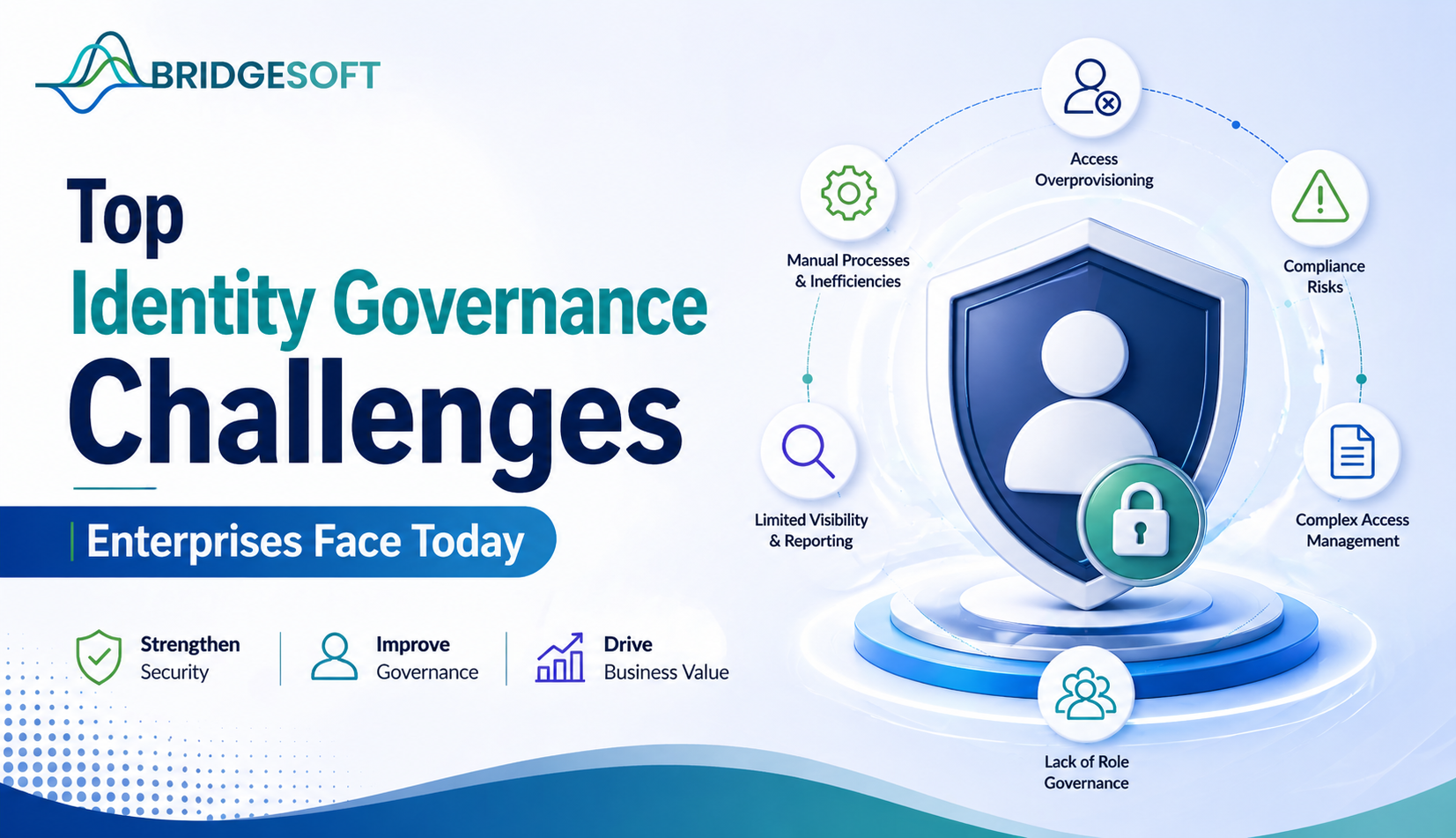
In the modern enterprise, identity has quietly become the most critical layer of security and operations. Every login, every API call, every automated workflow—each begins with an identity requesting access. What used to be a manageable system centered around employees has evolved into a complex ecosystem of humans, machines, applications, and AI agents.
And with this evolution comes a pressing reality:
Enterprises struggle to govern identity as it rapidly grows.
Traditional IAM (Identity Access Management) systems, once sufficient for structured environments, are now being stretched beyond their limits. The result is a growing set of IAM challenges that impact security, compliance, and operational efficiency.
This blog explores the most critical Identity Governance challenges enterprises face today—and why solving them requires a fundamentally new approach.
Enterprises today operate in a world without clear boundaries. Applications are distributed across cloud platforms, on-premises systems, and hybrid environments. Teams are remote and global. Business processes are automated and interconnected.
But perhaps the biggest shift is this:
Organizations now manage:
Each entity needs access, introduces risk, and requires consistent governance.
The Visibility Gap: When You Can’t See, You Can’t Secure
One of the most persistent challenges in Identity Governance is the lack of unified visibility.
In many enterprises, identity data is fragmented across:
This fragmentation makes it difficult to answer a fundamental question: who has access to what—and why?
Without a centralized view, access decisions become inconsistent.
An Identity Gateway becomes essential in this context, acting as a unifying layer that connects systems and provides a single, reliable view of identity across the enterprise.
Identity Sprawl: The Silent Risk Multiplier
As organizations grow, identities multiply—often faster than governance processes can keep up.
Additional identities and permissions are introduced with each new automation, integration, or application. Over time, this leads to identity sprawl, where access accumulates without review.
What makes identity sprawl particularly dangerous is that it often goes unnoticed.
A user who changes roles may retain access to resources they no longer need. A service account created for a temporary task may remain active indefinitely. An API integration may continue to operate with elevated privileges long after its purpose has changed.
These are not isolated issues—they are systemic risks that increase the enterprise attack surface.
The Rise of Non-Human Identities
One of the most significant—and often overlooked—shifts in identity management is the rise of non-human identities.
Machine identities, including APIs, bots, and service accounts, now play a central role in enterprise operations.
Unlike human identities, these entities:
Traditional IAM systems were not designed to manage these identities effectively. As a result, governance gaps emerge.
Credentials may not be rotated regularly. Access may not be reviewed. And activity may not be fully monitored.
As AI adoption accelerates, this challenge becomes even more complex, as AI agents act autonomously and require access to critical systems and data.
Fragmentation: The Cost of Disconnected IAM Systems
Many enterprises rely on multiple IAM tools to manage environments across cloud, on-premises, and legacy systems.
While each tool may address a specific need, together they create a fragmented identity ecosystem.
This fragmentation leads to:
More importantly, it prevents organizations from achieving Identity Governance.
An Identity Gateway helps bridge this gap by integrating systems, standardizing processes, and enabling centralized orchestration of identity workflows.
Manual Processes in an Automated World
Despite advances in technology, many identity processes remain manual.
Access requests require approvals. Reviews involve spreadsheets. Certifications depend on human judgment without sufficient context.
These manual processes introduce several challenges:
In a world, where identities and access change constantly, manual governance simply cannot keep pace.
Enterprises need to move toward automation and intelligent decision-making, where routine tasks are handled seamlessly, and high-risk decisions are prioritized.
Policy Inconsistency: When Rules Don’t Apply Everywhere
Policies are the foundation of identity governance—but only when they are applied consistently.
In fragmented environments, policies often vary across systems. What is enforced in one application may not apply in another. Access controls may differ between cloud and on-premises environments.
Attackers can exploit the gaps created by this difference.
Centralized governance ensures that:
Consistency is not just a best practice—it is a necessity for maintaining security and compliance.
Compliance: From Periodic Audits to Continuous Assurance
Regulatory expectations have evolved.
Organizations are now expected to demonstrate:
Traditional IAM systems, built for periodic audits, struggle to meet these requirements.