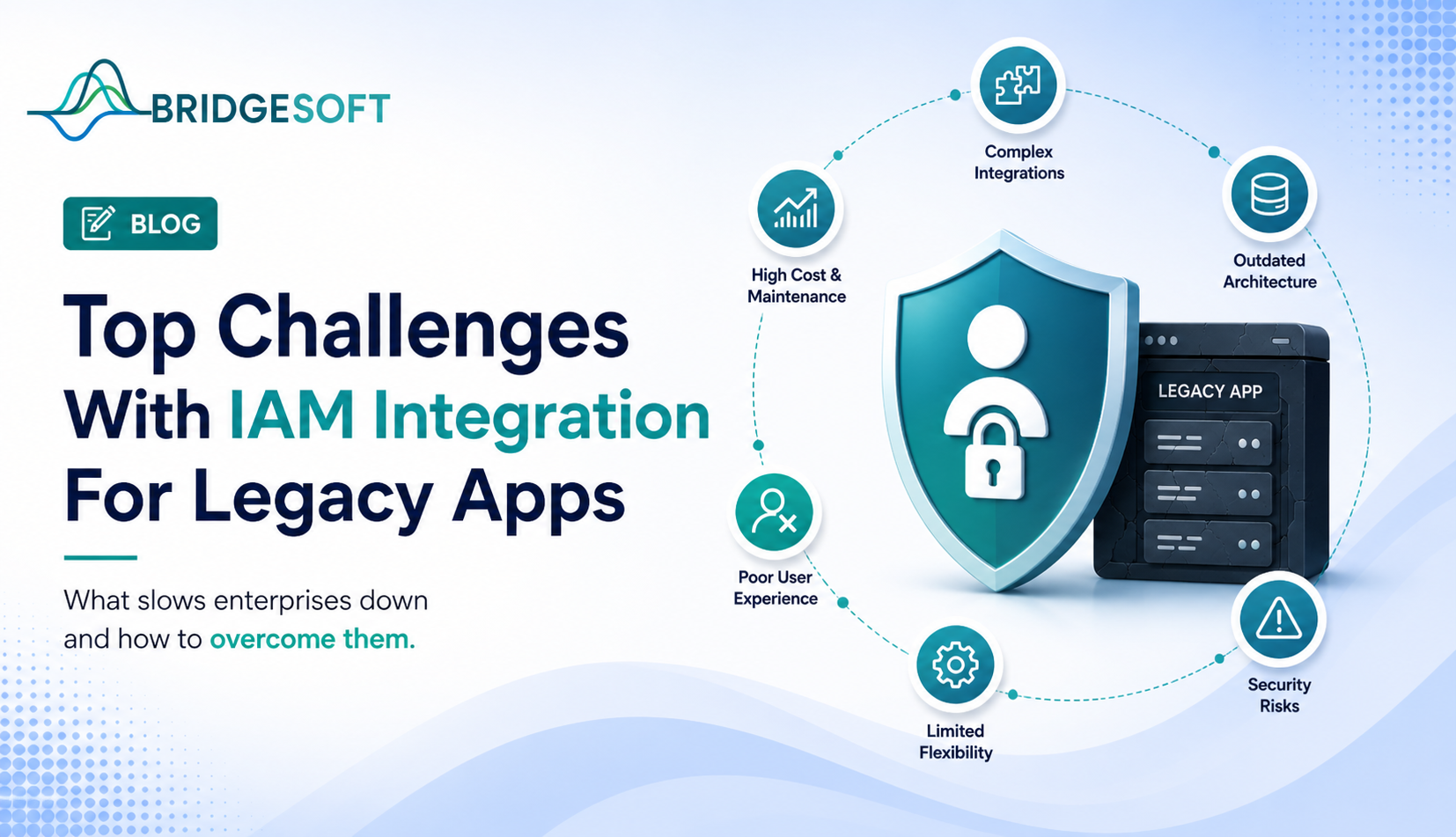
Digital transformation is accelerating across industries, but organizations still rely on legacy applications for key business operations. These systems often lack the security features needed for modern cybersecurity and compliance. With cloud adoption, hybrid environments, and remote work, securing legacy applications is now a top IT and security priority.
Modern Identity Access Management (IAM) transforms legacy systems by integrating them into a centralized identity framework. This strengthens security, enhances governance, simplifies access, and supports scalability, bridging traditional infrastructure with future-ready environments without disrupting business operations.
The Security Challenges Associated with Legacy Applications
Legacy applications were designed in a different era, before today’s standard cloud computing, security threats, and regulations. Many use outdated authentication, local credential storage, shared admin accounts, and manual processes—creating serious security gaps for modern enterprises.
One of the biggest challenges organizations face with legacy systems is the lack of centralized visibility into identities (knowing who has access to what). Employees often manage multiple usernames and passwords across applications, which increases password fatigue and the risk of credential compromise. In many cases, IT teams struggle to track who has access to specific systems, whether that access is still required, and whether excessive permissions exist within critical applications. Without proper Identity Governance (policies and tools to control user access), organizations lose the ability to effectively control and monitor user access across the enterprise.
Compliance requirements add another layer of complexity. Regulations such as GDPR (General Data Protection Regulation), HIPAA (Health Insurance Portability and Accountability Act), SOX (Sarbanes-Oxley Act), and ISO standards (international security and quality benchmarks) require organizations to implement strict access controls, maintain audit trails, and demonstrate accountability for user permissions. Legacy applications rarely provide these capabilities natively, making IAM implementation essential for organizations that need to meet modern compliance expectations while reducing operational risks.
What is Modern Identity Access Management Integration?
Modern IAM integrates legacy systems into a unified security framework. Older applications can join a centralized identity environment that supports secure authentication, access control, and automated management—improving security without disrupting operations.
A modern IAM solution centralizes authentication policies, enabling users to securely access multiple systems through Single Sign-On (SSO) and Multi-Factor Authentication (MFA), improving the user experience, security, and operational efficiency.
The Growing Importance of Identity Governance
Identity Governance is increasingly important as organizations grow employees, contractors, vendors, machines, bots, APIs, and AI agents all need secure, controlled access. Without governance, risks like excessive privileges, orphaned accounts, and threats increase.
Integrating Identity Governance into legacy environments improves access visibility, automates reviews, and enforces policy-driven controls. This visibility is vital for compliance and risk management in regulated industries.
Key Methods Used in Modern IAM Implementation
Identity Federation
Modern IAM uses multiple methods for integrating legacy applications. Identity federation allows users to authenticate with a centralized provider while accessing older systems, creating a seamless experience while enabling consistent security policies.
Directory Synchronization
Directory synchronization is key for legacy integration. Older systems often rely on on-premises directories like Active Directory or LDAP. Modern IAM can synchronize identities across all environments, improving consistency and reducing administrative effort.
Access Gateway Solutions
IAM access gateways add a security layer in front of legacy applications, allowing modern authentication methods without modifying the applications. Gateways introduce MFA, adaptive authentication, and session policies, even for systems that originally lacked these features.
API-Based Integration
API-based integration lets legacy applications join centralized provisioning, role management, and audit workflows. Automated identity management reduces manual work while improving consistency and security.
Privileged Access Management (PAM)
Privileged Access Management is vital for legacy environments. Many older systems use poorly secured privileged accounts. Integrating PAM secures credentials, automates password rotation, monitors sessions, and enforces least-privilege policies—cutting insider threat risk.
Benefits of Modern IAM Solutions for Legacy Applications
Modern IAM for legacy systems brings more than just security. Automated onboarding and offboarding improve efficiency, unified authentication simplifies user experience, and centralized governance streamlines audits and compliance. A scalable identity foundation supports digital transformation.
Common Challenges During IAM Implementation
Effective IAM implementation needs planning. Legacy setups are complex, with undocumented dependencies and inconsistent models. Organizations must first assess identity structures, application dependencies, privileged accounts, and governance gaps before modernizing.
Prioritizing high-risk applications is another important best practice. Systems containing sensitive data, financial records, customer information, or administrative privileges should typically be modernized first. Adopting role-based access controls (assigning permissions based on a user’s job role) also helps organizations simplify permission management while ensuring users receive access appropriate to their responsibilities.
Modern IAM aligns with Zero Trust security: no user or system is trusted by default. Continuous authentication, least-privilege access, and adaptive policies are crucial for protecting hybrid and distributed environments.
[Common IAM implementation challenges organizations face]
The Future of Cloud IAM Security and Identity Governance
The future of IAM is more intelligent and automated. AI analytics, behavioral authentication, and passwordless tech are emerging. Investing in modern IAM now prepares organizations for changing cybersecurity demands and growth.
Legacy applications may continue serving enterprises for many years, but outdated identity security practices should not. Modern IAM integration enables organizations to strengthen security, improve governance, simplify operations, and support compliance without sacrificing the stability of critical business systems. By combining Identity Governance, Identity Access Management, Cloud IAM Security, and advanced automation, enterprises can transform legacy environments into secure, scalable components of a future-ready digital ecosystem.
Organizations that proactively modernize their IAM strategy today will not only reduce operational and security risks but also create a stronger foundation for long-term digital transformation success.
Ready to Modernize Your IAM Strategy?
Legacy applications should never become security liabilities. Modern IAM solutions can help your organization strengthen access management, improve compliance, simplify operations, and secure both cloud and on-premises environments with confidence.
Discover how a modern IAM solution can help your business accelerate secure digital transformation while protecting critical enterprise systems.
#Bridgesoft #IdentityAccessManagement #IAM #IdentityGovernance #IAMImplementation #IAMSolution #CloudIAMSecurity #CyberSecurity #AccessManagement #DigitalTransformation #ZeroTrust #PrivilegedAccessManagement #EnterpriseSecurity #CloudSecurity #SSO #MFA #IdentitySecurity #Compliance #LegacyApplications #HybridCloud #DigitalSecurity