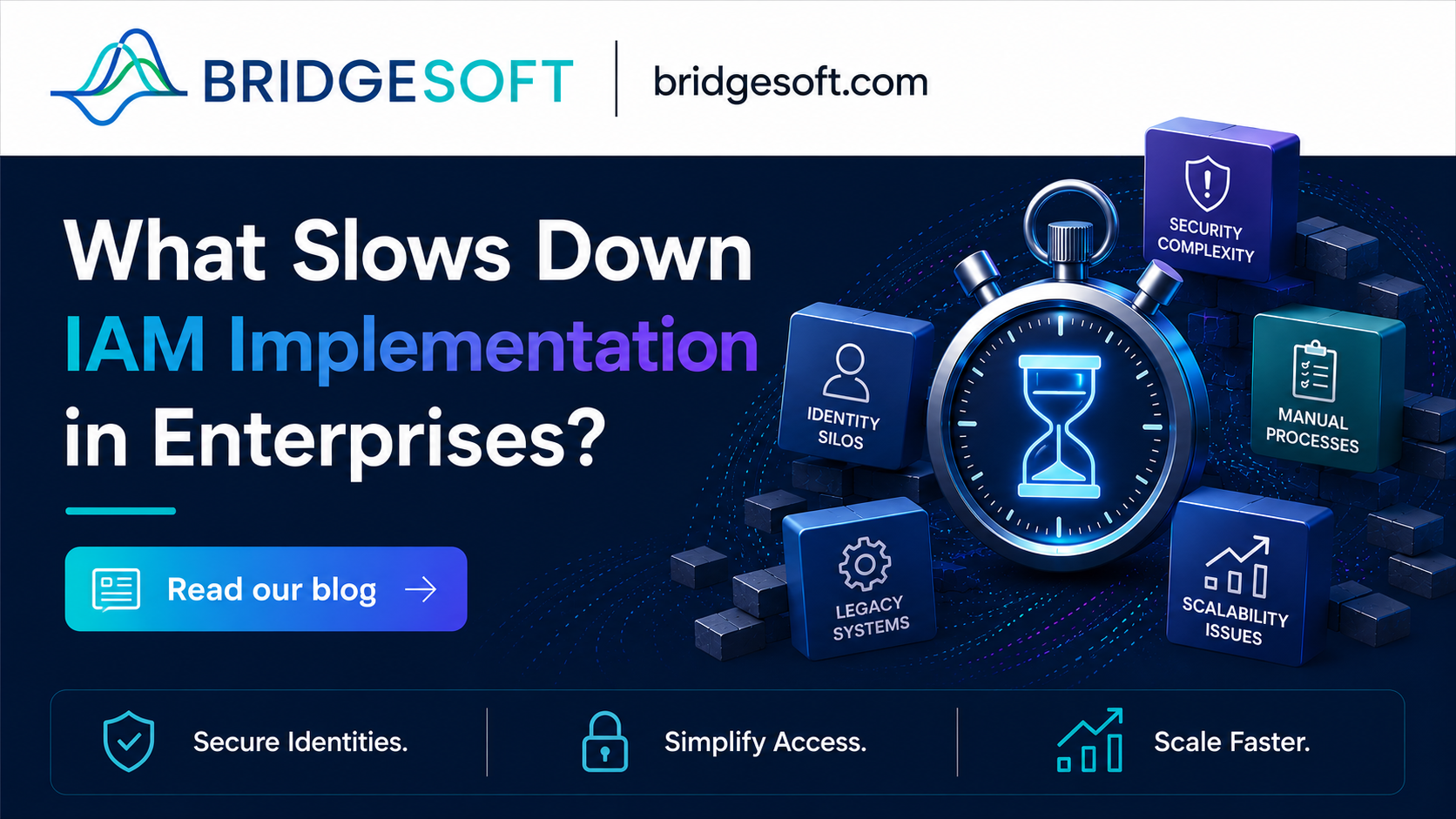
As organizations continue to expand across cloud platforms, hybrid infrastructures, remote work environments, and digital ecosystems, Identity and Access Management (IAM) has become a critical part of enterprise security. Businesses today must ensure that the right users have the right access to the right systems while maintaining security, compliance, and operational efficiency.
Despite growing investments in cybersecurity and modernization, many enterprises still face delays in IAM implementation. These delays are frequently caused by complex infrastructure, outdated systems, fragmented identity processes, and limited governance visibility.
Successful IAM implementation requires more than deploying technology — it requires a strong IAM strategy that aligns security, business operations, and identity governance across the organization.
Modern enterprises operate across multiple systems, including legacy applications, SaaS platforms, cloud environments, and on-premises infrastructure. Each system often has different authentication methods, user directories, and access controls.
Many older applications do not support modern authentication standards such as Single Sign-On (SSO), Multi-Factor Authentication (MFA), or federation services. As a result, organizations often require custom integrations and additional configuration to connect these systems to centralized Identity and Access Management (IAM) platforms.
The more fragmented the environment, the more complex the IAM implementation becomes.
One of the biggest IAM challenges organizations face is the absence of a well-defined IAM strategy.
Many enterprises begin implementation projects without fully understanding:
* Access governance requirements
* Role structures
* Compliance obligations
* Identity lifecycle workflows
* Future scalability needs
Without proper planning, IAM projects often experience delays, scope changes, and inconsistent security policies.
A successful IAM strategy should combine Identity Governance, automation, compliance, and user experience into a unified framework that supports long-term business growth.
Strong Identity Governance is essential, yet many organizations struggle with fragmented identity data and poor visibility into user permissions.
Businesses often face challenges such as:
* Overprivileged accounts
* Inactive user accounts
* Manual access approvals
* Inconsistent role assignments
* Limited audit visibility
Before implementing modern IAM solutions, organizations must first standardize governance policies and clean up existing access structures. This process can significantly slow down deployment timelines if not addressed early.
A key component of IAM deployment is Identity Lifecycle Management. It ensures that users receive appropriate access during onboarding, role changes, and offboarding.
A lot of businesses still use manual operations for:
* User provisioning
* Access approvals
* Role updates
* Account deactivation
Manual processes increase complexity and security risks.
Automating Identity Lifecycle Management helps organizations improve efficiency, reduce human error, and accelerate successful IAM deployments.
Legacy applications remain one of the biggest barriers to modern IAM implementation.
Older systems often rely on outdated authentication methods, disconnected identity stores, and limited integration capabilities. Many require custom development or middleware solutions before they can support centralized identity management.
These integration challenges increase:
* Project timelines
* Operational costs
* Maintenance complexity
* Security risks
Organizations relying on outdated systems struggle to modernize identity security efficiently.
IAM implementation impacts employees, departments, workflows, and business operations across the organization.
New authentication methods, approval processes, and access policies may create resistance among users who fear disruptions to productivity or operational changes.
Without strong communication, executive support, and user training, IAM projects can lose momentum internally.
Successful IAM implementation requires both technical execution and effective change management.
Manual identity management processes often slow down enterprise IAM deployments.
Organizations relying on spreadsheets, email approvals, and ticket-based provisioning workflows typically face:
* Delayed onboarding
* Slow access approvals
* Increased administrative workload
* Inconsistent access controls
* Difficult audit preparation
Modern IAM solutions rely heavily on automation to streamline identity operations, ensure consistent security, and reduce operational overhead.
Automating identity workflows accelerates implementation and ensures scalability.
Organizations can improve the success of IAM implementation by adopting a phased, strategic approach.
Key steps include:
* Building a clear IAM strategy
* Conducting identity assessments
* Improving Identity Governance
* Standardizing access policies
* Automating lifecycle management
* Prioritizing high-risk applications