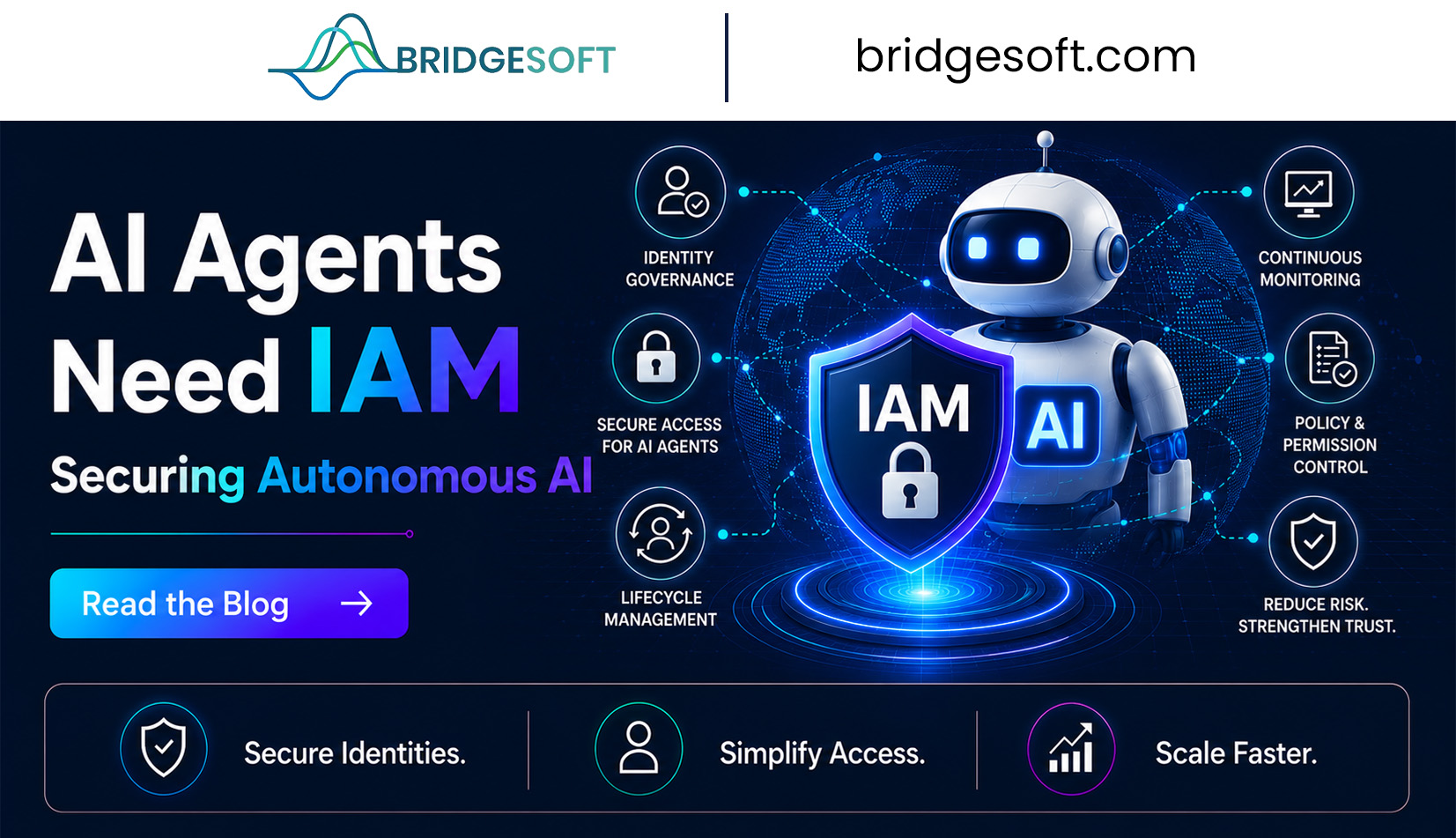
Business operations are changing because of artificial intelligence. What started with virtual assistants and chatbots has evolved into intelligent AI agents capable of analyzing data, automating workflows, interacting with enterprise applications, and making real-time decisions. These autonomous systems are helping organizations improve productivity, enhance customer experiences, and accelerate digital transformation.
Just like employees require secure identities to access business resources, AI agents also need unique digital identities. Every AI agent interacts with applications, APIs, databases, and cloud environments. Without proper identity controls, these agents can unintentionally expose sensitive information, access unauthorized systems, or become targets for cyberattacks.
The future of enterprise AI depends on securing every identity—human and non-human alike.
Modern organizations are rapidly deploying AI agents across customer service, IT operations, finance, HR, cybersecurity, and software development. These agents can perform repetitive tasks, retrieve information, generate reports, and even execute business processes with minimal human intervention.
Unlike traditional software, AI agents operate autonomously and interact with multiple systems simultaneously. To perform these tasks, they require access to enterprise applications and data.
This makes AI agents more than software—they are Non-Human Identities that require the same level of security and governance as human users.
Without proper identity controls, organizations lose visibility into what AI agents can access, how they use enterprise data, and whether their actions comply with security policies.
[AI for Identity vs Identity for AI]
Every employee receives a digital identity before accessing enterprise resources. That identity determines authentication, permissions, and accountability.
The same principle must apply to AI agents.
An AI agent without a managed identity becomes difficult to monitor and govern. Organizations cannot accurately determine which systems it accesses, what permissions it holds, or whether it is operating within approved security boundaries.
As AI agents gain greater autonomy, unmanaged identities create unnecessary risks. A compromised AI identity could access confidential information, misuse privileged permissions, or execute unauthorized actions across multiple applications.
Assigning every AI agent a unique identity establishes accountability, improves visibility, and enables continuous monitoring.
Identity is becoming the foundation of trusted AI.
Traditional Identity Governance focused on managing employees, contractors, and partners. Today’s enterprise environment includes thousands of digital entities such as AI agents, APIs, service accounts, containers, and machine identities.
In many organizations, these Non-Human Identities already outnumber human users.
Without centralized governance, these identities often accumulate excessive permissions, outdated credentials, and unmanaged access to business-critical systems.
Organizations need visibility into:
Extending Identity Governance to AI agents helps reduce security risks while supporting responsible AI adoption.
Modern Identity Access Management (IAM) provides the security foundation needed to manage AI agents throughout their lifecycle.
Rather than treating AI as another application, organizations should onboard every AI agent as a managed identity with clearly defined authentication methods, permissions, and governance policies.
An effective IAM strategy enables organizations to:
Organizations may increase security, strengthen governance, and get centralized visibility without restricting innovation by incorporating AI agents into Identity Access Management.
As AI agents interact with business applications and cloud services, Secure Access Management becomes increasingly important.
Every AI identity should receive only the permissions required to perform its specific responsibilities. Applying the principle of least privilege minimizes the impact of compromised credentials and prevents unnecessary access to sensitive systems.
Organizations should also implement:
Secure Access Management helps organizations maintain trust while allowing AI agents to operate efficiently across enterprise environments.
Many organizations deploy AI solutions before updating their identity infrastructure. Identity security should be incorporated into all IAM deployment strategies as the use of AI increases.
Future-ready IAM deployments must support:
Designing identity security from the beginning simplifies governance, improves compliance, and reduces future implementation costs.
Organizations that modernize IAM today will be better prepared to support the expanding AI ecosystem tomorrow.
[How AI is Transforming Identity and Access Management]
Most enterprise AI platforms operate in cloud environments, making Cloud IAM Security essential. Whether organizations use AI development platforms, cloud-hosted language models, or intelligent automation services, AI agents rely on cloud identities to authenticate, access enterprise resources, invoke APIs, and perform autonomous tasks. Cloud IAM ensures these identities are authenticated, authorized, continuously governed, and protected against misuse.