Imagine walking into an office building where no one knows exactly who has access to which rooms. Some employees still carry keys from previous departments, former contractors can enter restricted areas, and duplicate access cards exist without anyone realizing it. The result would be confusion, security risks, and a lack of accountability.
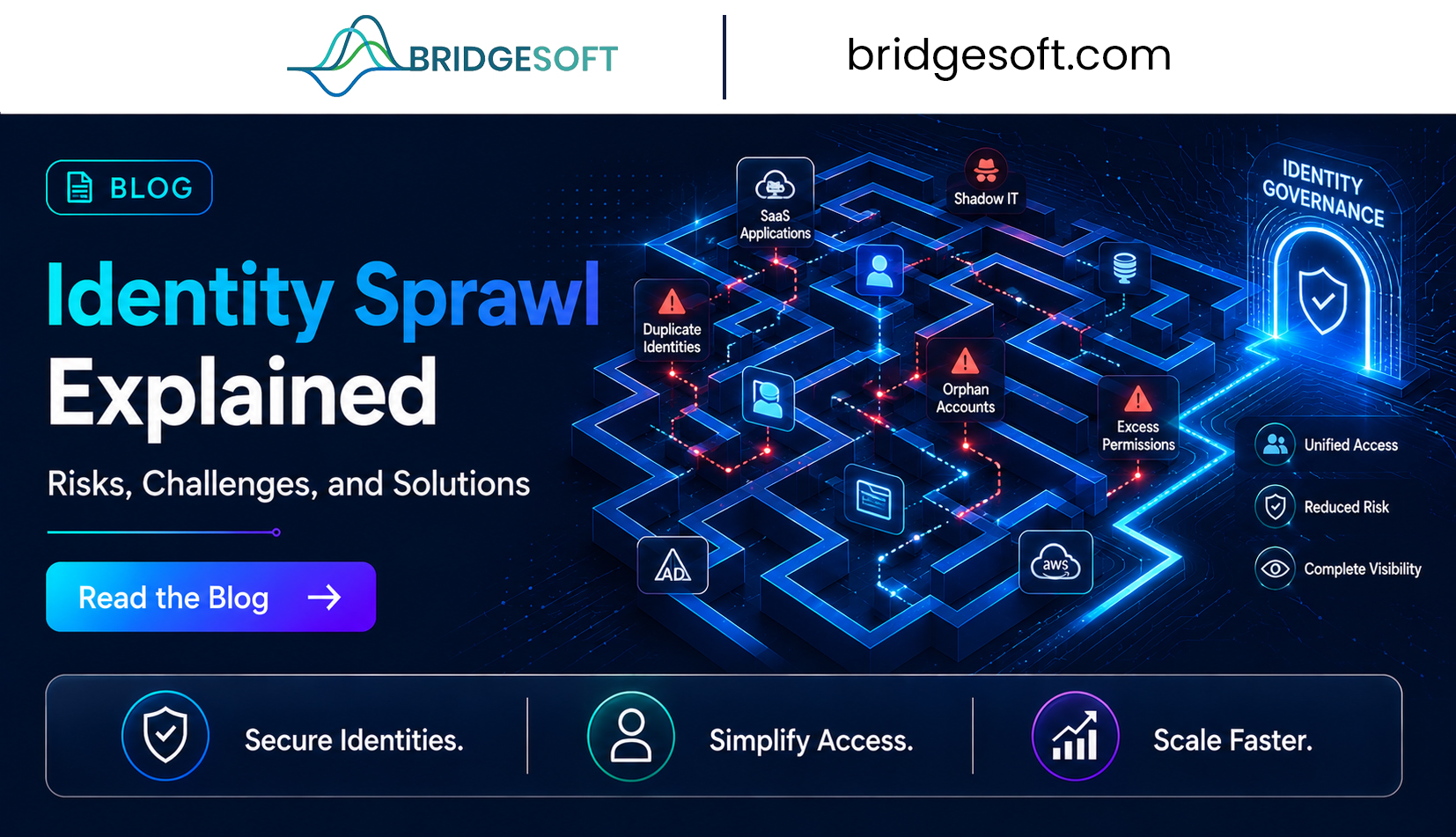
This scenario mirrors what many organizations experience today in their digital environments through a growing challenge known as Identity Sprawl.
As businesses adopt cloud applications, remote work models, third-party integrations, and digital transformation initiatives, the number of identities within the enterprise grows rapidly. Employees, contractors, partners, service accounts, applications, and devices all require access to systems and data. Without proper controls, these identities become scattered across multiple platforms, creating a complex web of unmanaged accounts, excessive permissions, and security vulnerabilities.
Identity sprawl is no longer just an IT challenge—it is a business risk that directly impacts security, compliance, and operational efficiency.
Identity sprawl occurs when organizations accumulate many identities across various systems without centralized visibility or governance. As new applications and services are introduced, user accounts are created in multiple locations, often with inconsistent access policies and little ongoing oversight.
Over time, employees change roles, projects evolve, and systems expand. However, access rights are rarely cleaned up at the same pace. Duplicate identities may appear across platforms, users may retain permissions they no longer want, and inactive accounts may remain active.
The result is an identity ecosystem that becomes increasingly difficult to manage, monitor, and secure.
In today's cloud-driven environment, identity sprawl has become one of the most common challenges organizations face in maintaining effective Identity and Access Management practices.
Modern organizations rely on identities to access virtually every business application and resource. As a result, identities have become one of the most attractive targets for cybercriminals.
Every unmanaged account, unused credential, or excessive permission creates a potential pathway for unauthorized access. If an attacker can compromise a valid identity, they no longer need to overcome conventional network security.
Identity sprawl increases the likelihood of:
The larger the identity ecosystem becomes, the more difficult it is for security teams to maintain control and enforce consistent security policies.
Organizations often discover these risks only after a security event or compliance audit if they don't have an organized identity management strategy.
Beyond security concerns, identity sprawl creates significant operational challenges.
IT teams frequently spend valuable time managing access requests, resetting passwords, reviewing permissions, and tracking down account ownership. As organizations grow, these manual processes become increasingly difficult to scale.
Separate identity stores and applications may be used by different departments, resulting in separation and uneven access control. Mergers, acquisitions, and digital transformation projects often introduce additional complexity by bringing new systems and user populations into the environment.
Without centralized visibility, organizations struggle to answer fundamental questions:
These challenges can quickly overwhelm security and IT teams, increasing both risk and administrative costs.
One of the most effective ways to combat identity sprawl is through strong Identity Governance.
Identity Governance provides organizations with visibility, accountability, and control over user access across the enterprise. It ensures that identities are continuously monitored, reviewed, and aligned with business requirements.
With proper governance processes in place, organizations can:
Identity Governance transforms access management from a reactive process into a proactive security strategy. Instead of simply granting access, organizations can continuously evaluate whether access remains appropriate.
This level of oversight is essential for maintaining security in increasingly complex digital environments.
As identity ecosystems grow, organizations must ensure users have access only to the resources required for their roles.
This is where Secure Access Management becomes critical.
Secure Access Management focuses on enforcing access controls that protect sensitive systems while maintaining a seamless user experience. Through centralized authentication, policy enforcement, and risk-based access decisions, organizations can significantly reduce identity-related threats.
Modern access management solutions provide features such as:
These capabilities help organizations strike the right balance between security and productivity while minimizing opportunities for unauthorized access.
Businesses can reduce their attack surface and improve overall cybersecurity resilience by implementing Secure Access Management procedures.
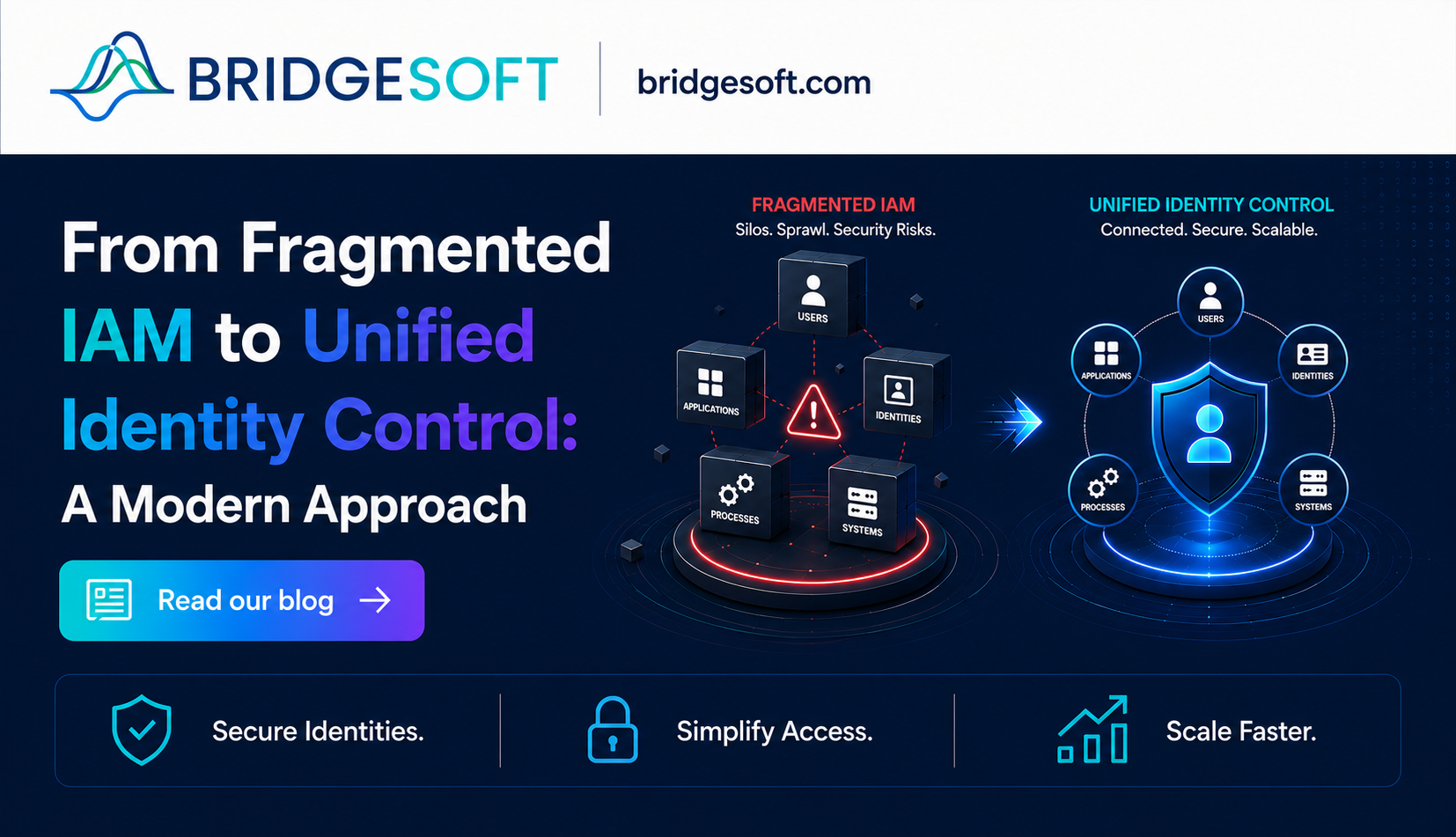
Organizations today operate in highly connected digital environments where employees, applications, and data exist across cloud, on-premises, and hybrid infrastructures. While businesses continue to accelerate their digital transformation, many still struggle with fragmented systems that create security gaps, operational inefficiencies, and inconsistent access controls.
Disconnected platforms and manual access process’s complicate identity management. Employees juggle multiple credentials, and IT teams spend excessive time resolving access issues. These systems decrease productivity and heighten the risks of unauthorized access and compliance failures.
Organizations are moving toward unified identity control—a centralized approach that strengthens security and streamlines access management. Modern IAM solutions create connected ecosystems with improved visibility, governance, and operational efficiency.
Fragmented IAM grows as organizations add technologies, expand operations, acquire new businesses, merge with other entities, or integrate multiple systems—without a centralized identity strategy. Large enterprises with multiple subsidiaries or business units often inherit disconnected identity environments that become increasingly difficult to manage and secure over time.
Without Identity Governance, organizations risk excessive privileges, orphaned accounts, delayed deprovisioning, and inconsistent access policies. These gaps expose systems and data, creating compliance headaches during audits.
In addition, scattered access information makes it difficult for security teams to gain complete visibility into who has access to critical resources and whether those permissions remain appropriate. Modern enterprises require more than isolated identity tools — they need centralized identity intelligence to secure the entire digital ecosystem.
[The Future of Identity Governance]
A unified IAM approach turns identity into a strategic advantage by centralizing authentication, access management, and user governance. Unified Identity and Access Management delivers stronger security, smoother operations, and more consistent controls across the enterprise.
Modern IAM platforms support advanced security capabilities such as Single Sign-On (SSO), Multi-Factor Authentication (MFA), and adaptive authentication. These technologies help employees securely access applications without the complexity of managing multiple credentials. At the same time, organizations strengthen protection against unauthorized access attempts and identity-based cyber threats.
Unified identity systems automate access tasks and centralize operations on a single platform, reducing IT complexity and supporting seamless user experiences across cloud and hybrid environments.
Identity is the new security perimeter. Organizations must monitor access requests, permissions, and identity-related activity to reduce risk and stay compliant. Identity Governance is essential.
Modern governance solutions give visibility into user access across systems. Businesses automate reviews, enforce policies, and monitor activities to spot risky behavior or excessive permissions.
By integrating Identity Governance into a centralized IAM framework, organizations can significantly reduce insider threats, improve compliance readiness, and ensure that users maintain only the access necessary for their roles. Automated audit reporting and policy enforcement also simplify compliance management for regulations such as GDPR, HIPAA, and ISO standards.
Manual identity management causes delays, inconsistencies, and security gaps. Modern IAM platforms automate user access provisioning to fix this.
Intelligent workflows let organizations automatically create accounts, assign permissions, and grant role-based access. When roles change or employees leave, permissions are updated or revoked immediately.
Automated user access provisioning improves operational efficiency while reducing the risks associated with dormant accounts, overprovisioned access, and manual errors. It also enhances employee productivity by enabling faster, more secure access to business-critical applications.
As organizations adopt cloud, remote work, and SaaS applications, digital transformation security becomes a top priority. Modern IAM Solutions provide the scale and flexibility required to secure rapidly evolving environments.
Centralizing identity controls enables consistent security across the enterprise. Adaptive authentication and AI-driven threat detection respond dynamically to changing risk levels and user behaviors.
Unified platforms also accelerate innovation by simplifying integration with digital services, allowing organizations to extend IAM policies consistently across the organization.
Final Thoughts:
Fragmented identity systems add complexity, inefficiency, and security risks that businesses can no longer ignore. Unified IAM centralizes control, strengthens governance, improves secure access management, and automates provisioning.
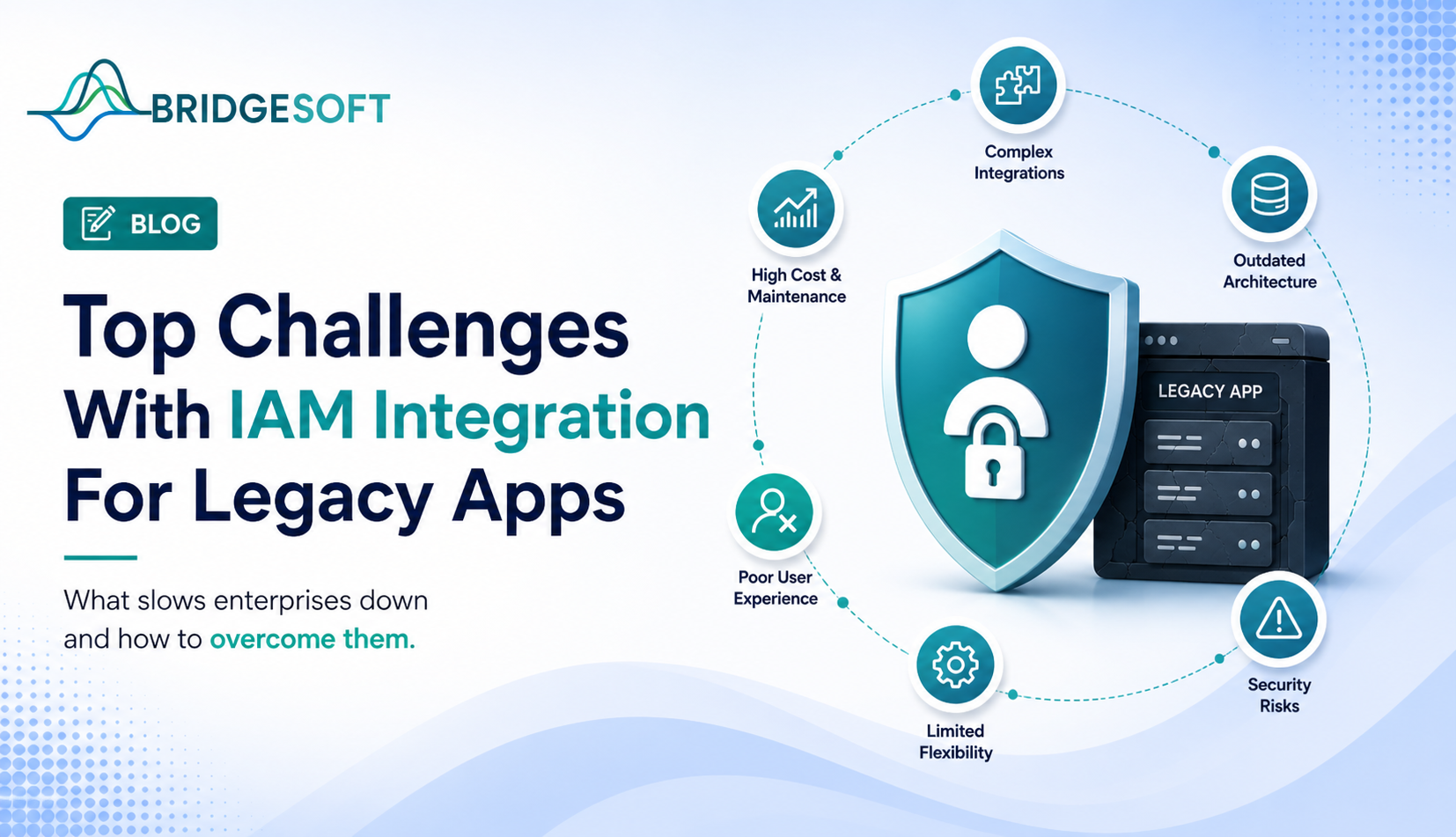
Digital transformation is accelerating across industries, but organizations still rely on legacy applications for key business operations. These systems often lack the security features needed for modern cybersecurity and compliance. With cloud adoption, hybrid environments, and remote work, securing legacy applications is now a top IT and security priority.
Modern Identity Access Management (IAM) transforms legacy systems by integrating them into a centralized identity framework. This strengthens security, enhances governance, simplifies access, and supports scalability, bridging traditional infrastructure with future-ready environments without disrupting business operations.
Legacy applications were designed in a different era, before today’s standard cloud computing, security threats, and regulations. Many use outdated authentication, local credential storage, shared admin accounts, and manual processes—creating serious security gaps for modern enterprises.
One of the biggest challenges organizations face with legacy systems is the lack of centralized visibility into identities (knowing who has access to what). Employees often manage multiple usernames and passwords across applications, which increases password fatigue and the risk of credential compromise. In many cases, IT teams struggle to track who has access to specific systems, whether that access is still required, and whether excessive permissions exist within critical applications. Without proper Identity Governance (policies and tools to control user access), organizations lose the ability to effectively control and monitor user access across the enterprise.
Compliance requirements add another layer of complexity. Regulations such as GDPR (General Data Protection Regulation), HIPAA (Health Insurance Portability and Accountability Act), SOX (Sarbanes-Oxley Act), and ISO standards (international security and quality benchmarks) require organizations to implement strict access controls, maintain audit trails, and demonstrate accountability for user permissions. Legacy applications rarely provide these capabilities natively, making IAM implementation essential for organizations that need to meet modern compliance expectations while reducing operational risks.
Modern IAM integrates legacy systems into a unified security framework. Older applications can join a centralized identity environment that supports secure authentication, access control, and automated management—improving security without disrupting operations.
A modern IAM solution centralizes authentication policies, enabling users to securely access multiple systems through Single Sign-On (SSO) and Multi-Factor Authentication (MFA), improving the user experience, security, and operational efficiency.
Identity Governance is increasingly important as organizations grow employees, contractors, vendors, machines, bots, APIs, and AI agents all need secure, controlled access. Without governance, risks like excessive privileges, orphaned accounts, and threats increase.
Integrating Identity Governance into legacy environments improves access visibility, automates reviews, and enforces policy-driven controls. This visibility is vital for compliance and risk management in regulated industries.
Identity Federation
Modern IAM uses multiple methods for integrating legacy applications. Identity federation allows users to authenticate with a centralized provider while accessing older systems, creating a seamless experience while enabling consistent security policies.
Directory Synchronization
Directory synchronization is key for legacy integration. Older systems often rely on on-premises directories like Active Directory or LDAP. Modern IAM can synchronize identities across all environments, improving consistency and reducing administrative effort.
Access Gateway Solutions
IAM access gateways add a security layer in front of legacy applications, allowing modern authentication methods without modifying the applications. Gateways introduce MFA, adaptive authentication, and session policies, even for systems that originally lacked these features.
API-Based Integration
API-based integration lets legacy applications join centralized provisioning, role management, and audit workflows. Automated identity management reduces manual work while improving consistency and security.
Privileged Access Management (PAM)
Privileged Access Management is vital for legacy environments. Many older systems use poorly secured privileged accounts. Integrating PAM secures credentials, automates password rotation, monitors sessions, and enforces least-privilege policies—cutting insider threat risk.
Modern IAM for legacy systems brings more than just security. Automated onboarding and offboarding improve efficiency, unified authentication simplifies user experience, and centralized governance streamlines audits and compliance. A scalable identity foundation supports digital transformation.
Effective IAM implementation needs planning. Legacy setups are complex, with undocumented dependencies and inconsistent models. Organizations must first assess identity structures, application dependencies, privileged accounts, and governance gaps before modernizing.
Identity and Access Management (IAM) is no longer just a layer of security—it has evolved into a critical business enabler. From onboarding employees efficiently to ensuring regulatory compliance and enabling secure digital transformation, IAM sits at the heart of modern enterprise operations.
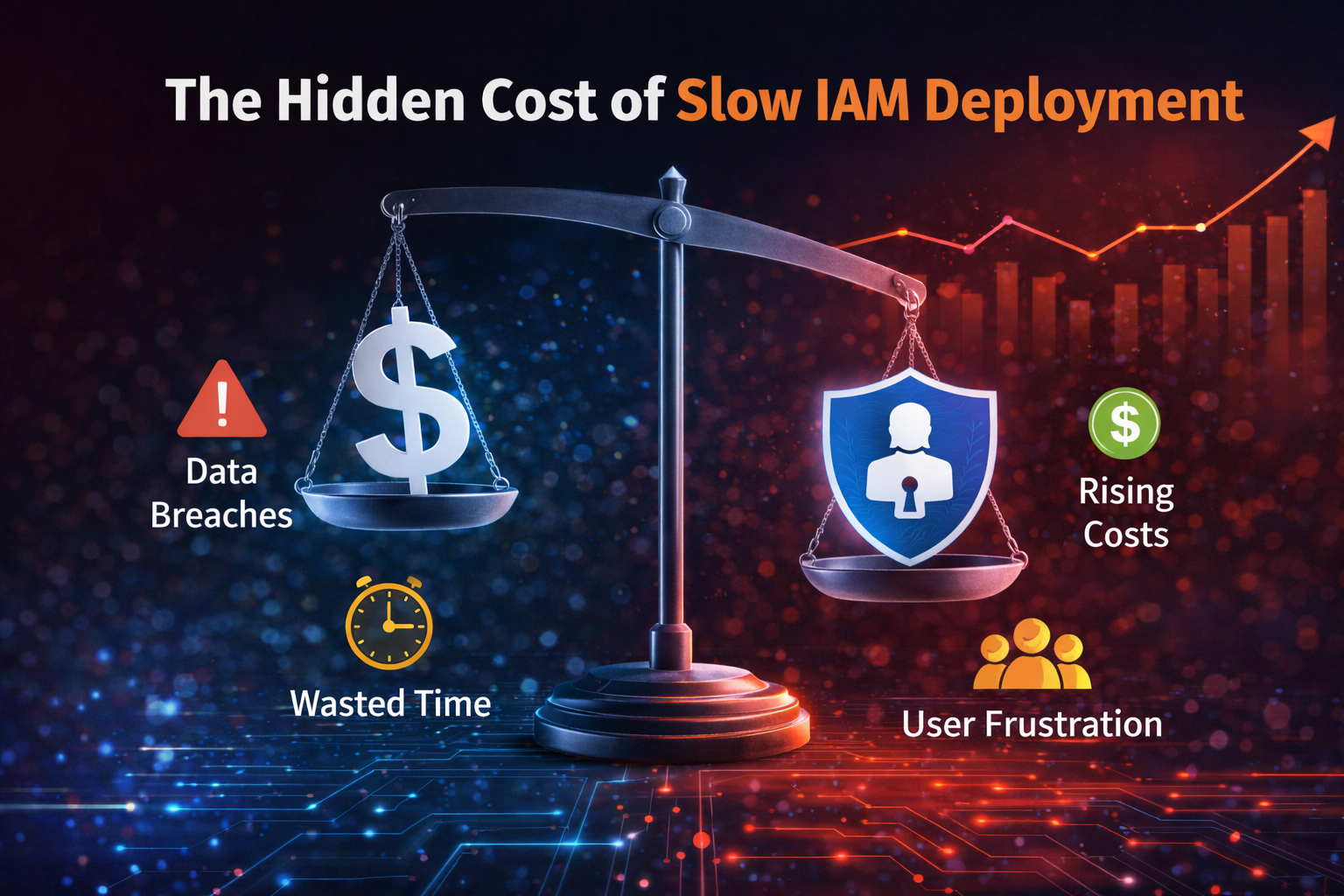
Despite its importance, many organizations struggle with a persistent, often underestimated challenge: slow IAM deployment.
At first glance, implementation delays may appear manageable—just a few weeks added to timelines or minor integration setbacks. However, as these delays accumulate, they begin to create ripple effects across the organization. What starts as a technical delay gradually becomes a business problem, affecting security, productivity, compliance, and overall performance.
To truly understand how to avoid these outcomes, it’s important to first recognize the root causes behind why IAM Projects fail and how organizations can implement IAM successfully with the right strategy.
Slow IAM deployment is not just about missed deadlines—it often reflects deeper inefficiencies in an organization’s technology and processes.
It can manifest in several ways: delayed employee onboarding, prolonged application integrations, heavy reliance on manual provisioning, and extended implementation cycles that far exceed initial expectations. These inefficiencies are typically rooted in legacy systems, a lack of integration planning, and the absence of a structured implementation roadmap.
Organizations that take the time to build a clear IAM roadmap and prioritize early integration are better positioned to avoid these delays and achieve a more streamlined implementation journey.
One of the most immediate and critical consequences of slow IAM deployment is the increased exposure to security risks. When IAM systems are only partially implemented, users often retain access privileges longer than necessary, and manual errors become more frequent.
Delayed deprovisioning and lack of centralized control create gaps that can be exploited, increasing the likelihood of unauthorized access or data breaches. Over time, these vulnerabilities can have serious financial and reputational consequences for the organization.
Beyond security, slow IAM directly impacts the day-to-day productivity of employees and teams. When access to applications and systems is delayed, employees are unable to perform their roles efficiently.
IT teams, on the other hand, are often burdened with repetitive manual tasks such as provisioning and access approvals. This not only slows down business workflows but also diverts valuable resources away from more strategic initiatives.
The result is a workplace environment where inefficiencies become normalized, and both employees and IT teams experience growing frustration.
IAM is often viewed as a long-term investment in security and efficiency. However, when deployment is slow, it begins to behave more like an ongoing operational expense.
Delays lead to extended development efforts, continuous rework, and increased reliance on manual processes. Organizations may find themselves allocating additional resources to maintain incomplete systems, driving up costs without delivering proportional value.
In such scenarios, the true cost of IAM is not in its implementation—but in its delay.
IAM plays a central role in maintaining regulatory compliance and ensuring audit readiness. When implementation is delayed, organizations struggle to establish complete audit trails, enforce access governance policies, and generate consistent reports.
These gaps can lead to compliance failures, especially in highly regulated industries where visibility and accountability are critical. The longer the IAM deployment is delayed, the more difficult it becomes to meet regulatory requirements and avoid potential penalties.
IAM is a foundational component for broader digital transformation efforts, including cloud adoption, automation, and Zero Trust security models.
When IAM deployment is slow, it creates a bottleneck that impacts these initiatives. Organizations may find themselves unable to move forward with modernization efforts because the underlying identity infrastructure is not yet mature.
In this way, IAM delays do not just affect security—they slow down the organization’s ability to innovate and compete in a digital-first world.
In today’s fast-paced work environment, users expect seamless and immediate access to the tools they need. Slow IAM processes, however, often lead to login issues, access delays, and inconsistent user experiences.
When employees are unable to access systems efficiently, they may turn to unauthorized tools or workarounds—leading to the rise of shadow IT. This not only undermines security but also creates additional governance challenges for the organization.
A major contributor to slow IAM deployment is the difficulty of integrating with legacy systems. Many enterprises operate with outdated platforms that lack modern APIs or standardized integration capabilities.
Identity and Access Management (IAM) is the backbone of enterprise security, ensuring the right people have the right access at the right time. But too often, IAM teams struggle to prove their value beyond basic compliance checkboxes.
If you're still measuring success by the number of roles created or users onboarded, you're missing the bigger picture. Real IAM success isn’t about system outputs; it’s about business outcomes.
Why Most IAM Metrics Miss the Mark

These metrics might look good on a dashboard, but they don’t answer the critical questions executives care about:
✔ Are we reducing risk?
✔ Are we improving efficiency?
✔ Are we enabling the business?
Without meaningful metrics, IAM teams get stuck in a cycle of "keeping the lights on" instead of driving strategic value.
The 3-Tier Framework for IAM Metrics That Matter
To shift from tactical reporting to business-aligned measurement, focus on three key areas:
1. Operational Metrics: Is IAM Running Smoothly?
These track efficiency and system health:
Example: A company reduced access provisioning from 5 days to 2 hours by automating workflows cutting onboarding costs by 30%.
2. Risk & Compliance Metrics: Are We Actually Safer?
These prove security effectiveness:
Example: After implementing just-in-time access, one firm reduced standing privileged accounts by 75% dramatically shrinking their attack surface.
3. Business Impact Metrics: Does IAM Drive Value?
These connect identity to strategic goals:
Example: A retailer’s streamlined customer IAM (CIAM) platform boosted checkout completion by 15% adding millions in revenue.
Turning Data into Decisions
Tracking metrics is useless unless they drive action. Here’s how to operationalize them:
IAM isn’t just about security it’s a business accelerator. The right metrics will help you:
"What gets measured gets improved." Start measuring what matters.
Ready to elevate your IAM metrics? Contact us today and let’s turn identity into your competitive advantage.
In today’s digital landscape, safeguarding sensitive data and ensuring regulatory compliance are top priorities for organizations. Identity Access Management (IAM) serves as a cornerstone for achieving these goals by controlling user access to critical systems and resources.
Below are key best practices to optimize your IAM strategy.
1. Develop Comprehensive IAM Policies Aligned with Business Needs
Start by defining clear IAM policies that reflect your organization’s unique requirements. This includes mapping user roles and access levels to ensure employees only have permissions necessary for their responsibilities. Implementing Role-Based Access Control (RBAC) simplifies permission management by assigning access based on job functions. Regularly revisit these policies to align with evolving business needs, ensuring scalability and agility in dynamic environments.
2. Strengthen Authentication and Access Controls
Enforce strong passwords and multi-factor authentication (MFA) to add security layers. Utilize advanced verification methods, such as biometrics or hardware tokens, to reduce unauthorized access risks. By combining security layers like encryption and least-privilege principles, organizations can create a robust defense against breaches.
3. Conduct Regular Risk Assessments and Policy Reviews
Proactively identify vulnerabilities through frequent risk assessments. This enables organizations to adjust policies and address gaps before they escalate. Schedule policy updates to stay compliant with industry regulations and adapt to emerging threats. A dynamic approach ensures your IAM framework remains resilient.
4. Automate User Lifecycle Management and Monitoring
Automate user provisioning and deprovisioning to eliminate manual errors and ensure timely access adjustments during onboarding or role changes. Implement log monitoring and automated alerts to track suspicious activities in real time. Tools that monitor access logs enhance visibility, enabling swift responses to potential incidents.

5. Integrate IAM with Security Solutions and Provide Training
Maximize protection by integrating IAM with security solutions like SIEM (Security Information and Event Management) systems. This fosters cohesive incident response strategies and centralized threat detection. Additionally, provide user training to educate employees on phishing recognition and secure access practices. An informed workforce is your first line of defense.
Why Bridgesoft?
At Bridgesoft, we understand that effective IAM requires a blend of cutting-edge technology and strategic planning. Our solutions support RBAC implementation, automated user management, and seamless SIEM integration, empowering organizations to enforce granular access controls while reducing administrative overhead.
Conclusion
Implementing these IAM best practices not only fortifies security but also enhances operational efficiency. By prioritizing policy reviews, strong authentication, and user training, businesses can build a future-proof IAM framework. Partner with Bridgesoft to leverage tailored IAM strategies that align with your organizational goals, ensuring secure and scalable access management.
By adopting these practices, organizations can transform their IAM approach into a strategic asset, driving both security and productivity.
In today's dynamic business environment, efficient Identity and Access Management (IAM) is critical for both security and operational success. By streamlining user lifecycle management, automating tasks, and enforcing least privilege principles, organizations can minimize risk, improve productivity, and gain a competitive advantage.
Automating user provisioning, de-provisioning, and access certifications reduces manual effort and minimizes human error. This streamlined approach enhances security and improves overall efficiency by eliminating unnecessary access requests and approvals.
Robust analytics and reporting capabilities provide valuable insights into user behavior and potential security threats. This data-driven approach enables informed decision-making, continuous process optimization, and a strong return on investment for your IAM strategy.
Five Real-World Examples of How IAM KPIs Improve Efficiency:
1. Reduced Time to Onboard New Employees:
2. Enhanced Security and Reduced Risk:
3. Improved User Experience:
4. Optimized Resource Allocation:
5. Accelerated Business Decision-Making:
The digital age demands a flawless Identity and Access Management (IAM) strategy. Businesses today rely on Okta, a leading IAM solution, to safeguard access and data across their ecosystem. But for maximum impact, Okta needs a bridge to connect it seamlessly with your existing workflows and applications. That's where Bridgesoft steps in.
We are integration specialists, and our expertise lies in bridging the gap between Okta and your business-critical systems. This powerful combination unlocks a future-proof IAM strategy that not only bolsters security but also streamlines operations and user experience.
Trending Topics in IAM: Charting the Course for Success
The IAM landscape is constantly evolving. Here are some of the hottest trends to consider when crafting your IAM roadmap:
The Bridgesoft + Okta Advantage: A Symbiotic Security Solution
By integrating Bridgesoft with Okta, you unlock a future-proof IAM strategy that delivers:
Bridge the Gap to a Secure Future
At Bridgesoft, we understand the critical role of a robust IAM strategy. Our integration experts can bridge the gap between your existing systems and Okta, empowering you to secure your digital landscape, optimize workflows, and unlock the full potential of your workforce.
Contact us today for a free consultation and discover how Bridgesoft can help you build a future-proof IAM strategy with Okta.
Ever feel bogged down by a complex Identity and Access Management (IAM) system? You're not alone. In a recent LinkedIn article by MARIA N. SCHWENGER (Link to the article), Bridgesoft tackles this common challenge head-on.
The article explores the struggles businesses face with traditional IAM solutions and how Bridgesoft's innovative approach can simplify user provisioning and access management. This can lead to significant benefits, including: