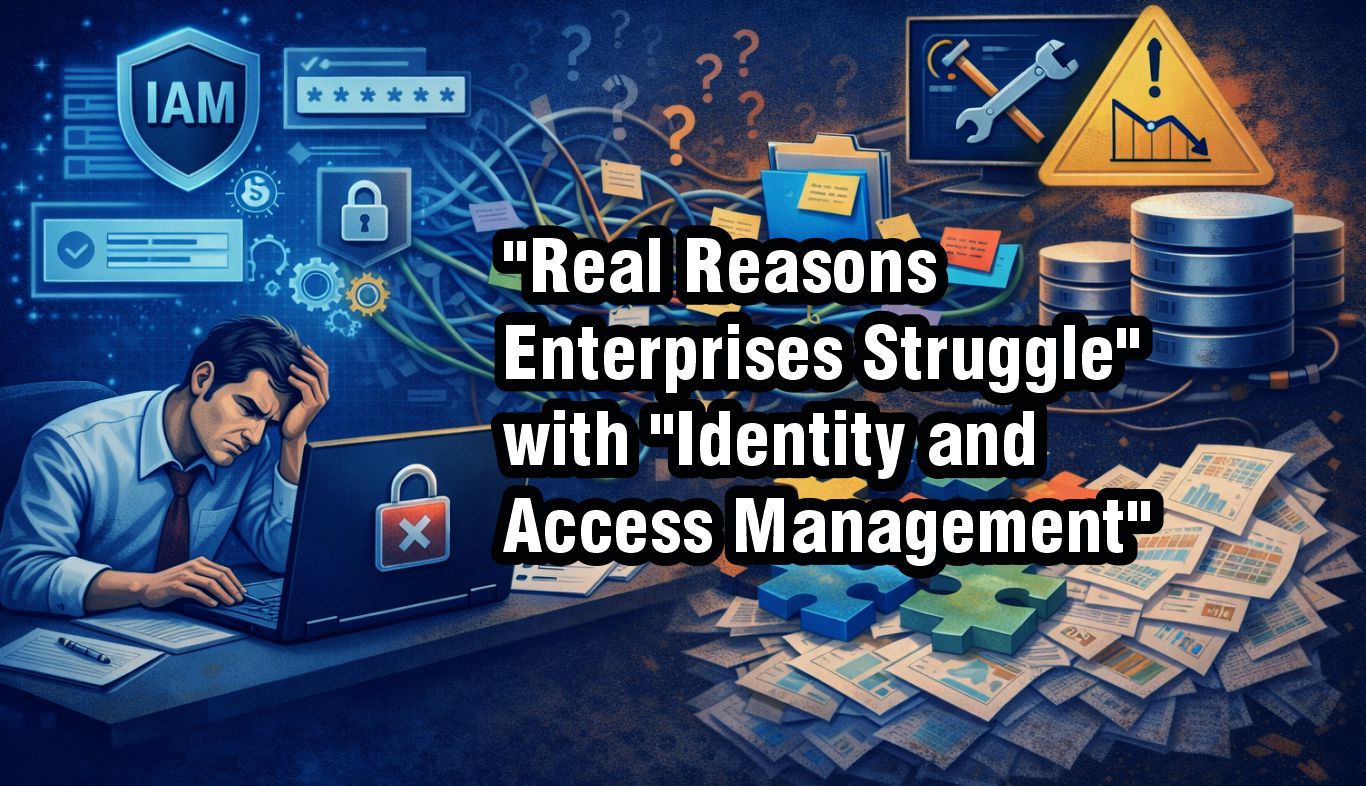
Identity and Access Management (IAM) is a critical pillar of modern enterprise security and digital transformation. It ensures the right users have the right access at the right time—while maintaining compliance and minimizing risk.
However, despite increasing investments in IAM implementation, many organizations struggle to achieve success.
Projects are delayed. Integration challenges arise. Costs escalate. And in some cases, implementations are abandoned altogether.
So, why do IAM projects fail?
This blog explores the most common IAM challenges and highlights the key reasons enterprises struggle with identity governance and access management implementation.
If you’re planning your IAM journey, start with a structured approach like building an enterprise IAM roadmap to avoid common problems.
IAM Is More Complex Than It Looks
At a surface level, IAM implementation appears straightforward—connect applications, define access policies, and manage identities.
IAM is deeply connected to:
- Enterprise IT infrastructure
- Legacy systems
- Business workflows
- Compliance requirements
This makes IAM deployment complexity one of the biggest challenges organizations face.
For example, a simple access request may involve multiple systems, approvals, and compliance checks—making even basic workflows complex to manage.
Top Reasons Why IAM Projects Fail
1. Legacy System Integration Challenges
One of the biggest barriers to successful IAM implementation is integrating with legacy systems.
Many enterprises rely on outdated platforms and custom-built applications that lack APIs or modern connectors. This creates major IAM integration challenges.
For instance, a large enterprise running an older ERP system may require custom development just to enable identity synchronization. This increases implementation time and introduces long-term maintenance risks.
As a result, integration becomes the biggest bottleneck in enterprise IAM deployment.
2. Underestimating IAM Implementation Complexity
IAM is not just a technical solution—it is a business transformation initiative involving multiple stakeholders.
Organizations often underestimate:
- Role modelling complexity
- Access governance requirements
- Cross-functional dependencies
This leads to poor planning, frequent scope changes, and delays in IAM project execution.
3. Over-Reliance on Custom Development
To overcome integration gaps, organizations often rely heavily on custom coding.
While this may solve short-term issues, it creates long-term challenges in IAM scalability and maintenance.
For example, building custom connectors for internal applications can make future upgrades difficult and increase dependency on specific developers.
This approach slows down innovation and increases operational risk.
4. Lack of a Clear IAM Strategy
Without a well-defined IAM strategy and roadmap, projects quickly lose direction.
Organizations often fail to define:
- Implementation phases
- Success metrics
- Business alignment
This results in fragmented execution and poor outcomes in identity governance implementation.
5. Poor Data Quality and Identity Governance Issues
IAM systems rely heavily on accurate identity data.
However, many organizations struggle with:
- Duplicate identities
- Inconsistent role definitions
- Outdated access data
This leads to incorrect provisioning, security risks, and compliance failures.
Improving identity data management is critical for successful IAM deployment.
6. Compliance and Audit Challenges in IAM
IAM plays a central role in regulatory compliance and access governance.
Without proper planning, organizations face:
- Incomplete audit trails
- Lack of visibility into access controls
- Inefficient reporting systems
This becomes especially critical in industries with strict compliance requirements.
7. Resistance to Change in IAM Adoption
IAM implementation often requires organizational change.
New workflows, approval systems, and access controls can create resistance among employees.
Without proper IAM change management strategies, adoption becomes a major barrier to success.
Summary
IAM failures are not just technical—they are strategic.
They stem from:
- Integration complexity
- Poor planning
- Data challenges
- Organizational misalignment
Understanding these issues is the first step toward building a successful enterprise IAM strategy.
Facing IAM Implementation Challenges?
Struggling with IAM integration complexity, slow deployment, or legacy system issues?
Discover how organizations are accelerating IAM implementation using modern, scalable approaches.
#IdentityAccessManagement #IAM #CyberSecurity #DigitalTransformation #IAMImplementation #LegacySystems #EnterpriseIT #ZeroTrust #AccessManagement #BookADemo