Furthermore, governance-driven IAM Deployment strategies allow enterprises to align identity policies with regulatory standards such as GDPR, HIPAA, SOX, and ISO compliance requirements. Automated compliance reporting significantly reduces audit preparation efforts while improving overall operational efficiency.
Managing user identities manually across multiple disconnected systems can be time-consuming and error prone. Modern Identity lifecycle management solutions streamline this process by automating the entire user journey — from onboarding and role changes to offboarding.
When a new employee joins an organization, modern IAM platforms can automatically provision accounts, assign appropriate permissions, and grant access to required applications based on predefined business roles. Similarly, access rights can be updated or revoked immediately when employees leave the company or change departments.
Integrating Identity lifecycle management with legacy systems ensures that even older applications follow modern security and compliance practices. This reduces delays, minimizes human error, and significantly lowers the risk of unauthorized access from inactive or forgotten accounts.
Automated lifecycle management helps employees get timely access to business applications, improving productivity. It also reduces IT workloads by automating access requests and updates.
A successful IAM Deployment is not simply about implementing technology — it is about enabling secure digital transformation across the enterprise. Organizations need scalable IAM architectures that can support evolving business needs while maintaining compatibility with existing systems.
Modern identity platforms provide flexible integration via APIs, connectors, and federation protocols, making it easier for organizations to update legacy applications. This enables incremental modernization, reducing both risk and cost while maintaining access to critical business tools.
A phased IAM Deployment strategy enables businesses to prioritize critical applications, gradually expand integration coverage, and minimize operational disruptions. This approach is especially valuable for enterprises with complex IT ecosystems where maintaining uptime and continuity is essential.
By connecting legacy infrastructure with modern identity platforms, organizations can embrace new technologies, support a mobile workforce, and increase security. This transition does not interrupt existing operations, ensuring stability throughout modernization.
As organizations continue to embrace hybrid work environments, cloud adoption, and digital transformation initiatives, identity will remain central to enterprise security strategies. Businesses can no longer afford disconnected systems, fragmented authentication processes, or outdated access management practices.
Bridging legacy systems with modern Identity Access Management platforms empowers organizations to build secure, scalable, and future-ready digital ecosystems. Through advanced Identity Governance, intelligent Role-based access control (RBAC), automated Identity lifecycle management, and strategic IAM Deployment, enterprises can transform identity from an operational challenge into a powerful business enabler.
The organizations that successfully modernize their identity infrastructure today will be better positioned to adapt to future security challenges, improve operational efficiency, and deliver seamless digital experiences for employees, partners, and customers alike.
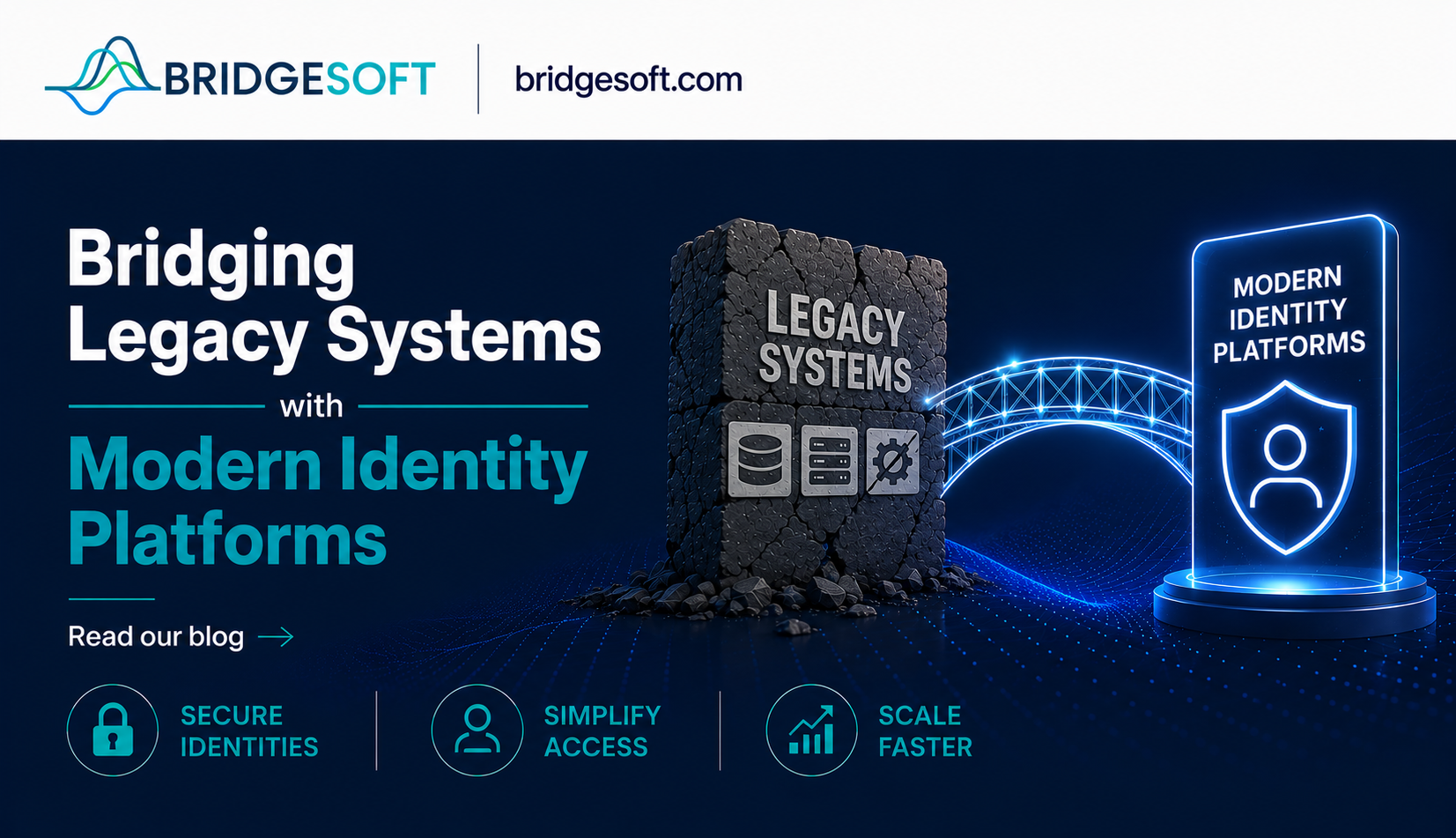
Legacy systems may still hold significant business value, but without modern identity integration, they can expose organizations to unnecessary security and operational risks. Modern IAM solutions provide the bridge enterprises need to connect traditional infrastructure with today’s dynamic digital environments.
By adopting intelligent Identity Access Management strategies, organizations gain stronger governance, simplified access control, improved compliance, and increased agility. These advantages come while preserving the value of existing systems and supporting future business growth.
The future of enterprise security is identity-driven, and the journey begins with bridging the gap between legacy systems and modern identity platforms.
Take the next step to modernize your identity infrastructure.
Empower your organization with secure, scalable, and future-ready IAM solutions that seamlessly integrate with your legacy systems.
Discover how modern identity platforms can streamline security, improve compliance, and accelerate your digital transformation journey.
#Bridgesoft #IdentityAccessManagement #IdentityGovernance #IAM #RBAC #IdentityLifecycleManagement #IAMDeployment #CyberSecurity #ZeroTrust #DigitalTransformation #LegacySystems #CloudSecurity #EnterpriseSecurity #AccessManagement #HybridCloud #Compliance #ITSecurity #ModernIAM #BusinessTransformation