In today’s digital enterprise, identity is one of the most important layers of security. Organizations invest heavily in authentication, access controls, identity governance, and security monitoring to ensure that the right people have access to the right resources.
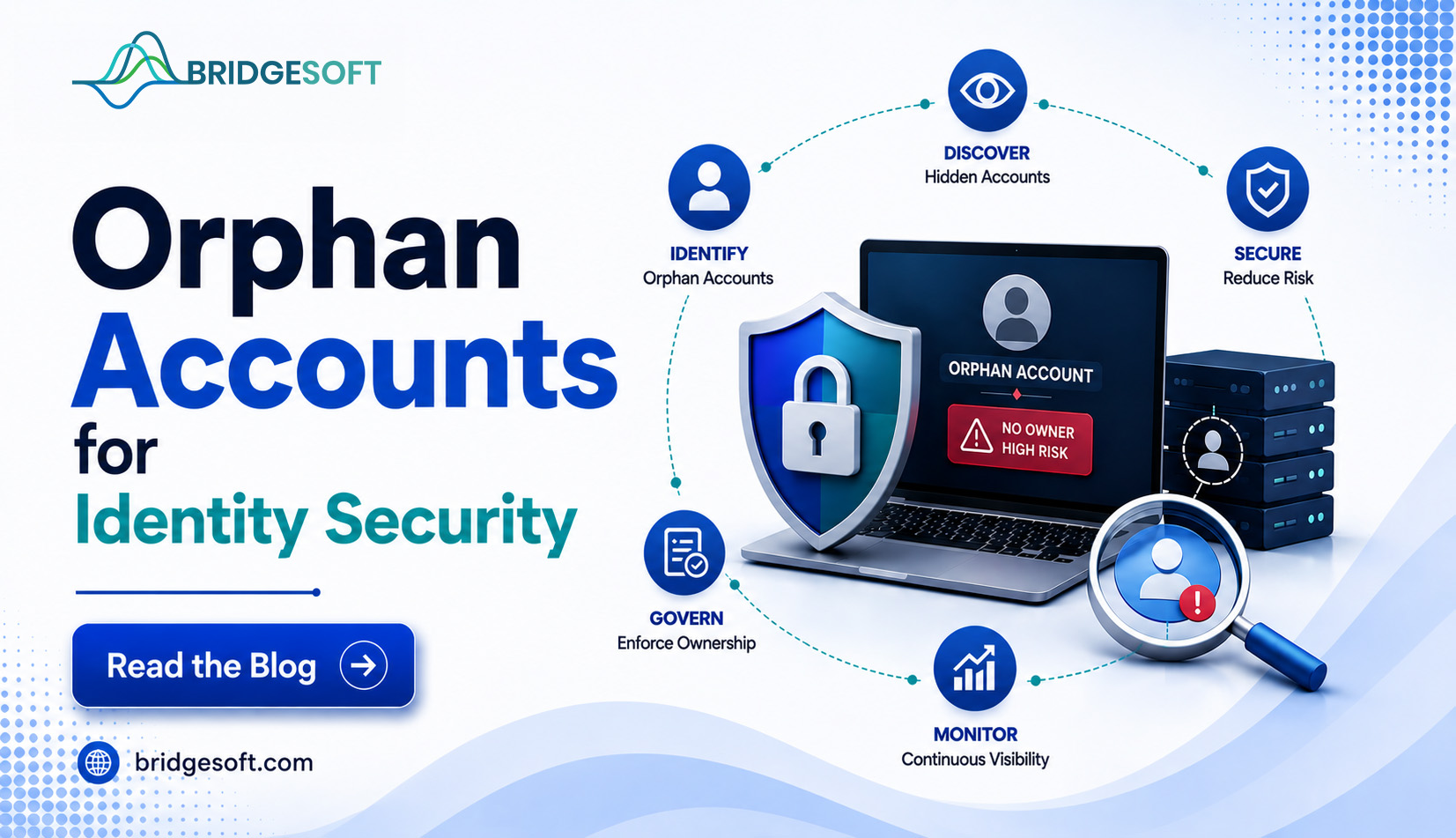
An orphan account is an active digital account that no longer has a valid owner or business justification. These accounts can remain after an employee leaves, a contractor’s engagement ends, an application is retired, or a service account is forgotten.
The real concern is that they may continue to hold access to applications, sensitive information, cloud environments, and business-critical systems without anyone actively responsible for them.
As organizations expand their digital environments, eliminating orphan accounts should become a fundamental part of a modern identity security strategy.
Orphan accounts are accounts that remain active even though their original owner is no longer associated with the organization, application, or business process.
They can appear in many forms.
An employee may leave the organization, but their application account remains active. If their credentials are valid, a contractor may finish a project. A temporary account created for a business initiative may never be removed after the initiative ends.
Beyond conventional human identities, orphan accounts can also exist. Service accounts, application identities, API credentials, and other Non-Human Identities can become orphaned when their associated applications or processes change.
Over time, these forgotten identities can accumulate across directories, SaaS applications, cloud platforms, and legacy systems.
What appears to be an inactive account can therefore become an unexpected security exposure.
Every active identity represents a potential pathway to enterprise resources.
When an account has no legitimate owner, organizations may not know whether its access is still required, whether its credentials are secure, or whether suspicious activity associated with the account is being investigated.
This creates several risks.
An attacker who obtains credentials associated with an orphan account may be able to access systems without immediately attracting attention. Because the account does not belong to an active employee, abnormal activity may also be harder to identify.
Orphan accounts can therefore contribute to:
The longer these accounts remain active, the greater the opportunity for misuse.
Eliminating unnecessary identities is therefore not simply an administrative task—it is a security control.
Effective Identity Governance is about maintaining visibility and control over who has access to what, why that access exists, and whether it remains appropriate.
Orphan accounts challenge all three questions.
If an account has no identifiable owner, organizations may struggle to establish business justification for its permissions. This makes access certification difficult and can create problems during security audits.
A strong governance framework should continuously identify accounts that:
By identifying these accounts and routing them through appropriate remediation processes, organizations can reduce identity risk while improving governance visibility.
The best way to eliminate orphan accounts is not to wait until they become a problem.
Organizations should build controls into Identity Lifecycle Management from the beginning.
A properly managed identity lifecycle covers the entire journey of an identity—from creation and access assignment through role changes, suspension, and eventual deprovisioning.
When an employee leaves the organization, their access should be removed promptly. When a contractor’s engagement ends, their accounts should be reviewed and disabled. Associated identities should be found and dealt with when applications are discontinued.
Automation can make these processes faster and more consistent.
Instead of relying on manual communication between HR, IT, application owners, and security teams, identity lifecycle processes can trigger appropriate access changes based on authoritative business events.
This reduces delays and significantly lowers the likelihood of accounts being forgotten.
Many organizations still depend on spreadsheets, email notifications, and periodic access reviews to identify inactive accounts.
While these processes may work at a small scale, they become increasingly difficult to manage as organizations grow.
Think of a company that has thousands of workers, contractors, apps, cloud resources, and service accounts. Manually determining which identities are still valid can quickly become overwhelming.
Manual processes can result in:
Modern Identity Access Management can help centralize identity information and automate many of these processes, giving security and IT teams greater visibility while reducing repetitive administrative work.
Cloud adoption adds another layer of complexity.
Businesses frequently use a variety of SaaS apps and cloud platforms, each with unique identities, access controls, and permissions.