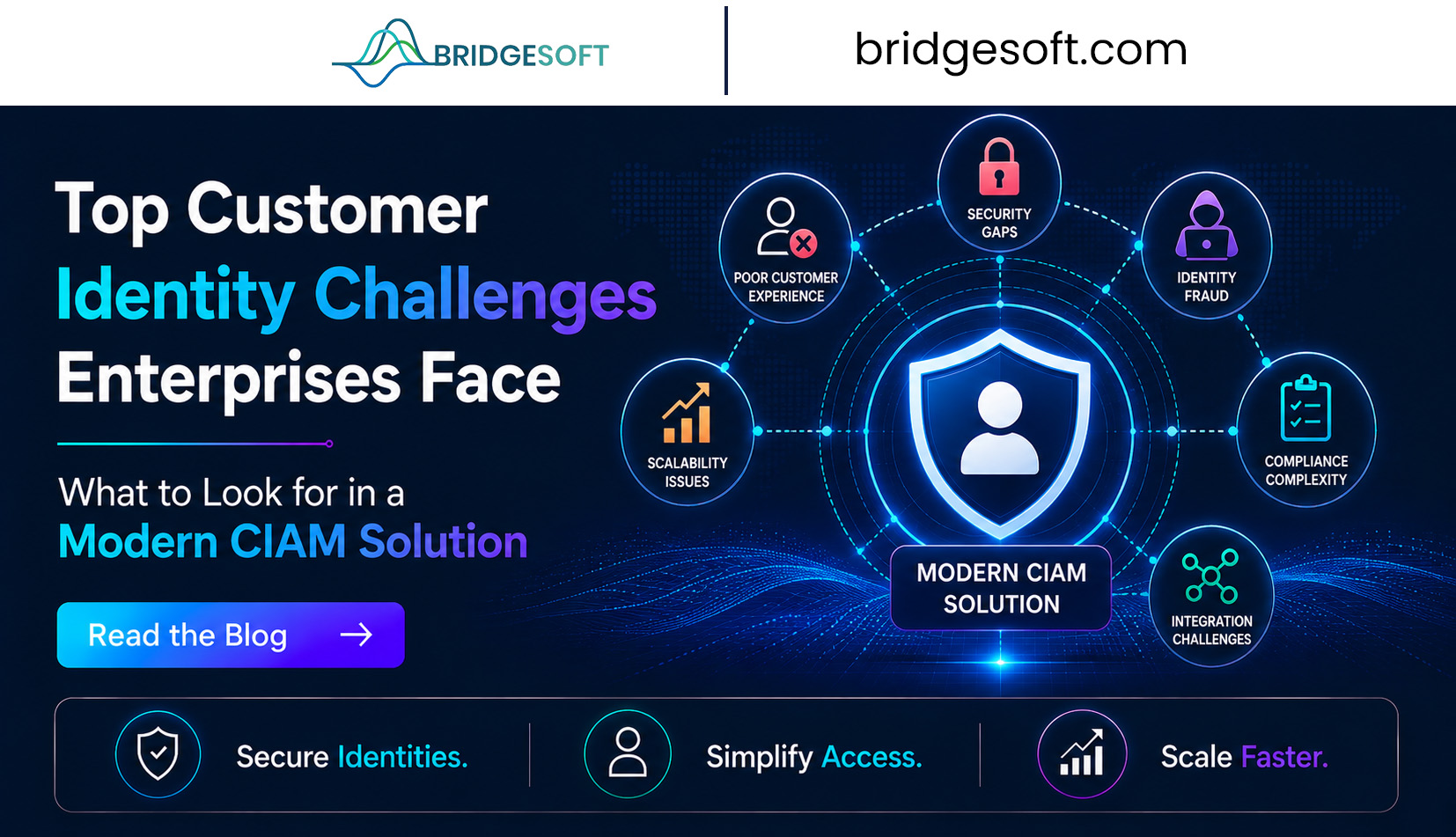
As organizations continue to expand their digital services, managing customer identities has become more complex than ever. Customers expect fast, secure, and personalized experiences across websites, mobile applications, and digital platforms, while businesses must safeguard sensitive information, meet regulatory requirements, and defend against evolving cyber threats.
This growing complexity has made Customer Identity and Access Management (CIAM) a strategic priority for enterprises. A modern CIAM solution helps organizations deliver seamless customer experiences while strengthening security and improving operational efficiency.
However, not every customer identity platform is equipped to address today’s challenges. Understanding the most common obstacles can help decision-makers evaluate solutions that are built for both current and future business needs.
Let’s explore five key customer identity challenges enterprises face—and what to look for in a modern Customer Identity and Access Management solution.
1. Balancing Security with Customer Experience
One of the biggest challenges organizations face is delivering robust security without creating unnecessary friction for customers. Lengthy registration forms, multiple password requirements, and complicated authentication processes often result in abandoned sign-ups, reduced engagement, and lower customer satisfaction.
Today’s users expect quick and intuitive access to digital services. If authentication becomes inconvenient, customers may choose a competitor that offers a smoother experience.
What to Look For
A modern Customer Identity Platform should provide:
- Simple and secure customer registration
- Single Sign-On (SSO)
- Social and federated login options
- Passwordless authentication
- Self-service account management
- Consistent experiences across web and mobile applications
The right platform should reduce login friction while maintaining strong identity protection.
Stay Ahead of the IAM Curve
Discover how identity integration platforms are shaping the future of enterprise IAM.
👉 Explore the Latest IAM Trends
2. Defending Against Identity Fraud and Weak Authentication
Cybercriminals increasingly target customer accounts through credential theft, phishing attacks, account takeover attempts, and automated bot attacks. To secure client identities, traditional username-and-password authentication is no longer adequate.
Organizations need authentication mechanisms that can adapt to changing risk levels while minimizing inconvenience for legitimate users.
What to Look For
When evaluating a CIAM solution, consider platforms that offer:
- Multi-Factor Authentication (MFA)
- Adaptive or risk-based authentication
- Passwordless authentication
- Identity verification capabilities
- Suspicious activity detection
- Protection against account takeover attacks
Strong authentication helps reduce fraud while increasing customer confidence in digital services.
3. Managing Compliance and Customer Privacy
Data privacy regulations continue to evolve worldwide. Organizations are expected to collect, manage, and protect customer information responsibly while giving individuals greater control over their personal data.
Failing to meet regulatory requirements can lead to financial penalties, reputational damage, and loss of customer trust.
What to Look For
An effective Customer Identity Management solution should support:
- Consent management
- Customer preference management
- Privacy policy enforcement
- Audit logging
- Data retention controls
- Compliance with regulations such as the CCPA and GDPR
Privacy should be embedded into the identity lifecycle rather than treated as a separate compliance activity.
Build a Stronger IAM Strategy
Discover practical approaches to modernize identity without unnecessary complexity.
👉 Explore the Enterprise IAM Roadmap
4. Scaling Customer Identity for Business Growth
As organizations introduce new applications, expand into new markets, or grow their customer base, identity systems must scale accordingly. Legacy identity platforms often struggle to handle increasing volumes of users and transactions, resulting in performance bottlenecks and operational challenges.
A future-ready identity platform should grow alongside the business without requiring extensive infrastructure changes.
What to Look For
A scalable Customer IAM solution should provide:
- Support for millions of customer identities
- High availability and reliability
- Cloud-ready architecture
- Flexible deployment options
- Multi-brand and multi-application support
- Consistent performance during peak traffic
Scalability ensures organizations can continue delivering excellent customer experiences as digital demand increases.
5. Integrating with Existing Business Applications
Customer identity rarely exists in isolation. Most enterprises operate a combination of cloud applications, legacy systems, CRM platforms, customer portals, APIs, and third-party services. Disconnected identity systems create administrative complexity, inconsistent customer experiences, and increased security risks.
Integration has become one of the most important evaluation criteria when selecting Identity Management Software.
What to Look For
A modern Customer Identity and Access Management platform should integrate seamlessly with:
- CRM platforms
- Customer portals
- Mobile applications
- API gateways
- Marketing automation platforms
- Cloud services
- Legacy business applications
- Identity providers
To speed up deployment and safeguard current technology investments, organizations should prioritize solutions that support open standards, APIs, and flexible integration capabilities.
Choosing a CIAM Solution That Supports Long-Term Success
Addressing these challenges requires more than simply adding authentication features. Organizations should evaluate how a Customer Identity Platform supports security, customer experience, governance, compliance, scalability, and integration as part of a unified identity strategy.
A well-designed CIAM solution can help organizations:
- Deliver seamless digital experiences.
- Strengthen customer trust
- Reduce identity-related fraud
- Improve regulatory compliance
- Simplify identity administration
- Support digital transformation initiatives.
- Scale with evolving business needs
Rather than focusing solely on individual features, enterprises should assess how well a platform aligns with their long-term business objectives and customer expectations.
Evaluate Customer Identity Platforms with Confidence
Selecting the right Customer Identity and Access Management solution is a strategic decision that influences both business growth and customer trust. By understanding the common challenges organizations face, decision-makers can develop a more structured approach to evaluating potential solutions.
Whether your organization is modernizing an existing identity platform or implementing CIAM for the first time, having a comprehensive evaluation framework can simplify the selection process and reduce implementation risks.
Discover the Essential Criteria for Evaluating CIAM Solutions
Choosing a customer identity platform requires balancing security, scalability, compliance, integration, and customer experience. Understanding what capabilities matter most can help organizations make more informed technology decisions.
The Gartner® Buyers Guide for Customer Identity Access Management report provides valuable guidance on the key capabilities and evaluation criteria organizations should consider when selecting a modern CIAM solution, helping technology leaders make confident, future-ready investment decisions.
Gartner, Buyer’s Guide for Customer Identity and Access Management, by Abhyuday, Rebecca Archambault, and Michael Kelley, 7 May 2025. GARTNER is a trademark of Gartner, Inc. and/or its affiliates.
#CIAM #CustomerIdentity #IdentitySecurity #IdentityManagement #CustomerExperience #Gartner #Bridgesoft #GartnerInsights #CustomerIdentityAndAccessManagement