For many organizations, implementing an Identity Access Management (IAM) solution is no longer just a cybersecurity initiative—it is a business transformation project. As enterprises embrace cloud applications, hybrid workforces, AI-driven automation, and digital ecosystems, managing identities securely has become essential for maintaining operational efficiency and protecting critical assets.
However, the success of an IAM project depends not only on selecting the right technology but also on choosing the right IAM Deployment approach. Even the most advanced platform can fall short if it is deployed without considering business priorities, existing infrastructure, integration requirements, and future growth.
Every organization has unique operational needs, regulatory obligations, and technology environments. A deployment strategy that works well for one enterprise may not be the right fit for another. Understanding the available deployment approaches and aligning them with business objectives is one of the most important decisions organizations can make during IAM Implementation.
Understanding Modern IAM Deployment Approaches
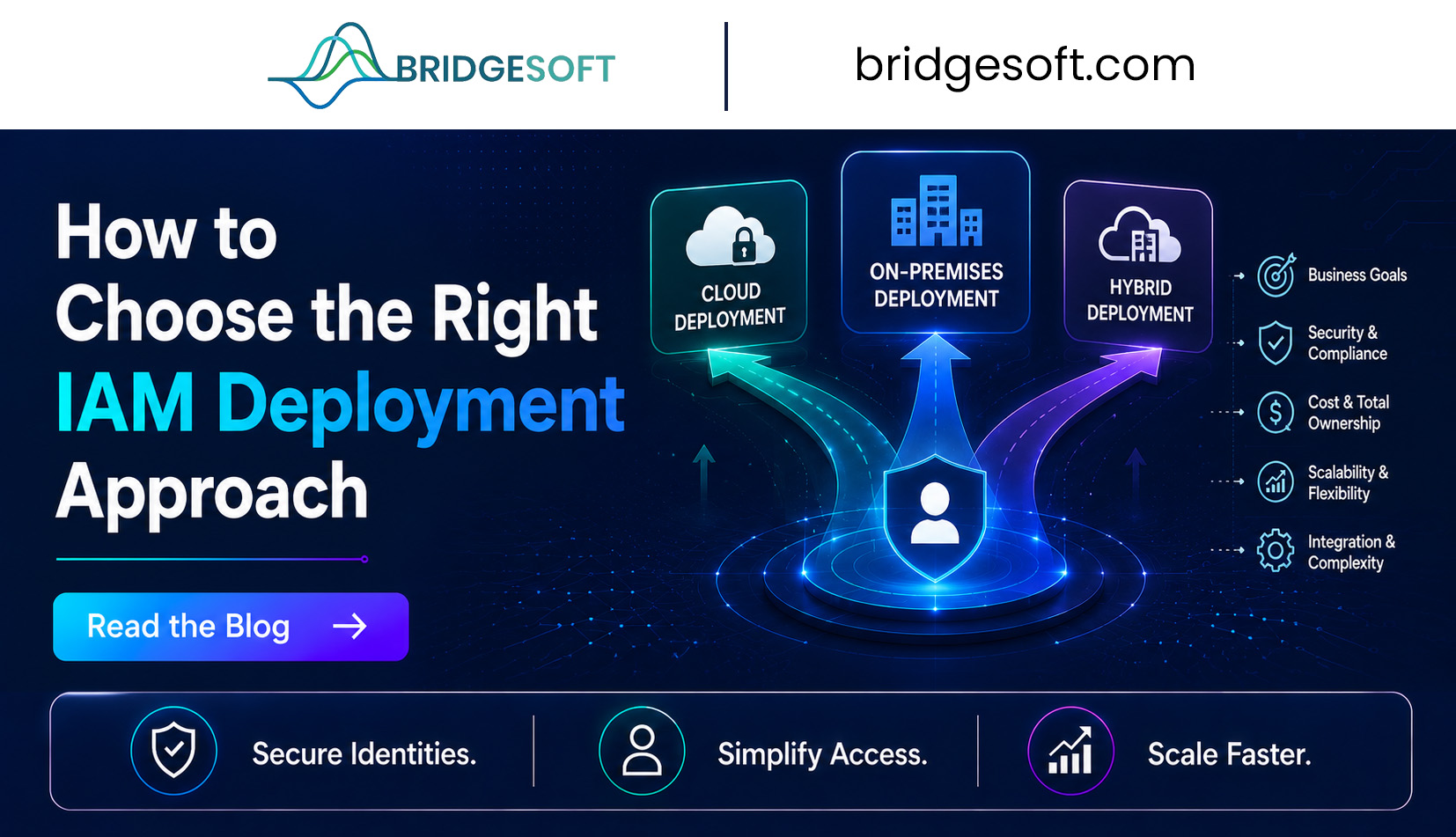
Today's organizations have more deployment options than ever before. Some prefer cloud-based platforms that offer rapid scalability and simplified management, while others continue to rely on on-premises environments to meet regulatory or operational requirements. Additionally, many businesses are implementing hybrid designs that combine both strategies.
Rather than asking which deployment model is universally better, organizations should ask which model best supports their security goals, compliance requirements, and long-term digital strategy.
A successful Identity Access Management program should provide flexibility, scalability, and consistent governance regardless of where identities or applications reside.
Factors That Influence IAM Deployment Decisions
Selecting the right deployment approach requires more than evaluating technical features. Organizations should first understand their business environment, application landscape, and operational priorities.
One of the most important considerations is infrastructure. Enterprises operating primarily in cloud environments may benefit from cloud-native IAM platforms. At the same time, organizations with critical on-premises systems may require a deployment model that integrates seamlessly with existing infrastructure.
Business growth is another key factor. An IAM deployment should not only address current requirements but also support future expansion, mergers, acquisitions, cloud adoption, and evolving workforce models.
Security and compliance requirements are also quite important. Organizations operating in highly regulated industries often need greater visibility, stronger governance controls, and detailed audit capabilities to meet industry standards.
Choosing an approach that aligns with both business and security objectives helps reduce implementation risk while improving long-term return on investment.
Align IAM Deployment with Business Goals
One of the most common reasons IAM Implementation projects struggle is that deployment decisions are driven solely by technology considerations.
An effective deployment strategy should support broader business objectives such as improving employee productivity, accelerating onboarding, enhancing customer experiences, simplifying compliance, and reducing operational costs.
When IAM initiatives are aligned with business priorities, organizations are more likely to gain executive sponsorship, improve user adoption, and achieve measurable business outcomes.
Identity should be viewed as a business enabler rather than simply a security control.
Build Enterprise IAM for Long-Term Scalability
Modern organizations require identity platforms that can evolve alongside changing business needs.
A well-designed Enterprise IAM strategy should support employees, contractors, partners, customers, applications, APIs, and emerging machine identities through a unified identity framework.
Scalability becomes particularly important as organizations expand into new markets, adopt additional cloud services, or integrate newly acquired business units.
Choosing a deployment approach that supports future growth reduces the need for costly redesigns while ensuring identity services remain consistent across the enterprise.
Rather than solving today's challenges alone, Enterprise IAM should establish a foundation for future innovation.
Simplify Integration Across the Enterprise
Identity environments rarely exist in isolation. Most organizations manage a combination of HR systems, ERP platforms, cloud applications, collaboration tools, customer portals, and legacy business applications.
An effective IAM deployment should simplify integration across these environments rather than add complexity.
Organizations should prioritize solutions that support open standards, flexible APIs, and scalable integration capabilities. This enables identities to flow consistently across systems while reducing administrative overhead.