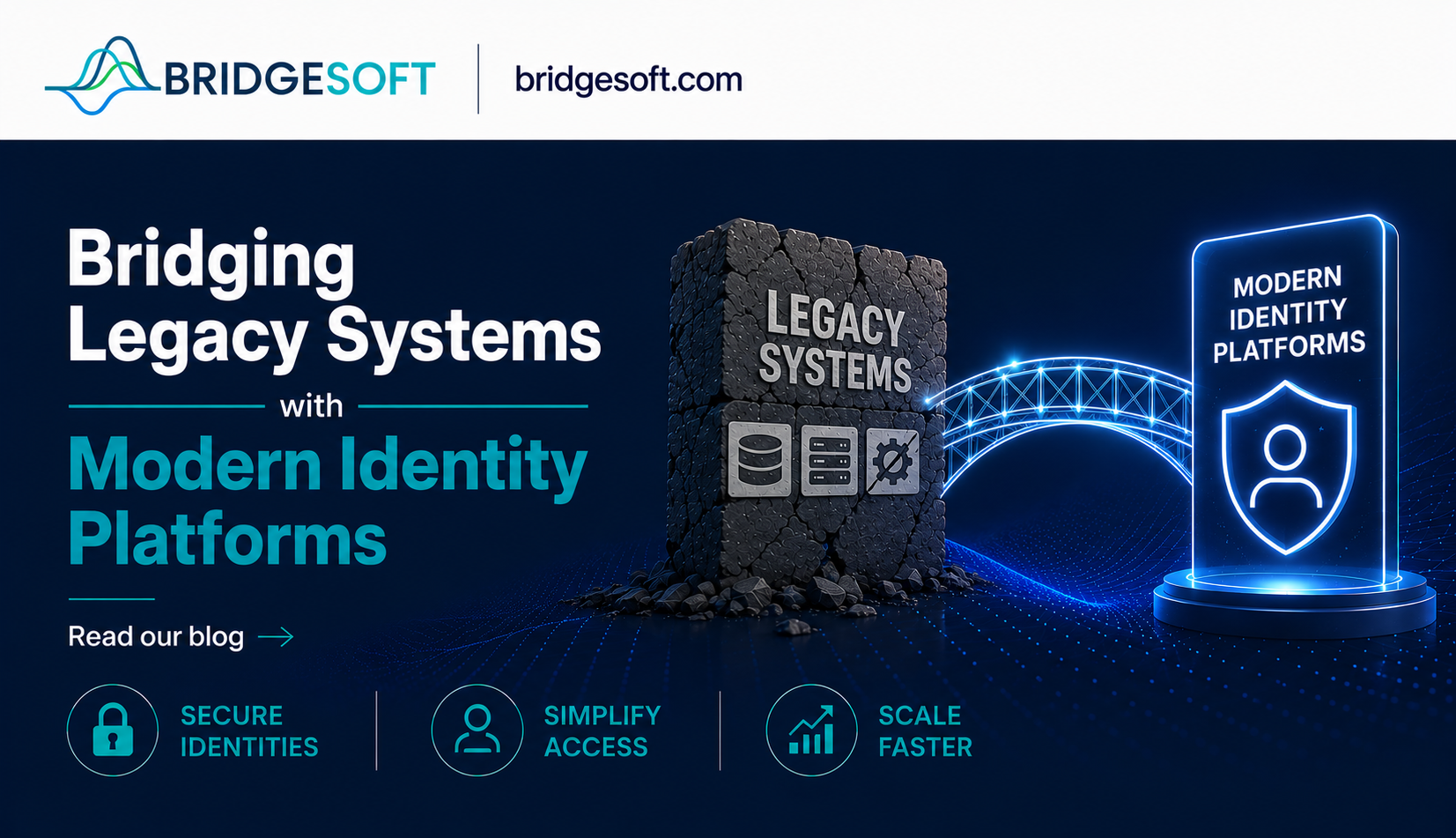
In today’s rapidly evolving digital ecosystem, organizations are under constant pressure to modernize their IT infrastructure while maintaining business continuity. Many enterprises rely on legacy systems that power essential operations developed years ago. While these systems provide significant operational value, they often struggle to meet current security expectations, cloud strategies, and compliance requirements. Modern Identity Access Management solutions help organizations overcome these challenges by modernizing security, improving compliance, and supporting continuous operations.
As organizations accelerate digital transformation initiatives, the challenge is no longer just about adopting new technologies. Instead, it is about ensuring seamless integration between existing legacy applications and modern identity platforms. To accomplish this, businesses require secure, scalable, and intelligent identity frameworks that can bridge the gap between traditional infrastructure and modern cloud ecosystems without disrupting ongoing operations.
To address these evolving needs, modern Identity Access Management platforms are designed to provide centralized control, enhanced visibility, and stronger security across hybrid environments. By integrating legacy systems with advanced identity solutions, organizations can create a unified access ecosystem that improves user experience, strengthens compliance, and reduces operational complexity.
Legacy systems often operate in isolated environments with outdated authentication methods, fragmented user directories, and limited support for modern security protocols. While these systems remain essential for many business processes, they can become major obstacles when organizations attempt to implement enterprise-wide digital security strategies.
Traditional systems typically lack advanced Identity Governance capabilities, making it difficult for organizations to monitor who has access to what resources, why that access exists, and whether it still aligns with current business requirements. Over time, unmanaged permissions and excessive access privileges increase security risks and create compliance challenges.
Additionally, legacy applications may not support cloud-native authentication mechanisms such as Single Sign-On (SSO), Multi-Factor Authentication (MFA), or federation standards. This creates fragmented user experiences in which employees manage multiple credentials across disconnected systems, ultimately reducing productivity and increasing the risk of credential misuse.
Modern identity platforms address these challenges by securely connecting old and new technologies. This enables businesses to enhance security, update access management procedures, and comply with new rules without completely redesigning their existing infrastructure.
Organizations today require more than just authentication systems. They need intelligent, policy-driven identity ecosystems that can manage users, applications, devices, and data access in real time. Modern Identity Access Management solutions deliver this flexibility by providing centralized identity controls across on-premises, cloud, and hybrid environments.
By integrating IAM solutions with legacy systems, organizations establish unified access policies, improved governance, and automated provisioning. This approach helps maintain ongoing operations while strengthening security, reducing manual processes, and meeting regulatory requirements.
One of the most critical benefits is the implementation of Role-based access control (RBAC). RBAC allows organizations to assign permissions based on user roles rather than managing access for each employee individually. This not only simplifies administration but also reduces the risk of unauthorized access by ensuring users receive only the permissions necessary for their responsibilities.
For example, employees in finance departments can automatically gain access to financial systems, while HR teams receive permissions aligned with employee management applications. When integrated with legacy systems, RBAC creates a structured and scalable security framework that minimizes manual intervention and reduces administrative overhead.
[What is Intelligent Identity Governance?]
As cyber threats continue to evolve, organizations must move beyond traditional perimeter-based security models. Identity has become the new security perimeter, making Identity Governance a critical component of enterprise cybersecurity strategies.
Modern identity platforms enable organizations to establish governance frameworks that continuously monitor user access, detect anomalies, and enforce compliance policies. Businesses obtain full visibility into their identity ecosystem through automated access assessments, approval workflows, and audit reporting.
When legacy systems are integrated into a centralized Identity Governance framework, organizations can eliminate access silos and create consistent security controls across all applications. This unified visibility helps security teams quickly identify orphaned accounts, excessive permissions, and outdated access rights that could otherwise become potential attack vectors.