Artificial intelligence is moving into the core of how businesses operate. What started as pilots and proofs of concept is quickly becoming part of everyday work. AI assistants, autonomous agents, intelligent applications, and automation platforms now access systems, retrieve information, interact with APIs, trigger workflows, and carry out tasks that once required direct human involvement.
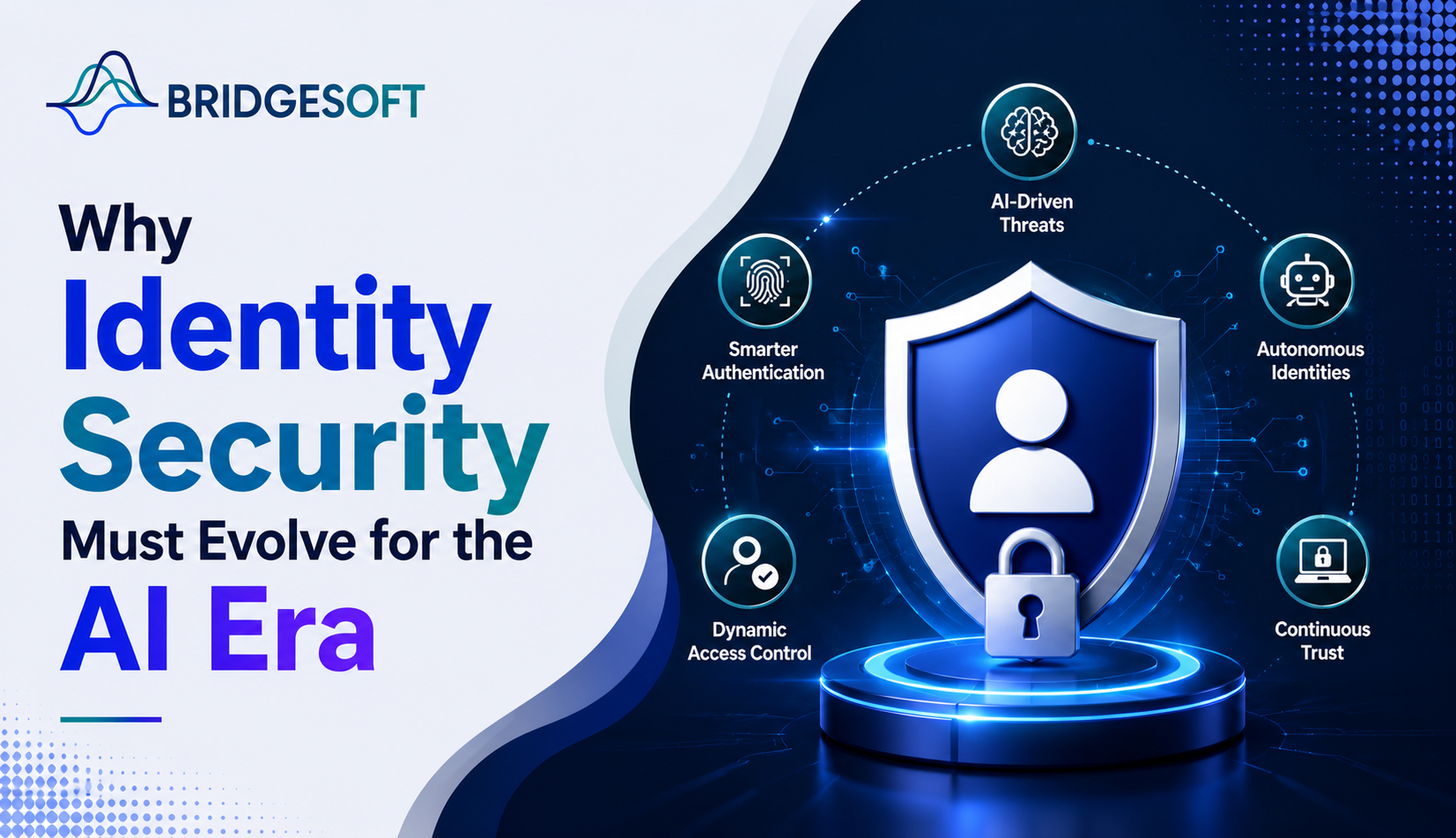
That shift introduces a challenge that many organizations are still working through identity security has traditionally been designed around people, while modern enterprises now also need to govern machine-driven identities such as service accounts, application identities, APIs, bots, and AI agents.
To avoid confusion, it helps to distinguish the three identity categories discussed in this article. Human identities are users such as employees, contractors, partners, and customers. Non-human identities are machine-based identities such as service accounts, application identities, APIs, bots, and automation accounts. AI agents are a newer, more autonomous type of non-human identity that can operate across systems with less direct human involvement.
For years, identity and access management focused on employees, contractors, partners, and customers. People authenticated into systems, received access based on their responsibilities, performed their work, and eventually had their permissions updated or removed.
AI agents operate differently from traditional human users because they can act continuously, connect across systems, and execute tasks with limited human involvement.
An AI agent can work around the clock, communicate with multiple applications simultaneously, pull data from different sources, invoke APIs, and initiate business processes with little or no human involvement. Existing service accounts and application identities already perform some of these machine-driven tasks, often with elevated privileges, which is why AI agents should be governed as part of the broader non-human identity landscape.
At the same time, identity-based attacks remain one of the most persistent security challenges. Microsoft reports analyzed roughly 38 million identity risk detections on average, and its Digital Defense Report found that 97% of identity attacks involved password-spray techniques. Those numbers matter in the AI era because AI agents and other non-human identities can expand the number of access paths attackers may try to exploit.
As AI adoption accelerates, organizations need to broaden their identity security programs beyond human users. Traditional IAM controls remain important, but they must now extend to AI agents, service accounts, application identities, APIs, bots, and other non-human identities from the start.
One of the biggest obstacles for security and IAM teams is visibility.
Most organizations already manage thousands, and in some cases millions, of identities spread across cloud environments, SaaS applications, databases, legacy systems, APIs, and infrastructure. Introducing AI agents into this ecosystem adds another layer of complexity.
Over time, identities tend to accumulate access.
A service account created for a specific application may still exist years later, even though its purpose has changed. An API identity may have permissions that extend far beyond what it requires. An AI agent may inherit access from an application or user account without the proper oversight needed to govern that access safely.
The result is often the same: identities become overprivileged, dormant, ownerless, or difficult to track.
This is exactly why non-human identity governance has become such an important security discipline: it provides organizations with a structured way to discover, assign ownership of, review, monitor, and control identities that are not tied to individual human users.
Organizations need clear answers to fundamental questions:
When those questions cannot be answered confidently, identity blind spots begin to emerge.
The challenge is not only the growing number of identities. It is also the speed and scale at which machine-driven identities can operate once they have access.
A typical employee may perform dozens or hundreds of actions during a workday. An automated identity, or AI agent, can execute thousands of actions in minutes, especially when connected to multiple systems.
That speed changes the risk equation.
A compromised machine identity or misconfigured AI agent can cause significant damage long before a traditional review process detects the issue. This risk becomes more severe when attackers exploit vulnerabilities to gain initial access and then use automation or AI-assisted techniques to move faster across systems.
The faster identities can act, the more important it becomes to continuously monitor and govern them.
Periodic access reviews still play a valuable role in identity governance. Managers review permissions, certify access, and remove privileges that are no longer justified.
The problem is that modern identity environments change constantly.
In today’s digital enterprise, identity is one of the most important layers of security. Organizations invest heavily in authentication, access controls, identity governance, and security monitoring to ensure that the right people have access to the right resources.
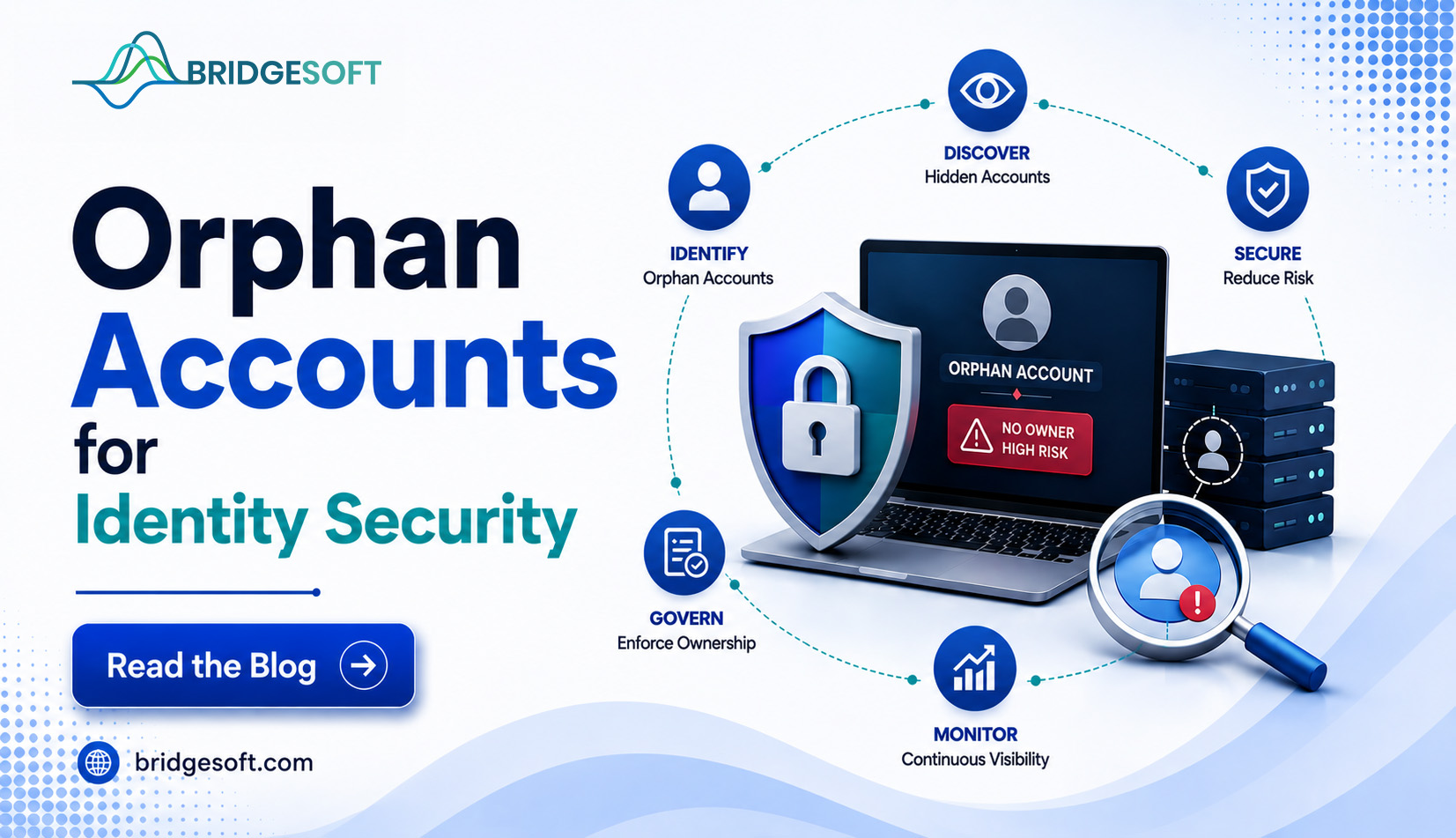
An orphan account is an active digital account that no longer has a valid owner or business justification. These accounts can remain after an employee leaves, a contractor’s engagement ends, an application is retired, or a service account is forgotten.
The real concern is that they may continue to hold access to applications, sensitive information, cloud environments, and business-critical systems without anyone actively responsible for them.
As organizations expand their digital environments, eliminating orphan accounts should become a fundamental part of a modern identity security strategy.
Orphan accounts are accounts that remain active even though their original owner is no longer associated with the organization, application, or business process.
They can appear in many forms.
An employee may leave the organization, but their application account remains active. If their credentials are valid, a contractor may finish a project. A temporary account created for a business initiative may never be removed after the initiative ends.
Beyond conventional human identities, orphan accounts can also exist. Service accounts, application identities, API credentials, and other Non-Human Identities can become orphaned when their associated applications or processes change.
Over time, these forgotten identities can accumulate across directories, SaaS applications, cloud platforms, and legacy systems.
What appears to be an inactive account can therefore become an unexpected security exposure.
Every active identity represents a potential pathway to enterprise resources.
When an account has no legitimate owner, organizations may not know whether its access is still required, whether its credentials are secure, or whether suspicious activity associated with the account is being investigated.
This creates several risks.
An attacker who obtains credentials associated with an orphan account may be able to access systems without immediately attracting attention. Because the account does not belong to an active employee, abnormal activity may also be harder to identify.
Orphan accounts can therefore contribute to:
The longer these accounts remain active, the greater the opportunity for misuse.
Eliminating unnecessary identities is therefore not simply an administrative task—it is a security control.
Effective Identity Governance is about maintaining visibility and control over who has access to what, why that access exists, and whether it remains appropriate.
Orphan accounts challenge all three questions.
If an account has no identifiable owner, organizations may struggle to establish business justification for its permissions. This makes access certification difficult and can create problems during security audits.
A strong governance framework should continuously identify accounts that:
By identifying these accounts and routing them through appropriate remediation processes, organizations can reduce identity risk while improving governance visibility.
The best way to eliminate orphan accounts is not to wait until they become a problem.
Organizations should build controls into Identity Lifecycle Management from the beginning.
A properly managed identity lifecycle covers the entire journey of an identity—from creation and access assignment through role changes, suspension, and eventual deprovisioning.
When an employee leaves the organization, their access should be removed promptly. When a contractor’s engagement ends, their accounts should be reviewed and disabled. Associated identities should be found and dealt with when applications are discontinued.
Automation can make these processes faster and more consistent.
Instead of relying on manual communication between HR, IT, application owners, and security teams, identity lifecycle processes can trigger appropriate access changes based on authoritative business events.
This reduces delays and significantly lowers the likelihood of accounts being forgotten.
Many organizations still depend on spreadsheets, email notifications, and periodic access reviews to identify inactive accounts.
While these processes may work at a small scale, they become increasingly difficult to manage as organizations grow.
Think of a company that has thousands of workers, contractors, apps, cloud resources, and service accounts. Manually determining which identities are still valid can quickly become overwhelming.
Manual processes can result in:
Modern Identity Access Management can help centralize identity information and automate many of these processes, giving security and IT teams greater visibility while reducing repetitive administrative work.
Cloud adoption adds another layer of complexity.
Businesses frequently use a variety of SaaS apps and cloud platforms, each with unique identities, access controls, and permissions.
Identity is no longer a background function. It’s a strategic driver of security, user experience, digital transformation, and even competitive advantage. As cloud adoption, remote work, and regulatory demands reshape the enterprise, identity has emerged as the control plane for the modern organization.
But this landscape is far from static. The next evolution of identity is already underway, shaped by emerging technologies, evolving threats, and rising expectations from users and regulators alike.
Understanding what’s next is essential for IAM leaders, CISOs, and IT decision-makers looking to future-proof their programs. This post explores the key trends that will define the future of identity and what organizations can do now to prepare.
Traditional identity models rely on centralized providers directories, identity platforms, or federated systems to verify and store credentials. But with increasing concerns about data privacy, portability, and control, decentralized identity (DID) is gaining traction.
In a decentralized identity ecosystem, individuals manage their own credentials using digital wallets. Verifiable credentials such as proof of employment, age, or certifications are issued by trusted authorities and presented only when needed. No centralized store, no password reuse, and no unnecessary collection of PII.
This model holds enormous promise:
However, adoption will take time. Standards like W3C’s DID and Verifiable Credentials are still maturing, and interoperability challenges remain. But make no mistake: user-centric identity is coming, and it will shift how organizations think about onboarding, access, and trust.
Artificial Intelligence is rapidly transforming cybersecurity and identity is no exception. On one side, IAM platforms are integrating AI to drive efficiency and enhance risk detection. On the other, identity systems are becoming core data sources for AI models.
AI-powered IAM brings benefits such as:
But there’s also a growing recognition that identity data itself is a critical input to AI governance. As enterprises deploy AI models, identity will help answer questions like: Who trained this model? Who can modify it? Who is responsible for its outputs?
Going forward, expect to see tighter integration between identity governance and AI governance especially in regulated industries where explainability and accountability are key.
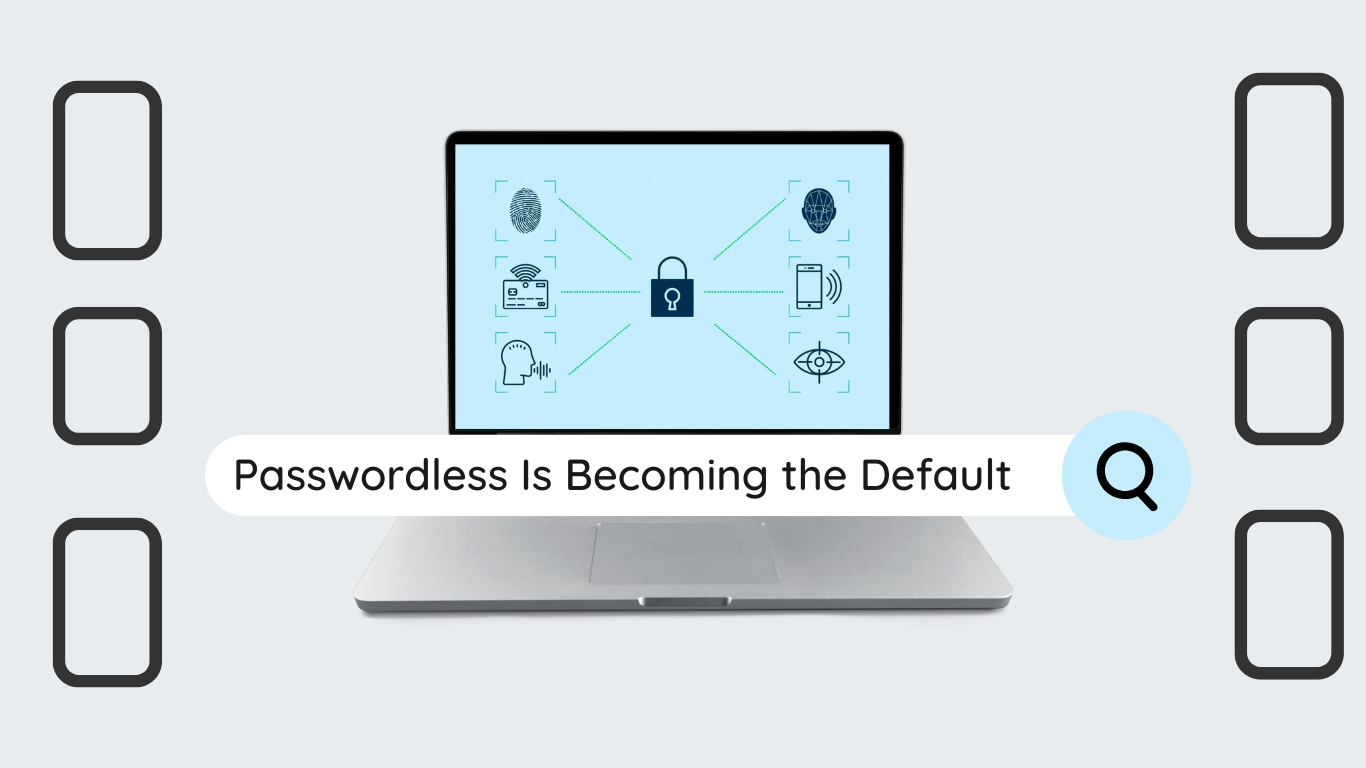
Passwords have long been the weakest link in security. They’re reused, forgotten, phished, and frequently compromised. Organizations have responded with MFA, but even that’s not immune to sophisticated attacks like MFA fatigue and phishing kits that intercept codes.
Now, a true shift is underway: passwordless authentication is moving from aspiration to standard.
Technologies like FIDO2/WebAuthn, biometric authentication, and device-based identity are allowing organizations to eliminate passwords altogether replacing them with cryptographic credentials stored on user devices.
This improves:
Adoption is growing, especially in customer-facing apps and modern workforce platforms. Within the next few years, passwordless will likely become the norm and organizations still reliant on passwords will find themselves increasingly exposed.
As discussed in earlier posts, non-human identities including APIs, service accounts, bots, and containers now outnumber human users in many environments. Yet governance for these identities is still catching up.
In the future, expect to see:
Organizations that delay governance in this area are inviting risk. Just as we’ve matured our processes around joiners, movers, and leavers for people, we must now do the same for code.
As threat actors increasingly target identities rather than infrastructure, Identity Threat Detection and Response (ITDR) is emerging as a key pillar of modern security.
ITDR involves detecting, investigating, and responding to identity-related threats such as privilege escalation, lateral movement via service accounts, and misuse of legitimate credentials.
Expect to see:
Identity isn’t just about provisioning anymore. It’s about active defense and ITDR is how organizations will stay ahead of adversaries.
Historically, compliance was a periodic effort to prepare for the audit, run the reports, close the gaps. But as regulations evolve and expectations shift, compliance is moving toward real-time, continuous assurance.
This requires:
IAM platforms will need to evolve from systems of record to systems of accountability, capable of proving compliance on demand and adapting to new rules as they emerge.
The future of identity is not a single destination it’s a constantly evolving landscape shaped by technology, threat actors, business needs, and user expectations. As identity becomes more decentralized, intelligent, and embedded into everything we do, the organizations that thrive will be those that embrace change, invest in innovation, and treat identity as strategic infrastructure.
Identity and Access Management (IAM) is the backbone of enterprise security, ensuring the right people have the right access at the right time. But too often, IAM teams struggle to prove their value beyond basic compliance checkboxes.
If you're still measuring success by the number of roles created or users onboarded, you're missing the bigger picture. Real IAM success isn’t about system outputs; it’s about business outcomes.
Why Most IAM Metrics Miss the Mark

These metrics might look good on a dashboard, but they don’t answer the critical questions executives care about:
✔ Are we reducing risk?
✔ Are we improving efficiency?
✔ Are we enabling the business?
Without meaningful metrics, IAM teams get stuck in a cycle of "keeping the lights on" instead of driving strategic value.
The 3-Tier Framework for IAM Metrics That Matter
To shift from tactical reporting to business-aligned measurement, focus on three key areas:
1. Operational Metrics: Is IAM Running Smoothly?
These track efficiency and system health:
Example: A company reduced access provisioning from 5 days to 2 hours by automating workflows cutting onboarding costs by 30%.
2. Risk & Compliance Metrics: Are We Actually Safer?
These prove security effectiveness:
Example: After implementing just-in-time access, one firm reduced standing privileged accounts by 75% dramatically shrinking their attack surface.
3. Business Impact Metrics: Does IAM Drive Value?
These connect identity to strategic goals:
Example: A retailer’s streamlined customer IAM (CIAM) platform boosted checkout completion by 15% adding millions in revenue.
Turning Data into Decisions
Tracking metrics is useless unless they drive action. Here’s how to operationalize them:
IAM isn’t just about security it’s a business accelerator. The right metrics will help you:
"What gets measured gets improved." Start measuring what matters.
Ready to elevate your IAM metrics? Contact us today and let’s turn identity into your competitive advantage.
Imagine your phone, computer, or favorite app being compromised, wouldn’t you want an immediate solution?
Well, lucky for you, there is one! There’s a digital detective whose job is to figure out who did it, how they did it, and what they accessed. That’s what Cyber Forensics is all about, solving digital crimes by collecting and analyzing evidence from electronic devices.
Now, here’s where IAM, short for Identity and Access Management, becomes a hero:
IAM is like the bouncer at a VIP party. It decides who gets in, what rooms they can enter, and what they’re allowed to do. And when something goes wrong, IAM keeps a record of every door opened and by whom. Think of it as having a detailed guest list and security footage at every door.
This makes Cyber Forensics faster and more accurate because investigators can trace digital footprints back to specific users or actions. Meaning that we are able to let you rest, knowing that you’re safe.
So in today’s world of constant digital threats, IAM isn’t just about security. Let’s imagine a scenario together so that you will know what to do in a situation where Cyber Forensics is needed. Because IAM is also about catching criminals.
You have just received an email from our cybersecurity team, telling you and the team to be cautious in opening suspicious emails or answering any call that requests us to log in to the link(s) that they provide.
Everyone began to question what was happening and found that there was a threat actor (TA) attempting to impersonate an IT support personnel, asking employees to log in to a link in order to get their user ID and password, also known as a user's login credentials.
The TA can use the login of whoever falls for the trick and get confidential company information. We were all relieved to find that our identity and access management (IAM) security awareness program was able to save the company from the cyber attack.
So, what exactly happened? The TA was able to convince one employee to create a login, hence getting access to their credentials. The TA then tried to log in to our company’s application from his device, in which he was prompted to use two-factor authentication.
The user was told to give him the authentication code which raised a red flag. It is
known that people are not meant to share the code with anybody especially for something important. The user immediately hung up and reported the incident to our security team…
This is known as an outsider threat, which happens when a person outside of a secure system manages to get in and essentially steal, change or block access to data.
However, companies must also be wary of the people on the inside, individuals within the system who misuse their access. IAM systems enhance digital forensics by monitoring user access, enforce stricter controls, and strengthen security overall.
IAM and Cyber Forensics play hand in hand together, and with this example above, it’s clear it’s more common than we think.
Every time you log into your email, swipe your access card at work, or even unlock your phone with Face ID, IAM is quietly working in the background. It’s making sure you are really you, and that you’re only accessing what you’re supposed to.
But when something goes wrong, like a data breach or unauthorized access, Cyber Forensics steps in. And thanks to IAM logs and records, investigators can follow the digital breadcrumb trail. They can pinpoint who accessed what, when, from where, and even what device they used.
This partnership is crucial, especially today when cybercrimes are becoming more sophisticated. Without IAM, forensic experts would be digging through a digital haystack without a clue. But with IAM? It’s like turning on the lights in a dark room.
Together, IAM and Cyber Forensics don’t just help respond to attacks, they help prevent them, by tightening access controls and spotting unusual behavior before it becomes a bigger problem.
So the next time you log in somewhere or get asked to verify your identity, remember: that tiny inconvenience is actually part of a much bigger system working to keep you, and your data safe.
The gaming industry is a colossal entertainment force, with millions worldwide enthralled by online games. This phenomenal growth, however, brings a rising tide of online security threats. Hackers constantly seek ways to exploit vulnerabilities in games and platforms, making robust security measures crucial for game developers and publishers to safeguard their players.
One of the most concerning issues is identity theft. Hackers can steal player accounts, wreaking havoc by cheating, pilfering in-game items, or even making real-world purchases. This can be devastating for players, potentially leading to lost accounts or compromised financial information.
Another major threat is denial-of-service (DoS) attacks. These bombard game servers with traffic, rendering them inaccessible to legitimate players. DoS attacks disrupt gameplay and cause frustration, potentially damaging a game's reputation.
Here's a glimpse into the industry's scale to emphasize the importance of security:

Bridgesoft, a company specializing in identity and access management (IAM) services, offers solutions specifically designed for the gaming industry. IAM solutions address online security challenges by providing features like:

By implementing IAM solutions, game developers and publishers can create a safer and more secure environment for their players. This safeguards them from identity theft, DoS attacks, and other online security threats.
There's more to the benefits of IAM solutions. They can also enhance the player experience by:
If you're a game publisher, prioritizing IAM solutions is vital to protecting your players and your business. Bridgesoft provides a variety of solutions to cater to your specific requirements. For more info on the gaming do check this.
To learn more about how Bridgesoft's IAM solutions can help you secure your game, visit our website or contact us directly.
The digital age demands a flawless Identity and Access Management (IAM) strategy. Businesses today rely on Okta, a leading IAM solution, to safeguard access and data across their ecosystem. But for maximum impact, Okta needs a bridge to connect it seamlessly with your existing workflows and applications. That's where Bridgesoft steps in.
We are integration specialists, and our expertise lies in bridging the gap between Okta and your business-critical systems. This powerful combination unlocks a future-proof IAM strategy that not only bolsters security but also streamlines operations and user experience.
Trending Topics in IAM: Charting the Course for Success
The IAM landscape is constantly evolving. Here are some of the hottest trends to consider when crafting your IAM roadmap:
The Bridgesoft + Okta Advantage: A Symbiotic Security Solution
By integrating Bridgesoft with Okta, you unlock a future-proof IAM strategy that delivers:
Bridge the Gap to a Secure Future
At Bridgesoft, we understand the critical role of a robust IAM strategy. Our integration experts can bridge the gap between your existing systems and Okta, empowering you to secure your digital landscape, optimize workflows, and unlock the full potential of your workforce.
Contact us today for a free consultation and discover how Bridgesoft can help you build a future-proof IAM strategy with Okta.
In the rapidly changing world of cybersecurity, where digital threats are ever-present challenges, the Zero Trust framework emerges as a powerful protector. It goes beyond industry jargon and represents a proactive and flexible security strategy that questions traditional assumptions. This article aims to explore the key aspects of Zero Trust, highlighting its departure from typical security methods and how it comprehensively strengthens organizations.
Breaking Down the Core Principles of Zero Trust
Essentially, Zero Trust is a shift in how we think about security – moving away from the idea that everything within the network is inherently safe. Think of it as a vigilant guard carefully examining every user, device, and transaction, regardless of their location or assumed trustworthiness. It's not about blindly trusting; instead, it's about consistently verifying and ensuring security.
Identity Takes the Center Stage
Zero Trust is like a theater, and in this play, identity steals the spotlight. Each user and device is a character, and the plot revolves around rigorous identity verification. It's not just about having a ticket; it's about proving you belong on the stage.
Least Privilege Access
Imagine your organization as a grand library, with different sections and restricted access to rare manuscripts. Zero Trust operates on the principle of least privilege access – users get access only to the specific shelves they need, preventing them from wandering into restricted literary realms.
Micro-Segmentation: Digital Compartments
Now, think of your network as a bustling city. Zero Trust introduces micro-segmentation, creating digital districts with controlled entry points. This way, even if a security breach occurs in one district, the damage is contained, much like a firebreak in a city planning strategy.
Continuous Vigilance
In the world of Zero Trust, there's no room for a digital siesta. Continuous monitoring is the night watchman, tirelessly observing network traffic, user actions, and device behavior. Any irregularity sets off the alarms – an unwavering eye on the digital landscape.
Implementing Zero Trust: A Play in Three Acts
Act I: Rethinking the Security Perimeter
In the traditional security play, a well-defined perimeter was the stage. But in the Zero Trust drama, there's a shift. It's about defining a dynamic security perimeter based on critical assets and data, regardless of their geographical location.
Act II: Architecting the Zero Trust Castle
Imagine your network as a medieval castle, and Zero Trust as the architectural blueprint for impenetrable fortifications. Identity and access management (IAM) becomes the castle gate, encryption the secret passage, and network segmentation the inner keep – all orchestrated to uphold the Zero Trust framework.
Act III: Continuous Monitoring - The Digital Sentinel
Now, envision your organization as a thriving city under the watchful eyes of a sentinel. Deploying multifactor authentication (MFA) becomes the city gates, strict access controls act as the vigilant guards, and network segmentation the city walls. And, of course, there's a team of digital sentinels – network monitoring tools – patrolling the virtual streets for any signs of trouble.
Zero Trust in Real-Life Scenarios
Let's step out of the metaphorical theater and into the real world. Picture a remote employee logging in from a cafe. In a traditional security play, once inside the corporate network, they might be deemed trustworthy. But with Zero Trust, every login, every access request, is met with scrutiny. Multifactor authentication kicks in – a virtual bouncer ensuring only the authenticated gain entry.
Now, imagine an employee attempting to access sensitive financial data. In the traditional narrative, if they had access privileges, the doors would open wide. However, in the Zero Trust saga, those doors are guarded by strict access controls. The employee's access is limited to what's essential for their role, reducing the risk of data exposure.
In a hypothetical breach scenario, Zero Trust operates like a digital emergency response team. Micro-segmentation kicks into action, isolating the compromised area, while continuous monitoring tools raise the alarm, prompting swift response and remediation.
Educating the Heroes: Your Employees
In the Zero Trust narrative, employees aren't just bystanders; they are the heroes. A security-aware culture becomes the guiding light. Regular training sessions, akin to rehearsals, empower employees to understand the significance of their roles in upholding the Zero Trust principles. They become the vigilant actors in this ongoing cybersecurity drama.
Conclusion: Trust Less, Secure More
As the curtain falls on our exploration of Zero Trust, it's evident that this framework is not just a theoretical concept – it's a living, breathing strategy in action. Safeguarding your organization from the inside out, Zero Trust reshapes the cybersecurity narrative. It's not about locking doors and building walls; it's about dynamic defense, continuous vigilance, and empowering your workforce to be the guardians of your digital realm. In a world where digital threats are the antagonists, Zero Trust emerges as the hero, ensuring that trust is earned, not assumed. In the play of cybersecurity, it's time to trust less and secure more.
In today's digital landscape, identity security has become a top priority for organizations. To safeguard sensitive information and prevent unauthorized access, many organizations have turned to Multi-Factor Authentication (MFA) as a key component of their Identity Access Management (IAM) systems. While MFA offers additional layers of security, its effectiveness and long-term viability in the ever-evolving threat landscape warrant critical examination. In this article, we will delve into the evolving landscape of MFA in IAM systems, exploring both the benefits and challenges associated with this approach.
1. The Benefits of MFA in IAM Systems
MFA undeniably brings certain advantages to the table. By requiring multiple factors for authentication, such as passwords, biometrics, or security tokens, MFA adds an extra layer of protection against unauthorized access. It reduces the likelihood of successful brute force attacks, credential theft, and phishing attempts, significantly bolstering the overall security posture. MFA provides organizations with an opportunity to mitigate the risks associated with weak or compromised passwords, ensuring that even if one factor is compromised, the additional authentication factors provide an additional barrier.
2. The User Experience Factor
One of the critical aspects to consider when implementing MFA in IAM systems is the impact on the user experience. While security is paramount, organizations must strike a balance between security and user convenience. The additional steps involved in the authentication process can sometimes lead to user frustration, particularly when MFA is poorly implemented or lacks user-friendly options. Organizations need to prioritize user education and adopt MFA solutions that minimize friction while maintaining a high level of security. Failure to address the user experience aspect can result in resistance to MFA adoption and potential workarounds that compromise security.
3. The Complexity of Integration
Integrating MFA into existing IAM systems can be a complex process. Organizations may face challenges in terms of compatibility with legacy systems, the need for additional infrastructure, and the complexities of managing multiple authentication factors. Seamless integration between MFA and IAM systems is crucial to ensure a streamlined user experience and efficient security management. It requires careful planning, robust implementation strategies, and ongoing monitoring and maintenance to keep up with evolving technology and threat landscapes.
The process involves seamlessly incorporating MFA mechanisms, such as biometrics, smart cards, or mobile authenticator apps, into the existing authentication infrastructure. This integration requires careful planning, considering compatibility with legacy systems, assessing scalability and performance implications, and ensuring a smooth user experience. By successfully integrating MFA into IAM systems, organizations can bolster their security posture, reduce the risk of unauthorized access, and provide an additional layer of protection for sensitive data and resources.
4. Evolving Threat Landscape
While MFA can provide a strong defense against many forms of cyberattacks, it is not impervious to evolving threats. Sophisticated attackers have devised methods to bypass or compromise MFA systems through tactics such as SIM swapping, social engineering, or malware attacks. Organizations must remain vigilant and keep abreast of the latest security measures to counter these emerging threats. Continual monitoring, threat intelligence, and proactive security measures should complement the implementation of MFA in IAM systems to maintain a strong defense against evolving attack vectors.
Conclusion
MFA in IAM systems has undoubtedly made significant strides in strengthening identity security. The additional layers of authentication factors provide an added barrier against unauthorized access and enhance overall security posture. However, organizations must critically evaluate the implementation challenges, user experience implications, and the ever-evolving threat landscape to maximize the effectiveness of MFA. Striking the right balance between security and user convenience, ensuring seamless integration, and staying ahead of emerging threats are crucial for organizations to strengthen their identity security. With careful planning, robust strategies, and ongoing adaptability, MFA in IAM systems can continue to play a pivotal role in safeguarding sensitive information and protecting organizations from malicious actors in the digital age.