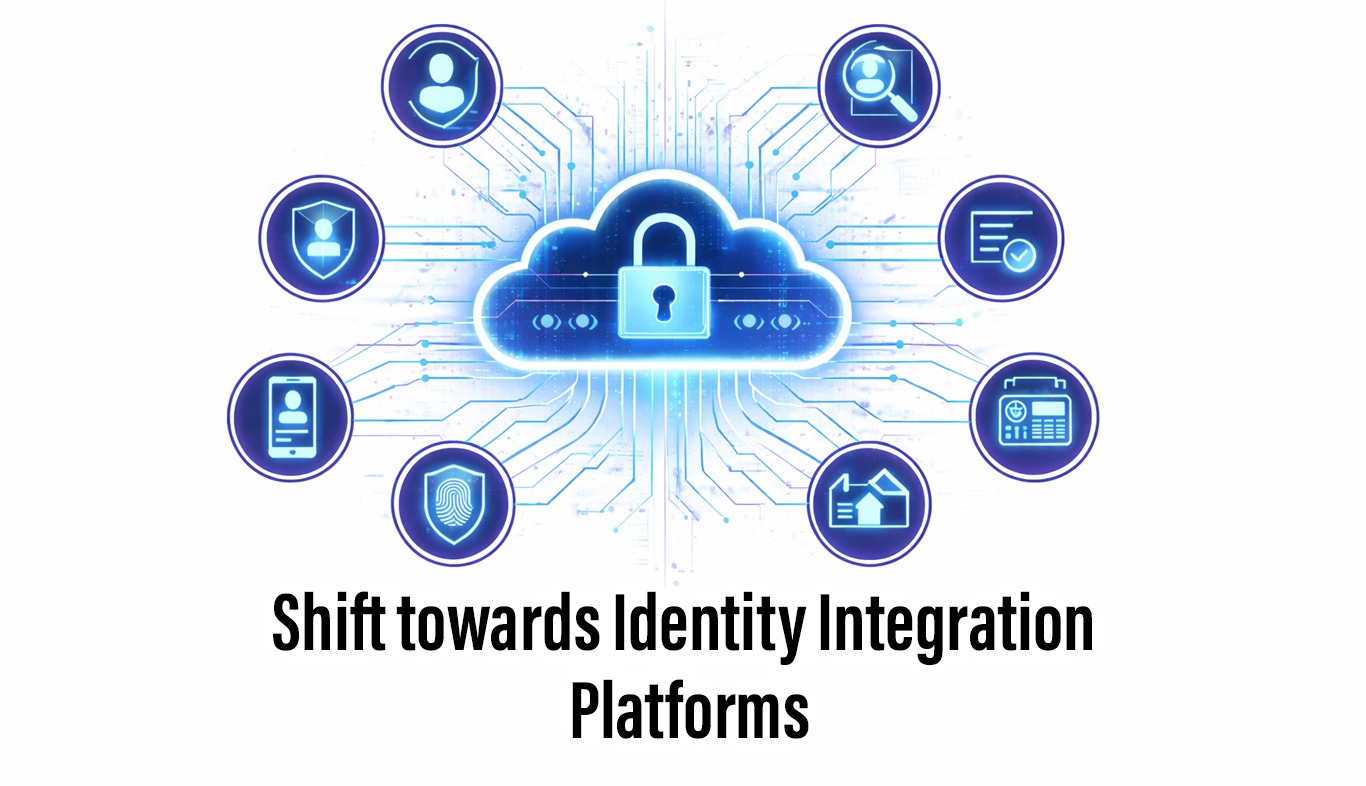
In today’s hyper-connected enterprise ecosystem, identity has quietly become the new control plane for security.
Organizations no longer operate within a single application environment. Instead, they rely on a constantly expanding mix of cloud platforms, SaaS tools, legacy systems, APIs, partner portals, and hybrid infrastructures. While this digital expansion has accelerated innovation, it has also introduced a growing identity challenge — one that traditional Identity and Access Management (IAM) systems were never designed to handle.
According to recent Gartner IAM roadmap insights, the future of enterprise security lies not in deploying more IAM tools, but in integrating identity across the entire digital landscape. This is where the concept of Identity Integration Platforms begins to reshape how modern organizations approach IAM.
Over the past decade, enterprises have adopted multiple identity solutions to address different needs:
While each of these tools solves a specific problem, they often operate in silos — resulting in fragmented identity governance across the enterprise.
This leads to:
In industries like aviation and gaming — where Bridgesoft IAM solutions are increasingly being deployed — managing identity across legacy reservation systems, operational platforms, third-party APIs, and cloud-native applications has become particularly complex.
The traditional IAM approach simply doesn’t scale in these environments.
Gartner IAM roadmap now emphasizes a shift from standalone identity management tools toward integrated identity ecosystems that can unify authentication, authorization, and governance across diverse technology stacks.
Rather than managing identity at the application level, organizations are being encouraged to treat identity as an integration layer — connecting:
This shift reflects a broader move toward identity-first security models, where access decisions are made dynamically based on context, risk signals, and policy orchestration across platforms.
Identity Integration Platforms are designed to bridge the gap between fragmented IAM deployments and modern enterprise infrastructure.
Instead of replacing existing IAM investments, these platforms enable organizations to:
This approach allows enterprises to unify identity operations without disrupting mission- critical systems, which are a crucial requirement for sectors that depend on continuous availability and compliance.
As enterprises continue their digital transformation journeys, identity is becoming deeply embedded in every business transaction — from employee onboarding and customer logins to partner integrations and machine-to-machine communications.
Managing these identities in isolation is no longer sustainable.
By aligning with Gartner IAM trends and adopting Identity Integration Platforms, organizations can:
The future of IAM is no longer about managing identities within applications — it's about integrating identity across ecosystems.
Identity Integration Platforms represent the next phase of the IAM evolution, enabling enterprises to move from fragmented identity management toward a unified, policy-driven identity fabric.
As organizations revisit their IAM roadmap considering Gartner’s strategic direction, investing in identity integration may well become the foundation for scalable, secure digital growth.
Gartner, Develop an IAM Program Roadmap to Deliver Business Value, Steve Wessels, Rebecca Archambault, Brian Guthrie, 2 September 2025.
GARTNER is a registered trademark and service mark of Gartner, Inc. and/or its affiliates in the U.S. and internationally and is used herein with permission. All rights reserved.