
The term “Zero Trust” has become a mainstay in cybersecurity conversations, yet it’s often misunderstood or misapplied. At its core, Zero Trust is a security model built on the principle of “never trust, always verify.” It assumes that threats can exist both outside and inside the network and that no user or system should be inherently trusted.
This approach has profound implications for how organizations manage identity and access. Identity is no longer just one piece of a broader strategy it’s the foundation. While Zero Trust can be an ambitious undertaking, practical, identity-centric strategies can help organizations make meaningful progress without boiling the ocean.
In a Zero Trust architecture, identity becomes the most critical control point. Every access request must be authenticated, authorized, and continuously validated based not just on credentials, but on context such as device health, user behaviour, location, and risk level.
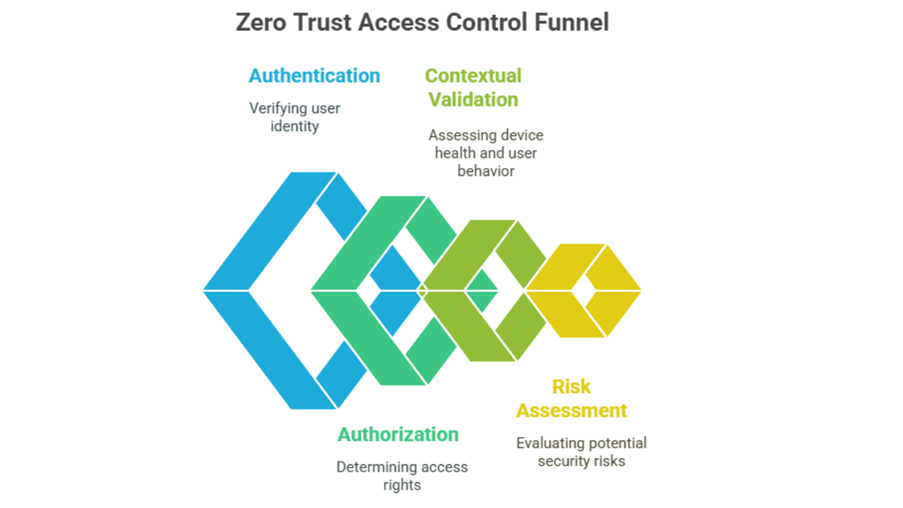
This shifts the focus from perimeter-based defences to identity-based access control, where policies govern how and when users can access resources. Implementing adaptive access controls, integrating multifactor authentication (MFA), and leveraging identity analytics are key steps toward enforcing Zero Trust principles. These measures allow organizations to dynamically assess risk and respond in real time, rather than relying on static roles or outdated permissions.
While the concept of Zero Trust is widely accepted, its implementation often falters due to scope and complexity. Many organizations attempt to implement it all at once, leading to resource strain and diminished momentum. A more pragmatic approach begins with prioritizing high-risk assets and users such as privileged accounts, critical applications, or third-party access.
Organizations can start by establishing strong identity foundations: centralizing identity data, enabling single sign-on (SSO), enforcing least privilege access, and automating provisioning and deprovisioning processes. From there, layered policies can be introduced to enforce conditional access based on contextual signals. The key is to take an iterative approach assessing risks, identifying gaps, and incrementally introducing controls that align with business operations.
One of the common pitfalls in Zero Trust initiatives is failing to align technical controls with business outcomes. Identity strategies must not only protect systems but also support operational agility. For example, sales teams require quick access to CRM platforms while traveling, and developers may need temporary access to production environments. Applying Zero Trust doesn’t mean limiting productivity it means enabling it securely.
Cross-functional alignment is essential. Security leaders must work with business stakeholders to understand workflows, pain points, and regulatory requirements. Zero Trust policies should reflect real-world use cases and strike a balance between protection and usability. When executed properly, Zero Trust becomes an enabler of innovation, not an obstacle.
Ready to Accelerate Your IAM Journey ?
Move from planning to execution—faster and smoother.
👉 Book a Demo
Zero Trust is not a product or a one-time project it’s a long-term security mindset. It requires continuous validation, adaptive controls, and identity as a strategic anchor. Organizations that begin with a clear understanding of their risk landscape and take focused steps toward maturity will see measurable gains in both security posture and operational efficiency. Ultimately, identity is where Zero Trust begins and where its success is measured. By adopting identity-first strategies that are grounded in business context, organizations can turn Zero Trust from a buzzword into a blueprint for resilient security.