The way businesses operate is changing due to the rapid adoption of artificial intelligence. AI-powered applications, intelligent automation, APIs, cloud-native workloads, robotic process automation (RPA), and software bots are now performing tasks that once required human intervention. As enterprises continue to embrace digital transformation, the number of non-human identities is growing faster than that of traditional user accounts.
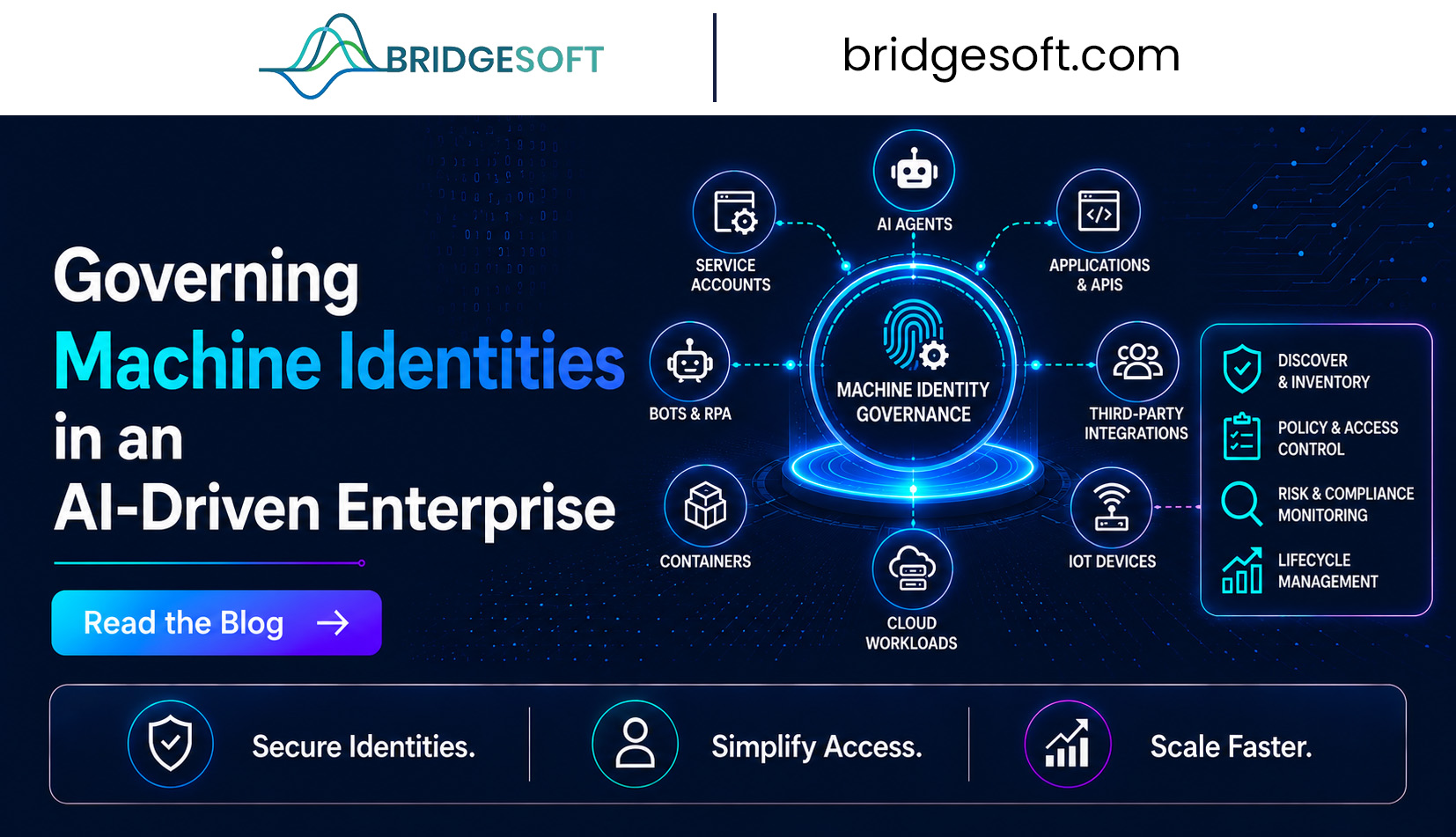
Every AI agent, service account, application, API, container, and automated process requires credentials to communicate with systems and access sensitive resources. These machine identities have become essential to modern business operations, yet they often receive far less attention than human users.
The challenge is that machine identities can easily outnumber employees in large enterprises. Without proper controls, they create security blind spots that increase the risk of unauthorized access, credential misuse, and compliance failures.
This is why organizations are expanding Identity Governance beyond human users and adopting governance strategies that include every digital identity operating within the enterprise.
Understanding Machine Identities
Unlike human users, machine identities represent software-based entities that interact with applications, services, and infrastructure. They authenticate to systems, exchange data, execute automated tasks, and support business-critical processes without direct human involvement.
Examples include cloud workloads, APIs, service accounts, AI agents, containers, virtual machines, DevOps pipelines, and automation bots.
Although these identities are not people, they often possess highly privileged access to enterprise systems. In many organizations, machine identities have permission to access sensitive databases, cloud services, financial applications, and business-critical infrastructure.
As AI adoption accelerates, the number of machine identities continues to grow, making governance increasingly important.
Why Conventional Identity Management Is Insufficient
Most organizations have invested significantly in securing employee identities through modern Identity Access Management solutions. Processes such as onboarding, access reviews, authentication, and role management are well established for human users.
Machine identities, however, often fall outside these governance processes.
Service accounts may remain active for years without review. API credentials are frequently shared across applications. Secrets and certificates may not be rotated regularly, while AI-driven workloads often receive broad permissions to avoid operational disruption.
These practices increase security risk and make it difficult to maintain visibility across enterprise environments.
As organizations become increasingly dependent on automation and AI, machine identities must be governed with the same discipline applied to human users.
The Risks of Unmanaged Machine Identities
Every unmanaged identity creates potential security exposure.
Machine identities frequently possess elevated privileges because they perform critical business operations. If compromised, they can provide attackers with direct access to sensitive applications, cloud resources, and enterprise data.
Another challenge is visibility. Many organizations cannot accurately identify how many machine identities exist, who owns them, what systems they access, or whether their credentials remain active.
Without centralized governance, organizations risk:
As machine identities continue to multiply across hybrid and cloud environments, these risks become increasingly difficult to manage manually.
The Role of Identity Governance
Modern Identity Governance provides organizations with the visibility and control required to manage both human and machine identities consistently.
Instead of treating machine identities as technical assets, organizations should manage them throughout their lifecycle—from creation and authorization to credential rotation, monitoring, and retirement.
Governance policies should answer critical questions such as:
Who owns each machine's identity? What systems can it access? Does it still require those permissions? When were credentials last rotated? Is the identity still actively being used?
Establishing clear ownership and continuous monitoring helps reduce security risks while improving operational accountability.
Building Identity Governance into IAM Implementation
Successful IAM Implementation should include machine identities from the very beginning rather than treating them as an afterthought.
As organizations deploy new identity platforms, governance policies should extend beyond employees and contractors to include applications, APIs, bots, cloud services, and AI workloads.
A comprehensive Identity Access Management strategy should automate machine identity creation, enforce least-privilege access, monitor credential usage, and support regular access reviews.
Integrating machine identities into existing IAM processes enables organizations to maintain consistent security policies across all identity types.
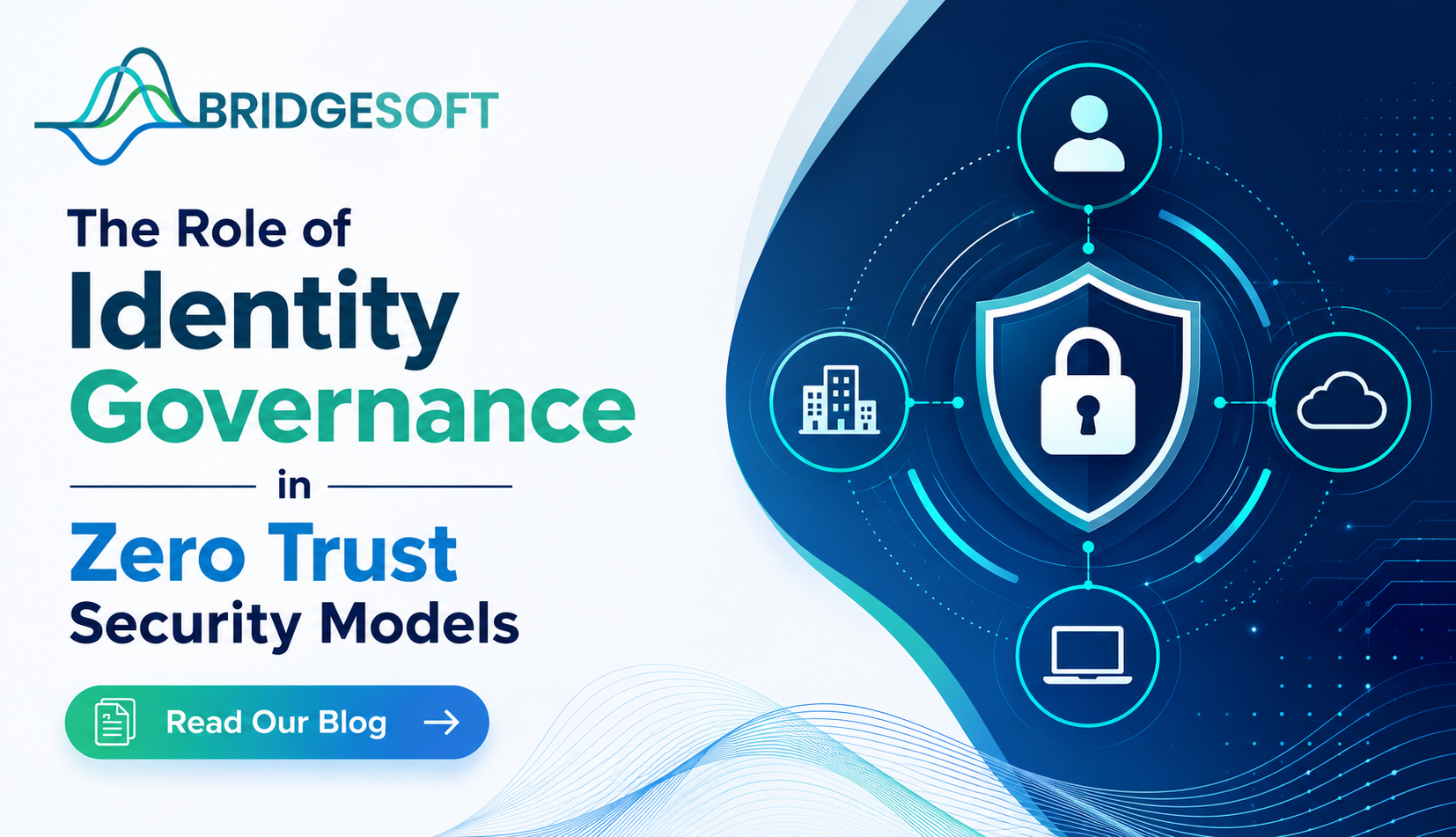
In today’s digital enterprise environment, traditional security boundaries are no longer enough. Employees work remotely, applications run across hybrid infrastructures, and users access business systems from multiple devices and locations. As a result, organizations are rapidly shifting toward Zero Trust Security Models — a security approach based on one core principle:
At the centre of every successful Zero Trust strategy is Identity Governance.
Identity has become the new security perimeter. Every user, application, and device requesting access must be continuously verified, monitored, and governed to ensure secure access to enterprise resources. Without strong Identity Governance and Identity Access Management (IAM), organizations face increased risks of unauthorized access, compliance failures, insider threats, and operational inefficiencies.
Modern enterprises are therefore investing in scalable IAM Solutions and governance frameworks to strengthen security while supporting digital transformation initiatives.
Zero Trust requires continuous validation of identities, access permissions, and user behavior before granting access to systems or sensitive data. However, maintaining this level of control is nearly impossible without effective Identity Governance.
Identity Governance provides centralized visibility and policy enforcement to help organizations answer critical questions:
Without governance controls, organizations often experience “privilege creep,” where users accumulate excessive access rights over time. This creates significant security and compliance risks.
A strong Identity Governance framework ensures access rights remain accurate, compliant, and continuously monitored across the enterprise.
Modern organizations manage thousands of identities across cloud applications, on-premises systems, third-party integrations, and remote work environments.
As digital ecosystems expand, identity management becomes increasingly complex, leading to challenges such as:
Traditional security approaches were not designed to manage this scale and complexity.
Modern IAM Implementation strategies help organizations automate identity lifecycle management, streamline access reviews, and enforce least-privilege access without disrupting business operations.
Identity Governance acts as the decision-making engine behind Zero Trust by ensuring access policies remain aligned with user roles, business requirements, and organizational security standards.
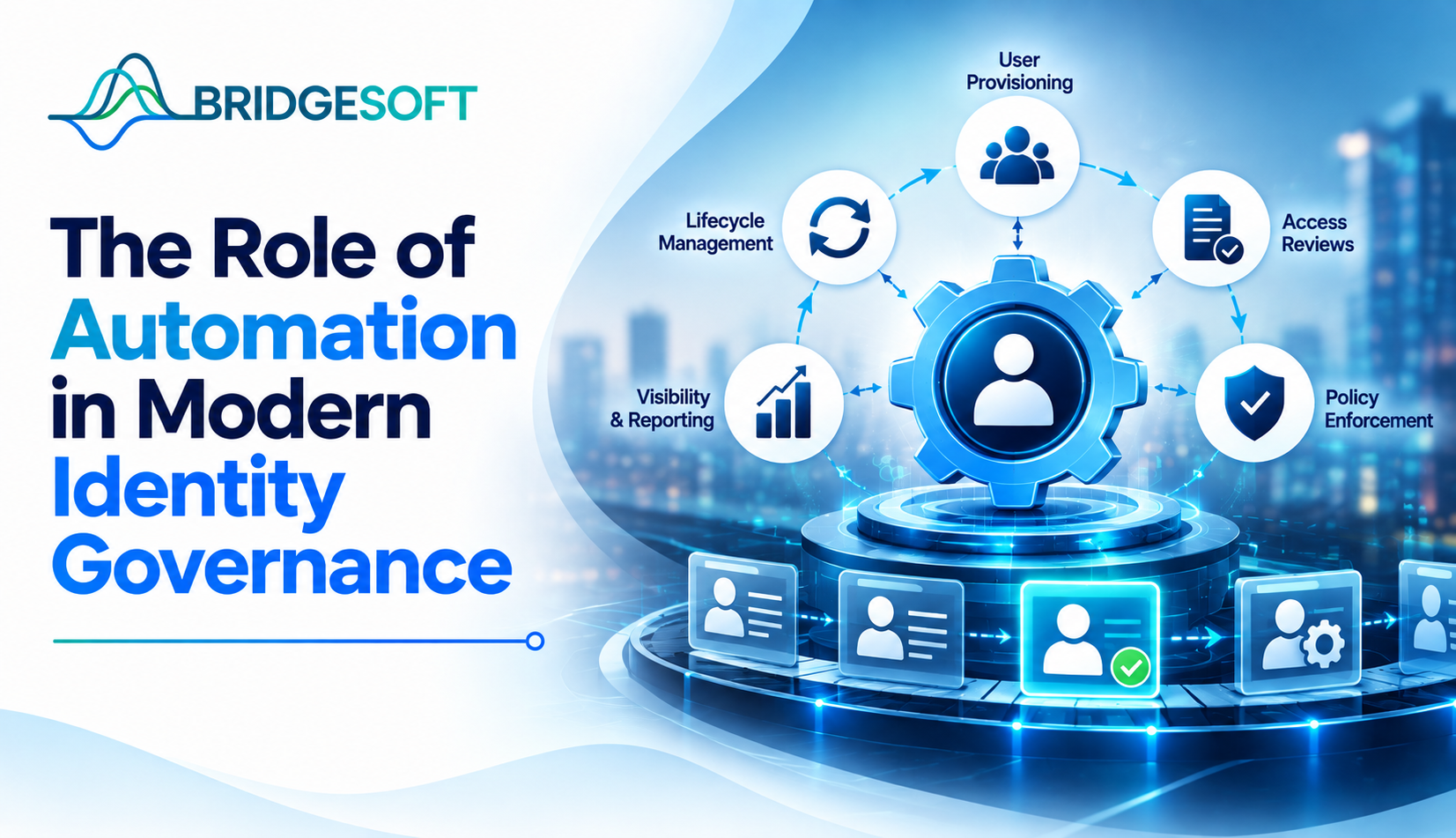
1. Automated Access Provisioning
When employees join, move roles, or leave the organization, access rights must be updated immediately.
Modern IAM Solutions automate user provisioning and deprovisioning, reducing delays and minimizing security gaps.
This ensures users receive only the access necessary for their responsibilities.
2. Least-Privilege Access Enforcement
Zero Trust depends heavily on least-privilege access principles.
Identity Governance continuously evaluates permissions and removes unnecessary access rights that may expose systems to risk. This significantly reduces attack surfaces and helps prevent credential misuse.
3. Continuous Access Reviews
Outdated permissions are a common security challenge in growing enterprises.
Identity Governance automates periodic access reviews and certification campaigns, allowing organizations to validate whether users still require access to specific systems and applications.
This improves both security and compliance readiness.
4. Policy-Based Access Controls
Zero Trust environments require dynamic access decisions based on user context, device posture, risk level, and behavior.
Identity Governance enables organizations to implement policy-driven access controls that strengthen security while maintaining operational flexibility.
5. Audit and Compliance Readiness
Regulatory requirements continue to grow across industries.
Identity Governance simplifies compliance by providing centralized visibility, automated reporting, and audit-ready access records. This reduces manual effort and improves overall governance efficiency.
[Top Identity Governance Challenges Enterprises Face Today]
While Identity Governance is a critical cybersecurity component, its impact extends beyond security operations.
Organizations implementing mature governance frameworks often experience measurable business benefits, including:
Improved Operational Efficiency
Automating identity lifecycle management reduces manual administrative work and accelerates onboarding processes.
Enhanced User Experience
Employees gain faster, secure access to the tools and systems they need without unnecessary delays.
Reduced Security Risks
Continuous governance minimizes insider threats, unauthorized access, and privilege misuse.
Faster Compliance Audits
Automated reporting and access reviews simplify audit preparation and strengthen compliance management.
Scalable Security Architecture
Identity Governance enables organizations to scale securely as business operations and digital ecosystems grow.
Cyber attackers increasingly target identities instead of traditional network infrastructure. Compromised credentials remain one of the leading causes of enterprise data breaches.
In the modern enterprise, identity has quietly become the most critical layer of security. Firewalls, networks, and endpoints still matter—but increasingly, breaches don’t happen because someone broke in. They happen because someone logged in.
That entity is not always a human user.
It could be an API calling a backend service.
A bot executing a workflow.
An AI agent accessing sensitive data to make decisions.
Enterprises now operate in a dynamic, hyper-connected environment where identity has become universal. In this environment, traditional IAM (Identity and Access Management) struggles to keep pace.
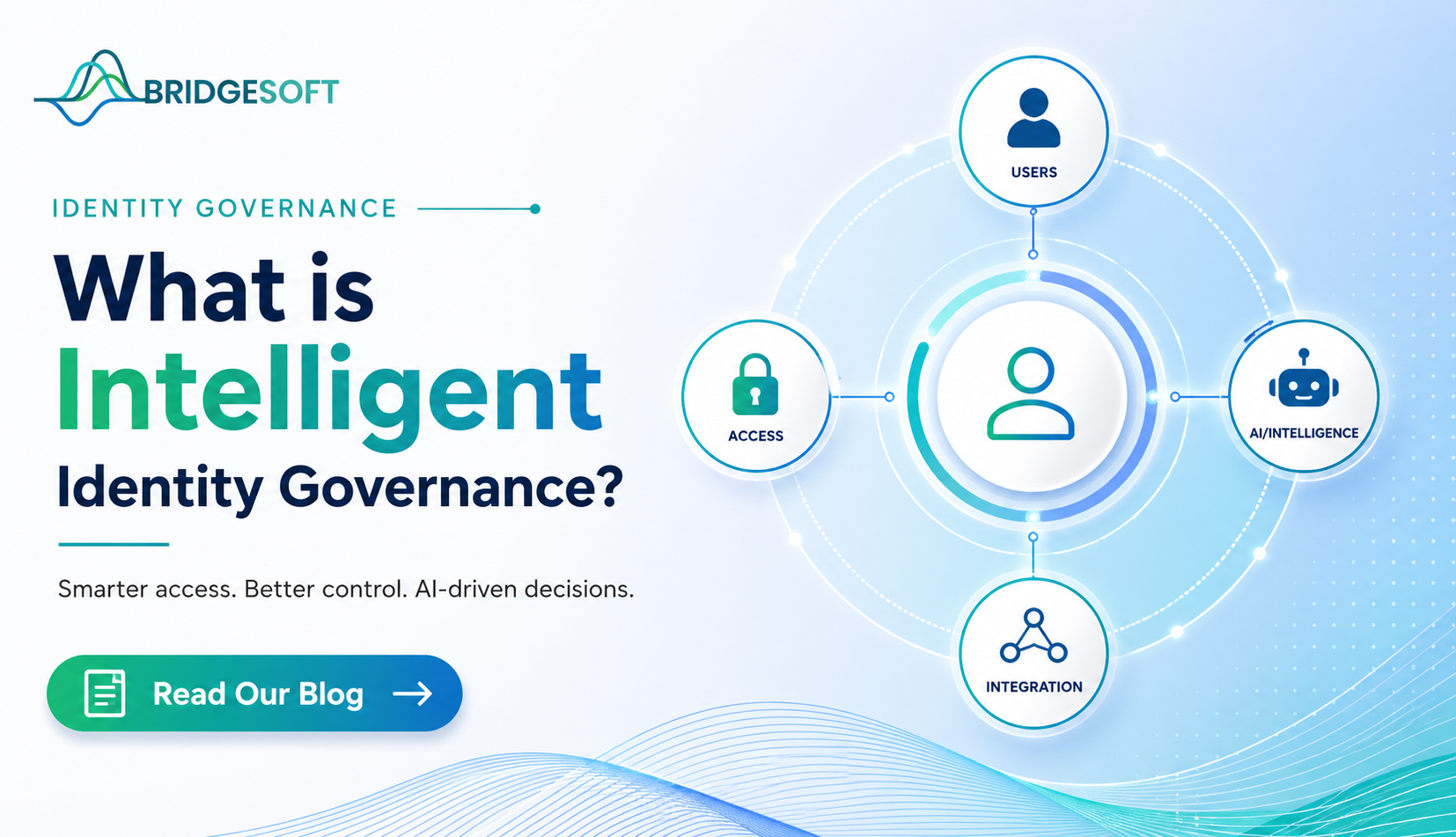
What organizations need today is not just identity management, but Intelligent Identity Governance—a smarter, adaptive, and deeply integrated way to control access across the entire ecosystem. The key benefits include enhanced security by adapting to dynamic threats, improved operational efficiency through automation, and enabling seamless access for users and systems.
For decades, IAM systems were designed with a straightforward goal: to ensure that users could access the systems they needed to do their jobs. Access was provisioned based on roles, reviewed periodically, and revoked when no longer needed.
This worked well in a relatively stable IT environment.
But today’s enterprises are anything but stable.
Applications span cloud and on premises. Teams are remote and global. Integrations are ongoing. Identities created and modified continuously—often with no human involved—are no longer static.
Traditional IAM systems operate on static rules and periodic checks. But modern enterprises require real-time awareness and continuous decision-making.
This gap marks the emergence of Intelligent Identity Governance—not as a simple upgrade, but as an essential evolution.
At its core, Intelligent Identity Governance is about bringing context, automation, and intelligence into identity decisions.
It is not just about answering:
Who has access to what?
It is about continuously evaluating:
In other words, it transforms identity governance from a static control mechanism into a living, adaptive system.
It combines the foundational principles of Identity Governance with:
The result: a system that enforces and continuously optimizes access.
To understand why Intelligent Identity Governance is essential, it’s important to recognize how dramatically the identity landscape has changed.
Enterprises today manage a diverse and expanding set of identities:
This diversity introduces major IAM challenges.
There is often no single system that provides complete visibility. Policies are inconsistently applied. Additionally, manual procedures struggle to keep up with the scale.
Over time, this leads to what many organizations experience but struggle to control—identity sprawl.
Access accumulates. Permissions linger. And identities become over-privileged.
Without intelligent governance, this complexity increases enterprise risk.
One of the biggest barriers to effective identity governance is fragmentation.
Most enterprises operate with:
An Identity Gateway is essential in this context.
An Identity Gateway acts as a unifying layer—connecting systems, normalizing identity data, and enabling consistent governance across environments.
It allows organizations to:
Without this layer, governance remains fragmented. With it, identity management becomes cohesive and controllable.
One of the defining characteristics of Intelligent Identity Governance is automation—but not just any automation.
This is intelligent automation.
Traditional IAM automates tasks such as provisioning and password resets. Intelligent systems go further by automating decisions.
They can:
This reduces reliance on manual intervention while increasing both speed and accuracy.
Organizations can proactively prevent issues rather than just respond to them.
Artificial Intelligence plays a central role in making identity governance truly intelligent.
In complex environments, humans can’t analyze every access pattern or detect every anomaly manually. AI fills this gap by continuously analyzing behavior and identifying risks.
It enables:
Perhaps most importantly, AI brings predictive capability.
Instead of asking:
What went wrong?
Organizations can start asking:
What could go wrong, and how can we avoid it?
Compliance has traditionally been a periodic activity—prepare for audits, gather evidence, and demonstrate controls.
But in today’s regulatory environment, this approach is no longer sufficient.
Organizations are expected to maintain continuous compliance.
Intelligent Identity Governance enables this by:
This shifts compliance from a reactive burden to a built-in capability, helping organizations reduce audit overhead and ensure ongoing regulatory readiness.
When implemented effectively, Intelligent Identity Governance does more than reduce risk—it enables more secure innovation, agility, and operational efficiency across the business.
It allows organizations to:
Instead of slowing the business down, identity becomes a foundation for growth, increased productivity, and secure digital initiatives.
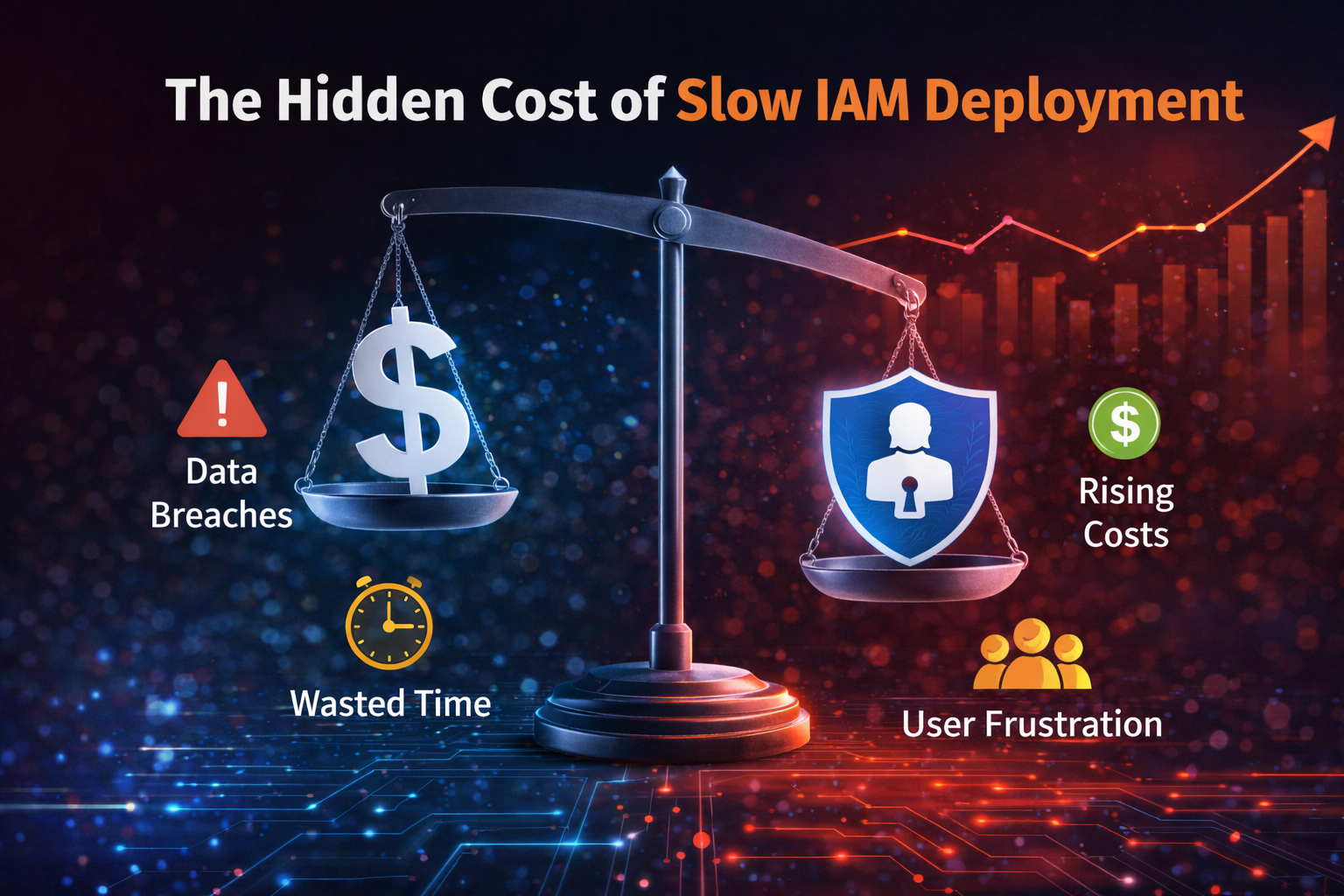
Identity and Access Management (IAM) is no longer just a layer of security—it has evolved into a critical business enabler. From onboarding employees efficiently to ensuring regulatory compliance and enabling secure digital transformation, IAM sits at the heart of modern enterprise operations.
Despite its importance, many organizations struggle with a persistent, often underestimated challenge: slow IAM deployment.
At first glance, implementation delays may appear manageable—just a few weeks added to timelines or minor integration setbacks. However, as these delays accumulate, they begin to create ripple effects across the organization. What starts as a technical delay gradually becomes a business problem, affecting security, productivity, compliance, and overall performance.
To truly understand how to avoid these outcomes, it’s important to first recognize the root causes behind why IAM Projects fail and how organizations can implement IAM successfully with the right strategy.
Slow IAM deployment is not just about missed deadlines—it often reflects deeper inefficiencies in an organization’s technology and processes.
It can manifest in several ways: delayed employee onboarding, prolonged application integrations, heavy reliance on manual provisioning, and extended implementation cycles that far exceed initial expectations. These inefficiencies are typically rooted in legacy systems, a lack of integration planning, and the absence of a structured implementation roadmap.
Organizations that take the time to build a clear IAM roadmap and prioritize early integration are better positioned to avoid these delays and achieve a more streamlined implementation journey.
One of the most immediate and critical consequences of slow IAM deployment is the increased exposure to security risks. When IAM systems are only partially implemented, users often retain access privileges longer than necessary, and manual errors become more frequent.
Delayed deprovisioning and lack of centralized control create gaps that can be exploited, increasing the likelihood of unauthorized access or data breaches. Over time, these vulnerabilities can have serious financial and reputational consequences for the organization.
Beyond security, slow IAM directly impacts the day-to-day productivity of employees and teams. When access to applications and systems is delayed, employees are unable to perform their roles efficiently.
IT teams, on the other hand, are often burdened with repetitive manual tasks such as provisioning and access approvals. This not only slows down business workflows but also diverts valuable resources away from more strategic initiatives.
The result is a workplace environment where inefficiencies become normalized, and both employees and IT teams experience growing frustration.
IAM is often viewed as a long-term investment in security and efficiency. However, when deployment is slow, it begins to behave more like an ongoing operational expense.
Delays lead to extended development efforts, continuous rework, and increased reliance on manual processes. Organizations may find themselves allocating additional resources to maintain incomplete systems, driving up costs without delivering proportional value.
In such scenarios, the true cost of IAM is not in its implementation—but in its delay.
IAM plays a central role in maintaining regulatory compliance and ensuring audit readiness. When implementation is delayed, organizations struggle to establish complete audit trails, enforce access governance policies, and generate consistent reports.
These gaps can lead to compliance failures, especially in highly regulated industries where visibility and accountability are critical. The longer the IAM deployment is delayed, the more difficult it becomes to meet regulatory requirements and avoid potential penalties.
IAM is a foundational component for broader digital transformation efforts, including cloud adoption, automation, and Zero Trust security models.
When IAM deployment is slow, it creates a bottleneck that impacts these initiatives. Organizations may find themselves unable to move forward with modernization efforts because the underlying identity infrastructure is not yet mature.
In this way, IAM delays do not just affect security—they slow down the organization’s ability to innovate and compete in a digital-first world.
In today’s fast-paced work environment, users expect seamless and immediate access to the tools they need. Slow IAM processes, however, often lead to login issues, access delays, and inconsistent user experiences.
When employees are unable to access systems efficiently, they may turn to unauthorized tools or workarounds—leading to the rise of shadow IT. This not only undermines security but also creates additional governance challenges for the organization.
A major contributor to slow IAM deployment is the difficulty of integrating with legacy systems. Many enterprises operate with outdated platforms that lack modern APIs or standardized integration capabilities.
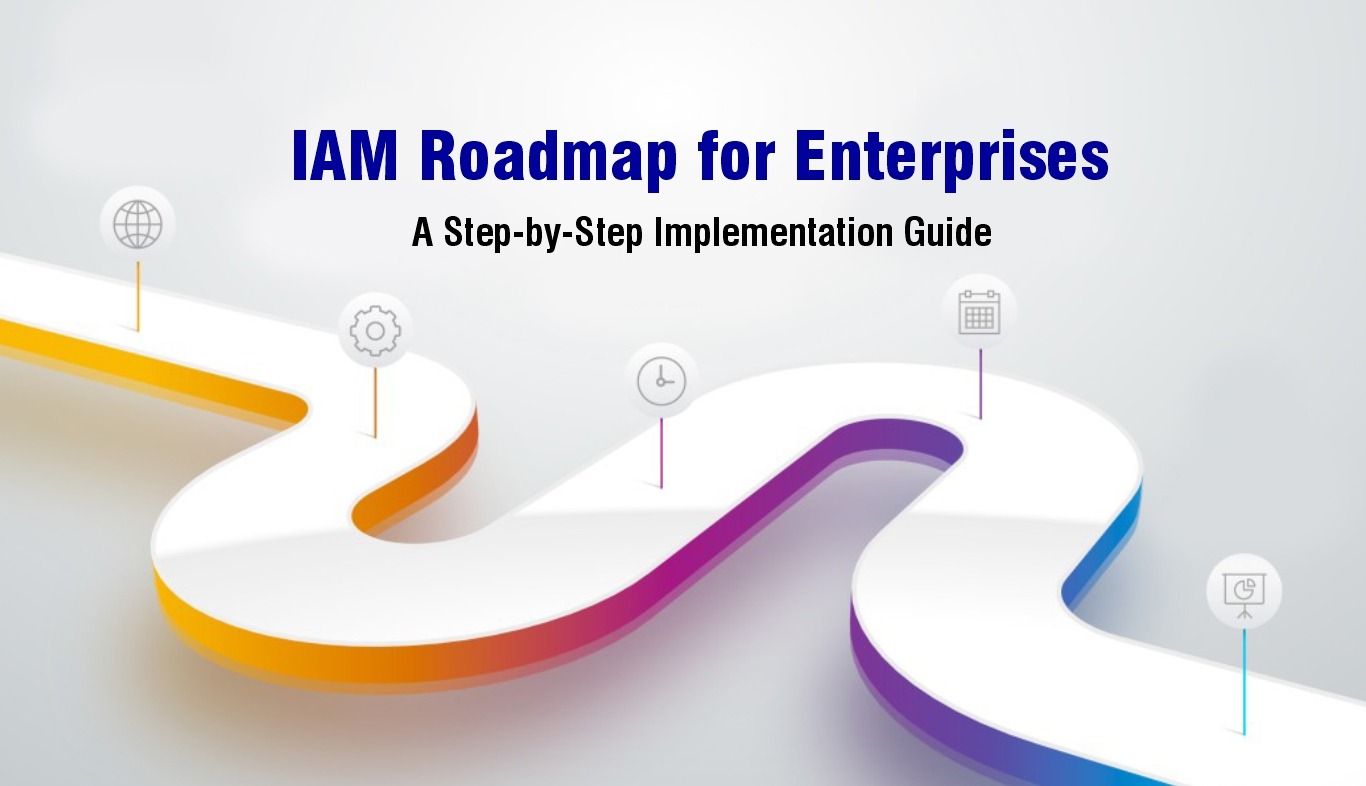
In today’s digital enterprise, managing who has access to what is no longer just an IT task—it’s a critical business priority. With organizations operating across cloud platforms, legacy systems, SaaS applications, and remote work environments, Identity and Access Management (IAM) has become the backbone of enterprise security.
However, many organizations struggle with fragmented identity systems, manual provisioning, compliance risks, and delayed application onboarding. This is where a well-structured IAM roadmap becomes essential.
An effective IAM implementation of roadmap helps enterprises transition from reactive access management to a strategic identity-centric security framework. In this guide, we’ll walk through a step-by-step IAM strategy that enterprises can follow to successfully implement and scale IAM across their organization.
Many organizations jump into IAM projects by selecting tools before defining their strategy. This often leads to delays, integration issues, and poor user adoption.
A well-defined IAM roadmap helps enterprises:
Most importantly, it provides a structured IAM implementation roadmap that reduces complexity and ensures long-term scalability.

The first step in building an effective IAM strategy is to understand the organization’s security goals and operational needs.
Important factors to consider:
During this stage, enterprises should involve stakeholders from IT, security, compliance, HR, and business units to ensure the IAM roadmap aligns with broader organizational priorities.
A well-defined IAM strategy forms the foundation of a successful IAM implementation roadmap.
Before implementing IAM, organizations must evaluate their existing identity infrastructure.
This assessment typically includes:
Enterprises often discover fragmented identity systems and inconsistent access policies during this phase.
Understanding these gaps helps define the scope of the IAM roadmap and highlights integration challenges early in the implementation process.
Not every application needs to be onboarded into IAM at once. A phased approach ensures smoother implementation and reduces operational risks.
Priorities for organizations should be:
This prioritization becomes a key component of the IAM implementation roadmap, allowing enterprises to achieve quick wins while gradually expanding identity governance coverage.
Once priorities are established, the next step is designing a scalable IAM architecture.
A typical enterprise IAM architecture includes:
Organizations must also plan how to integrate legacy systems, SaaS platforms, and custom applications into the IAM framework.
This is where modern integration solutions—such as identity gateways or automation layers—can significantly simplify application onboarding and reduce integration complexity.
One of the biggest benefits of IAM is automated identity lifecycle management.
This includes managing the entire user journey:
Automating these processes ensures that users receive the right access at the right time while preventing unauthorized access after role changes or employee departures.
A strong lifecycle management strategy is a cornerstone of an effective IAM roadmap.
Regulatory frameworks and internal security policies require organizations to maintain strict access controls.
IAM enables enterprises to enforce:
These capabilities help organizations strengthen governance while simplifying compliance with industry standards.
By integrating governance into the IAM implementation roadmap, enterprises can ensure that identity security aligns with regulatory requirements.
One of the biggest challenges in enterprise IAM projects is integrating diverse applications.
Many legacy systems lack modern APIs or identity connectors, making integration complex and time-consuming.
To address this challenge, organizations can leverage integration platforms that support:
These technologies accelerate application integration and reduce the operational overhead of IAM deployments.
IAM is not a one-time implementation—it’s an ongoing process.
Once the IAM system is deployed, organizations should continuously monitor:
Regular reviews help refine the IAM strategy and ensure the IAM roadmap evolves with business needs, new technologies, and emerging security threats.
Even with a well-planned IAM implementation roadmap, enterprises often face challenges such as:
Addressing these challenges requires both strong IAM governance and flexible integration capabilities that simplify identity automation across enterprise systems.
Tired of IAM Delays Slowing You Down?
Accelerate deployment with a smarter integration strategy.
👉 Schedule a Demo
As organizations adopt cloud platforms, remote work models, and digital ecosystems, identity becomes the new security perimeter.
A future-ready IAM strategy should focus on:
By following a structured IAM roadmap, enterprises can build a secure, scalable identity framework that supports digital transformation while protecting critical business assets.
Implementing IAM is not just about deploying technology—it’s about creating a strategic identity framework that aligns security, compliance, and business operations.
As cloud adoption continues to accelerate, identity has become one of the most critical and complex components of enterprise security. Organizations are no longer relying on a single cloud provider or data center; instead, they are operating in multi-cloud and hybrid environments that span public clouds, on-premises systems, SaaS platforms, and legacy infrastructure.
This fragmented landscape presents a growing challenge: how to manage identity consistently across a diverse, dynamic IT ecosystem. It’s not just about keeping users connected it’s about keeping access secure, compliant, and scalable without slowing down innovation.
Solving this challenge starts with a shift in mindset: identity must be viewed not as a one-time project, but as a foundational architecture layer one that underpins access, governance, and risk across every platform the business touches.
The move to cloud is rarely all-or-nothing. Many organizations adopt cloud services incrementally, driven by specific business needs. A company might use AWS for development, Azure for Office 365, and Google Cloud for data analytics all while retaining core legacy systems on-premises due to regulatory or operational constraints.
This flexibility comes at a cost. Each environment may have its own identity model, access controls, and integration capabilities. Without a unified strategy, this leads to identity silos: users with duplicate accounts across systems, inconsistent roles and entitlements, and gaps in visibility. These silos increase risk, reduce efficiency, and make compliance audits far more difficult.
Additionally, the growing number of non-human identities such as service accounts, bots, and machine workloads adds complexity. These identities often lack proper governance, creating blind spots and potential entry points for attackers.
Traditional IAM solutions were built for centralized environments, where users and resources were confined to a corporate domain. In today’s distributed architecture, this model breaks down. Manual provisioning, static policies, and point-to-point integrations simply cannot keep pace with the velocity and scale of modern cloud environments.
When identity is managed in silos, the business suffers:
To address these challenges, organizations must adopt a cloud-ready identity architecture one that is unified, automated, and policy-driven.
Building an identity strategy that spans cloud and on-premises systems requires several key capabilities:
A strong, cloud-ready identity strategy is key to secure, compliant, and scalable operations.
See how Bridgesoft can unify and automate identity across your cloud and on-premises systems: Bridgesoft Identity Solutions
Mergers and acquisitions (M&A) are often positioned as growth catalysts — opportunities to enter new markets, acquire talent, expand offerings, or streamline operations. But while financials, legal exposure, and cultural alignment often dominate the M&A due diligence process, one critical area is frequently overlooked: identity governance.
When two organizations join forces, their IT ecosystems must be integrated, aligned, and secured — and identity is at the center of that effort. Yet in many cases, identity and access management (IAM) challenges surface only after the deal is signed, when integration is already underway. By then, it’s often too late to prevent the risks: over-provisioned accounts, orphaned access, regulatory gaps, and delayed synergies.
In today’s digital-first enterprises, failure to address identity early in the M&A process isn’t just a missed opportunity — it’s a hidden liability.
When two companies merge, their user populations double overnight. Employees, contractors, partners, and systems must quickly gain access to shared resources — from collaboration tools and business applications to customer data and internal systems. At the same time, access must be governed carefully to prevent security breaches, conflicts of interest, or compliance violations.
This rapid scaling of access often introduces chaos:
Legacy identity systems with conflicting architectures
These challenges become particularly acute when the organizations involved operate in regulated industries such as finance, healthcare, or energy, where identity governance is tightly tied to compliance mandates.
Without proper identity governance, M&A activities can introduce multiple categories of risk:
Identity governance must become a formal component of M&A due diligence. This means evaluating the maturity, architecture, and risk posture of each entity’s IAM program before integration begins. Key questions to ask include:
By answering these questions upfront, organizations can identify integration gaps, anticipate challenges, and begin to define a roadmap that aligns with both security and business goals.
There is no one-size-fits-all approach to identity integration during M&A. The right strategy depends on the size, complexity, and timelines involved. However, the most effective approaches share three key characteristics: visibility, unification, and governance.
Here are four common strategies:

Regardless of the model chosen, the integration must be governed by clear policies, documented processes, and continuous monitoring.
Even with a solid strategy in place, the post-merger period brings unique identity risks that must be proactively managed:
IAM leaders should create a post-merger identity scorecard that tracks key metrics — such as number of identities reconciled, accounts decommissioned, and policy violations resolved — to guide integration efforts and report progress to leadership.
Rather than being a drag on M&A execution, IAM can be a powerful accelerator — if approached strategically. Mature identity governance accelerates onboarding, simplifies audit preparation, and increases organizational agility during a time of high change.
Imagine being able to grant access to new systems in hours rather than weeks. Or having a unified view of all user entitlements across both organizations. Or being able to assure the board and regulators that access to sensitive systems is fully under control.
This is the promise of treating identity not just as a technical function, but as a core M&A capability.
Don’t Let Identity Chaos Undermine Your M&A Success
A well-planned IAM strategy doesn’t just prevent disasters—it accelerates integration, ensures compliance, and protects your investment.
Ready to secure your merger with a proven identity governance strategy?
Visit Bridgesoft today to learn how we help enterprises turn IAM from a risk into a competitive advantage.
In today's world, companies are being put in the spotlight for data breaches or leaks. These breaches have led to consumer distrust of businesses, and now businesses have to work even harder to regain consumer trust.
Applications and databases are crucial for business operations, which is why you need to make sure that only authorized users can access them. With the identity governance and administration (IGA) approach, you can do it by defining and managing role-based access controls over your applications and databases. It will help you enable effective access control for all of your users.
You might not have given much thought to this, but the truth is that your enterprise needs identity governance and administration. Whether your business is just getting started or you're a seasoned veteran, you'll be able to use this article to learn what the benefits of identity governance and administration are for your company.
Defining Identity Governance
Identity governance (IG) is a framework that caters to businesses' needs of gaining better visibility of user identities and access controls while complying with standards like the HIPAA, Sarbanes-Oxley Act, etc. Identity governance merges with identity administration to constitute the identity governance and administration approach, which caters to access and authorization management, user provisioning, and de-provisioning and at the same time fulfilling compliance requirements.
The Benefits of Identity Governance and Administration for Your Business
As your business grows, it's important to have a system in place to manage user identities and access privileges. This is where identity governance and administration comes in. Identity governance and administration (IGA) is a set of processes and technologies that helps organizations manage digital identities. IGA can help you improve security, compliance, and efficiency within your organization. Here are some of the benefits of implementing IGA.
By establishing firm controls over user identities and access to company data, businesses can rest assured that their confidential information is safe from unauthorized persons. In addition, strict adherence to industry regulatory standards can be maintained through comprehensive identity management protocols. Finally, businesses may experience increased operational efficiency by automating many aspects of the user provisioning process.
In the digital world, identities are everything. Your customers, partners, and employees all have digital identities that they use to interact with your organization. If you can't manage these digital identities effectively, it puts your whole business at risk. Identity governance and administration can help you manage these digital identities in a secure and compliant way. By centralizing identity management within your organization, you can make sure that only the right people have access to sensitive data and systems. This helps reduce the risk of data breaches and compliance violations.
There are many reasons why your business needs identity governance and administration (IGA). IGA can help improve security by ensuring that only authorized users have access to sensitive data. This can help prevent data breaches and protect your company's reputation. In addition, IGA can help you comply with regulatory requirements, such as those related to the General Data Protection Regulation (GDPR). By implementing IGA, you can demonstrate to customers and other stakeholders that you take their privacy and security seriously.
As your business grows, so does the need to protect your data. One way to do this is through identity governance and administration (IGA). IGA can help prevent unauthorized access to your systems and data, and it can also help improve compliance by providing a mechanism for the auditing user activity. By managing identities centrally, you can ensure that only authorized users have access to sensitive information and that all user activity is tracked and audited. This can be a valuable tool in protecting your business from both internal and external threats.
As a business owner, you know that security is important. You also know that managing user identities can be a time-consuming and complex task. Identity governance and administration (IGA) can help improve both security and efficiency in your business. IGA provides a centralized way to manage users and their access to resources. This can help reduce the risk of unauthorized access to sensitive data. It can also automate many tasks related to managing user identities, which can save time and improve efficiency in your business.
Hope this article is informative; please feel free to share your thoughts and suggestions in the comment section. For more information about IAM services, Contact us.