Author: bridgesoft_wpnew
-
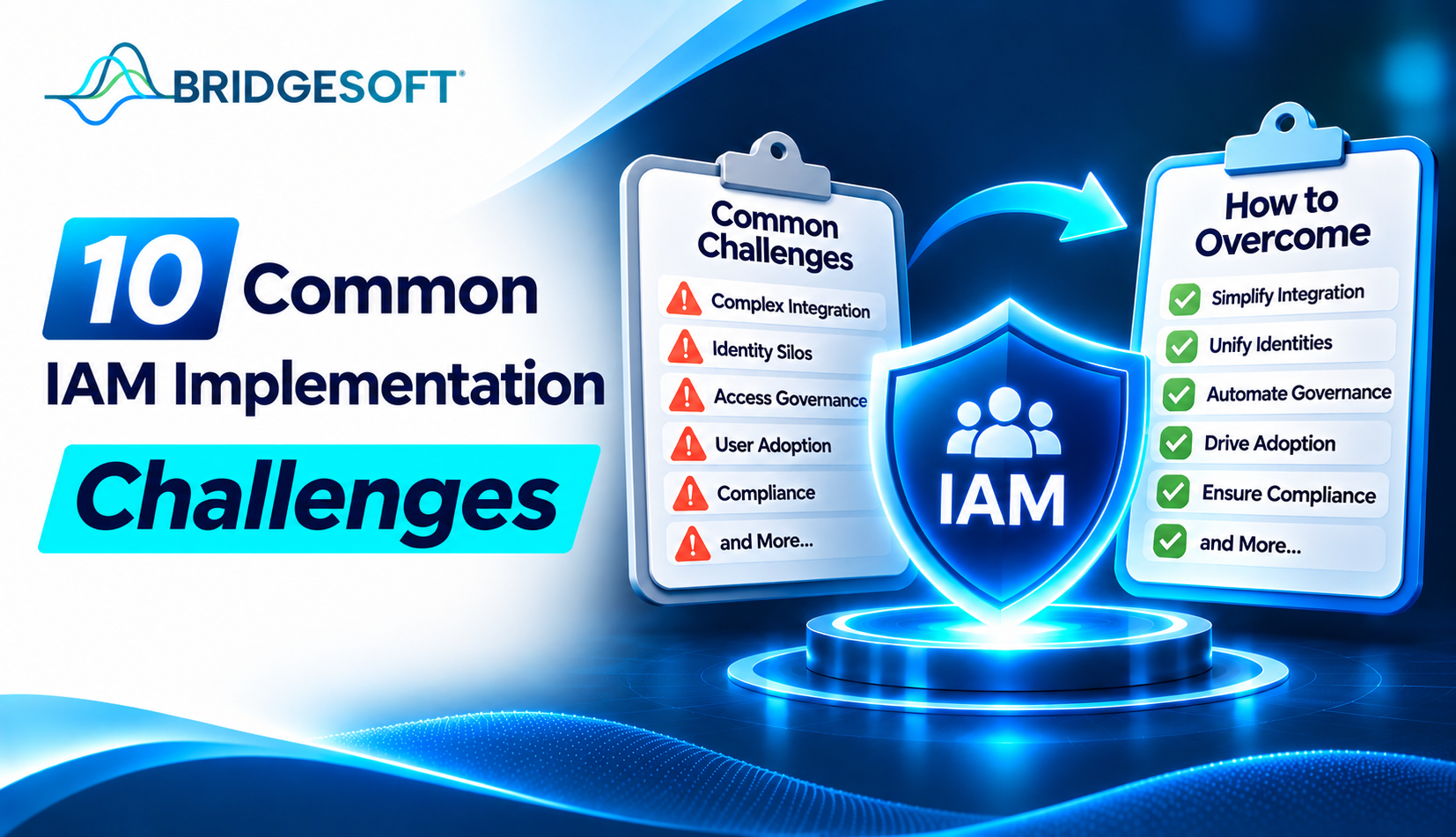
10 Common IAM Implementation Challenges and How to Overcome Them
On February 12, 2024, attackers accessed a Change Healthcare remote-access portal with stolen credentials. The portal lacked multi-factor authentication (MFA), and ransomware was deployed nine days later, according to UnitedHealth Group CEO Andrew Witty’s congressional testimony. The incident illustrates how one missing identity control can create an entry point. Identity and Access Management (IAM) determines…
-
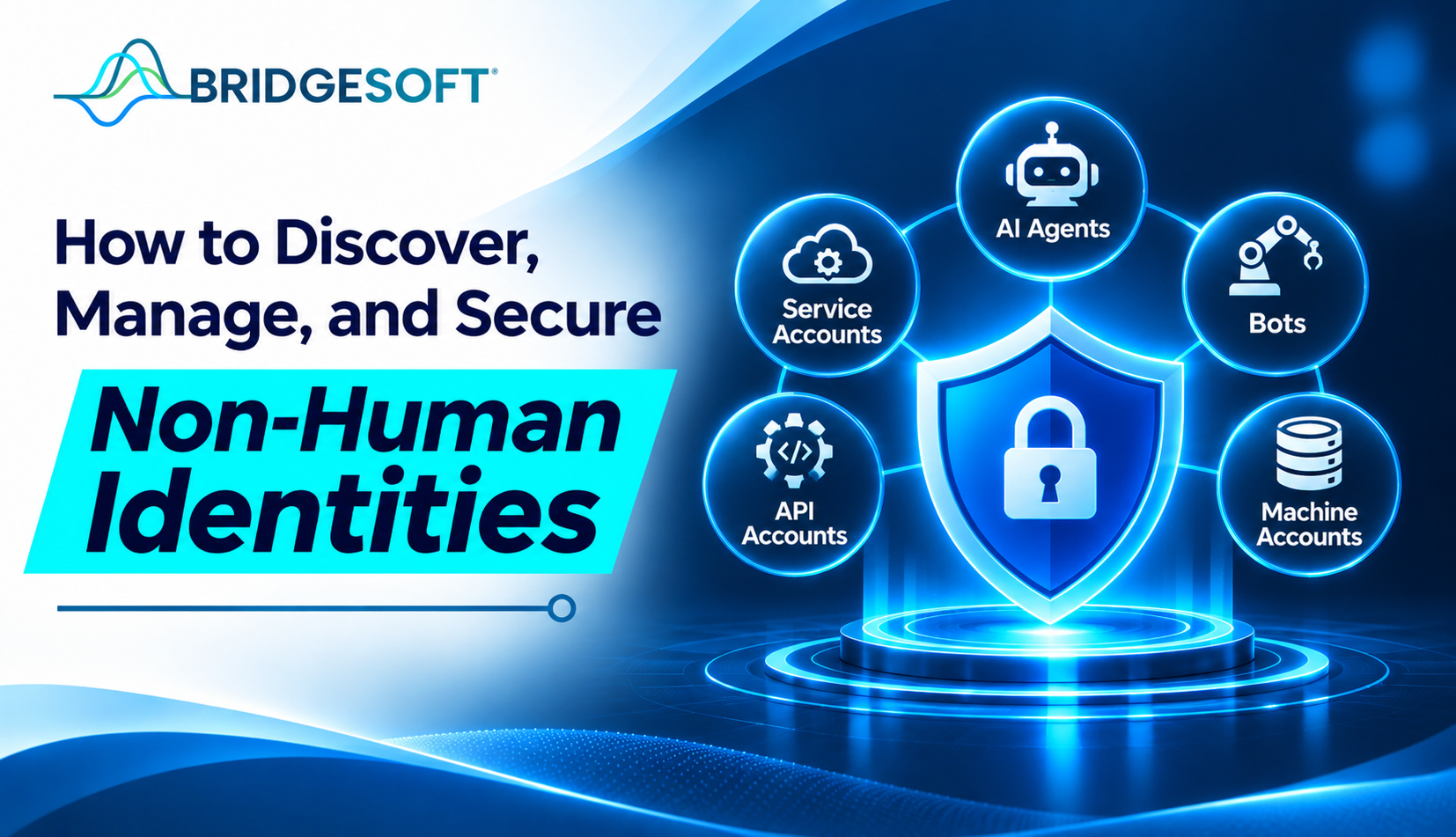
How to Discover, Manage, and Secure Non-Human Identities
Ask your IT team how many employees can reach your ERP, and you’ll get an answer in minutes. Ask how many service accounts, API keys, bots, and AI agents can reach it, and the honest reply is often, “We’d have to check.” That gap is the problem. Machine-driven access now outnumbers human access in many…
-
Preparing Enterprise IAM for the Rise of AI Agents and Autonomous Identities
A finance team deploys an AI agent to reconcile invoices. To do the job, it needs read access to the ERP, a token for the payments API, and a mailbox. Someone creates a service account, pastes a secret into a config file, and moves on. Six months later, the project owner has changed teams, the…
-
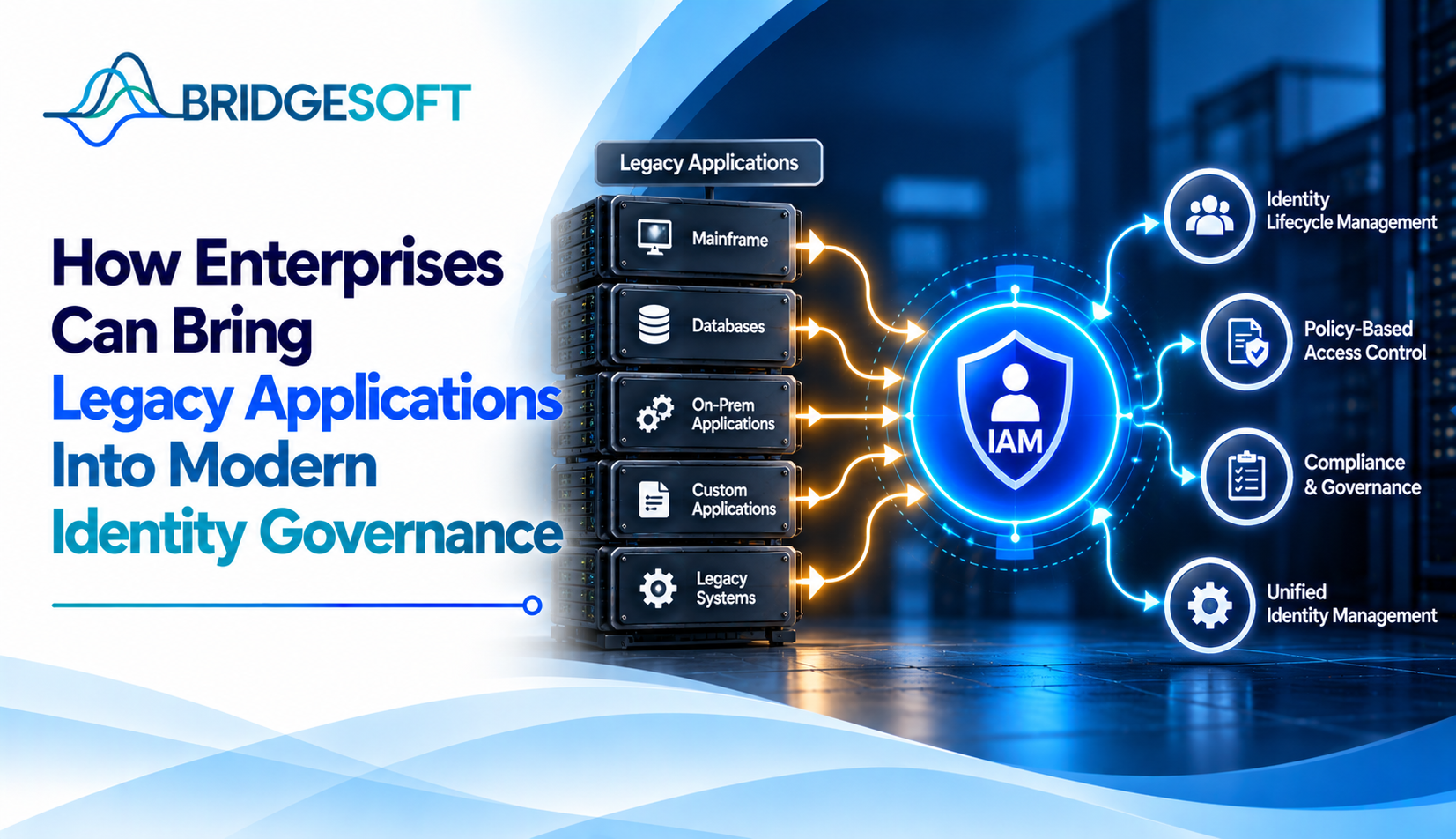
How Enterprises Can Bring Legacy Applications into Modern Identity Governance
An access review can appear complete while leaving a critical question unanswered: does the reviewer understand what the application’s permissions actually allow? A list of users and codes like “CLM_SUPER2” isn’t enough. Without business context, accountable owners, and proof that changes were completed, certification can become a checkbox exercise. Bringing a legacy application into identity…
-
Why Legacy Applications Make Identity Management Difficult
Ask who still has access to your 15-year-old payroll or claims system, and the honest answer is often, “We’d have to check it by hand.” Nobody is being careless. The application was built before centralized identity management existed, and nobody wants to be the one to break it. This article explains why legacy applications resist…