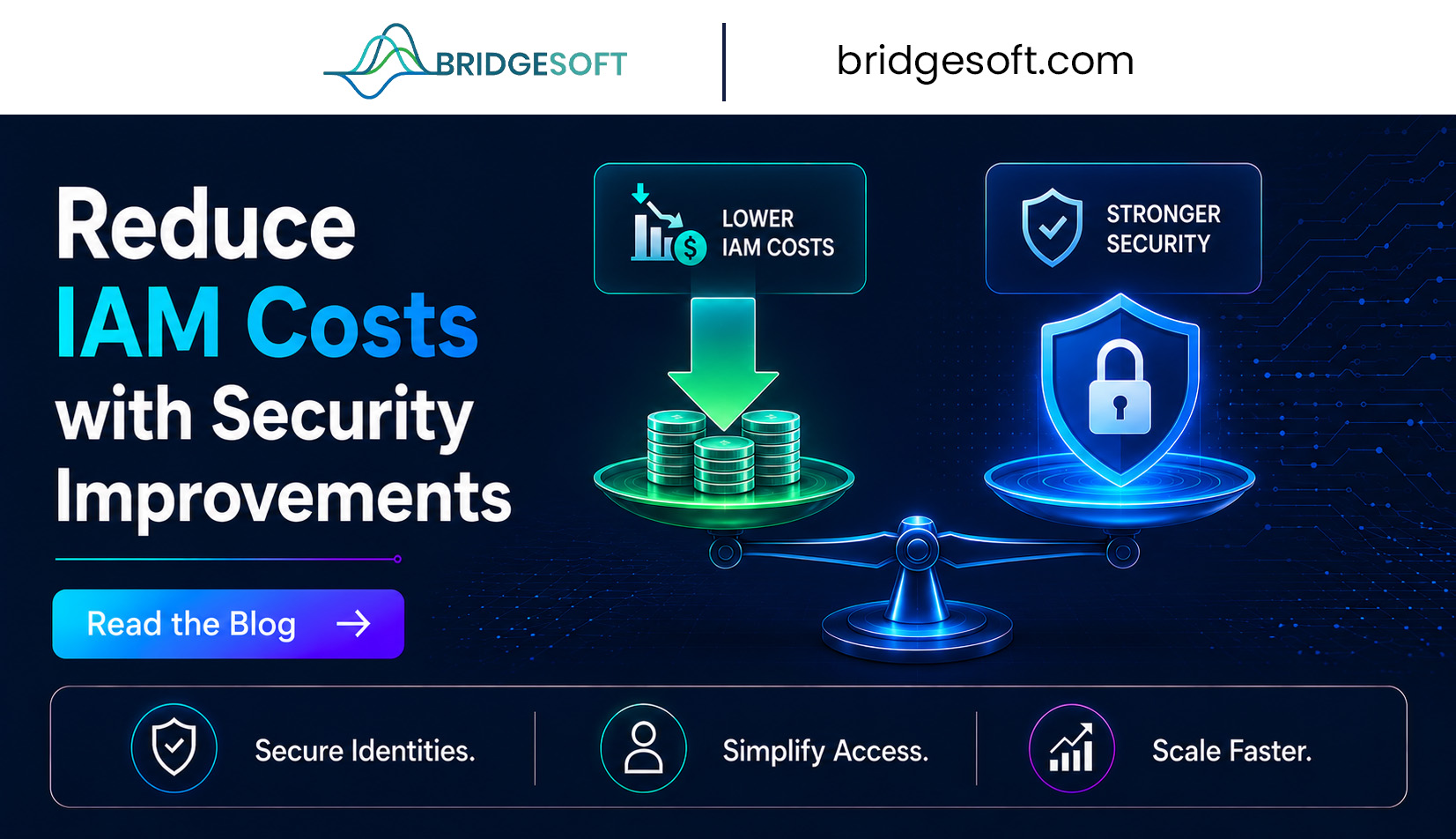
Identity Access Management (IAM) has emerged as a key component of enterprise security as businesses adopt cloud computing, hybrid work, and digital transformation. However, many businesses find that IAM costs continue to rise due to fragmented identity systems, manual processes, and legacy infrastructure. While licensing is often considered the primary expense, the true Total Cost of Ownership (TCO) of IAM extends far beyond software purchases.
Organizations must focus on three crucial areas to successfully reduce IAM costs: deployment, ongoing maintenance, and upgrade costs. Businesses can save operating costs while enhancing security, compliance, and user experience by implementing a single IAM strategy, automating identity procedures, and updating identity governance.
[How to Successfully Implement IAM]
A successful IAM cost optimization strategy begins with understanding where organizations spend the most. IAM expenses typically fall into three categories:
Optimizing each of these areas helps organizations maximize their IAM investment while reducing long-term operational costs.
1. Optimize IAM Deployment Costs
Deployment is often the largest upfront investment in an IAM program. Costs can increase due to multiple IAM products, custom integrations, legacy applications, and lengthy implementation timelines. Organizations that deploy separate solutions for authentication, identity governance, and access management often face duplicated functionality and higher consulting expenses.
The most effective way to reduce deployment costs is by adopting a single IAM and Identity Governance (IGA) strategy. A unified platform simplifies integrations, eliminates redundant technologies, and provides a centralized source of truth for managing identities across cloud and on-premises environments.
A phased implementation approach also minimizes deployment risks by prioritizing high-value applications before expanding across the enterprise. Combined with pre-built connectors and standardized APIs, organizations can accelerate implementation, reduce custom development, and achieve faster time-to-value.
2. Reduce Ongoing Maintenance Costs Through Automation
While deployment is a one-time investment, maintenance costs continue throughout the IAM solution's lifecycle. Manual user provisioning, password resets, access requests, role modifications, compliance reporting, and audit preparation consume significant IT resources and increase operational expenses.
Automation is one of the most effective ways to reduce these recurring costs. Modern IAM platforms can automatically provision and deprovision user accounts, assign role-based permissions, trigger approval workflows, and manage identity lifecycle events without manual intervention.
Organizations should also implement Role-Based Access Control (RBAC) to simplify access management. By assigning permissions based on job roles instead of individual users, IT teams reduce administrative effort while ensuring employees receive appropriate access.
Additionally, centralized Identity Governance enables continuous access reviews, automated certification campaigns, and improved visibility into user permissions. These capabilities reduce compliance effort, eliminate unnecessary access, and strengthen security without increasing operational overhead.
[What Slow Downs IAM Implementation in Enterprises?]
3. Lower Upgrade and Modernization Costs
Many enterprises continue to operate legacy IAM environments that become increasingly expensive to maintain. Platform upgrades often require custom coding, infrastructure refreshes, compatibility testing, and complex migration projects, resulting in higher costs and longer implementation timelines.
Modernizing with cloud-based IAM platforms significantly reduces these expenses. Cloud IAM solutions provide automatic updates, built-in scalability, and standardized integrations that simplify future upgrades while reducing infrastructure management costs.
Organizations should also adopt API-first architectures and standard connectors to minimize custom development and improve interoperability with enterprise applications. Combining several identity solutions into a single IAM ecosystem simplifies upcoming modernization projects and further lowers license, training, and maintenance expenses.
[AI for Identity vs Identity for AI]
It takes more than implementing new technology to reduce IAM costs; a comprehensive approach that balances cost savings with business results is needed.
Key strategies include:
These strategies not only reduce costs but also improve operational efficiency, strengthen compliance, and enhance the organization's overall security posture.
[How AI is Transforming Identity and Access Management]
Organizations should evaluate IAM initiatives based on both financial savings and business value.
| Optimization Strategy | Cost Benefit | Business Benefit |
| Single IAM / IGA Strategy | Reduced licensing and infrastructure costs | Centralized governance and simplified administration |
| Identity Automation | Lower operational and support costs | Faster onboarding and improved productivity |
| Role-Based Access Control | Reduced access management effort | Stronger compliance and least-privilege access |
| Cloud IAM | Lower infrastructure and upgrade costs | Improved scalability and business agility |
| Regular Access Reviews | Eliminate unused licenses and inactive accounts | Reduce security risks and improve audit readiness |
When organizations align IAM investments with measurable business outcomes, they maximize their return on investment while creating a scalable, future-ready identity ecosystem.
Imagine walking into an office building where no one knows exactly who has access to which rooms. Some employees still carry keys from previous departments, former contractors can enter restricted areas, and duplicate access cards exist without anyone realizing it. The result would be confusion, security risks, and a lack of accountability.
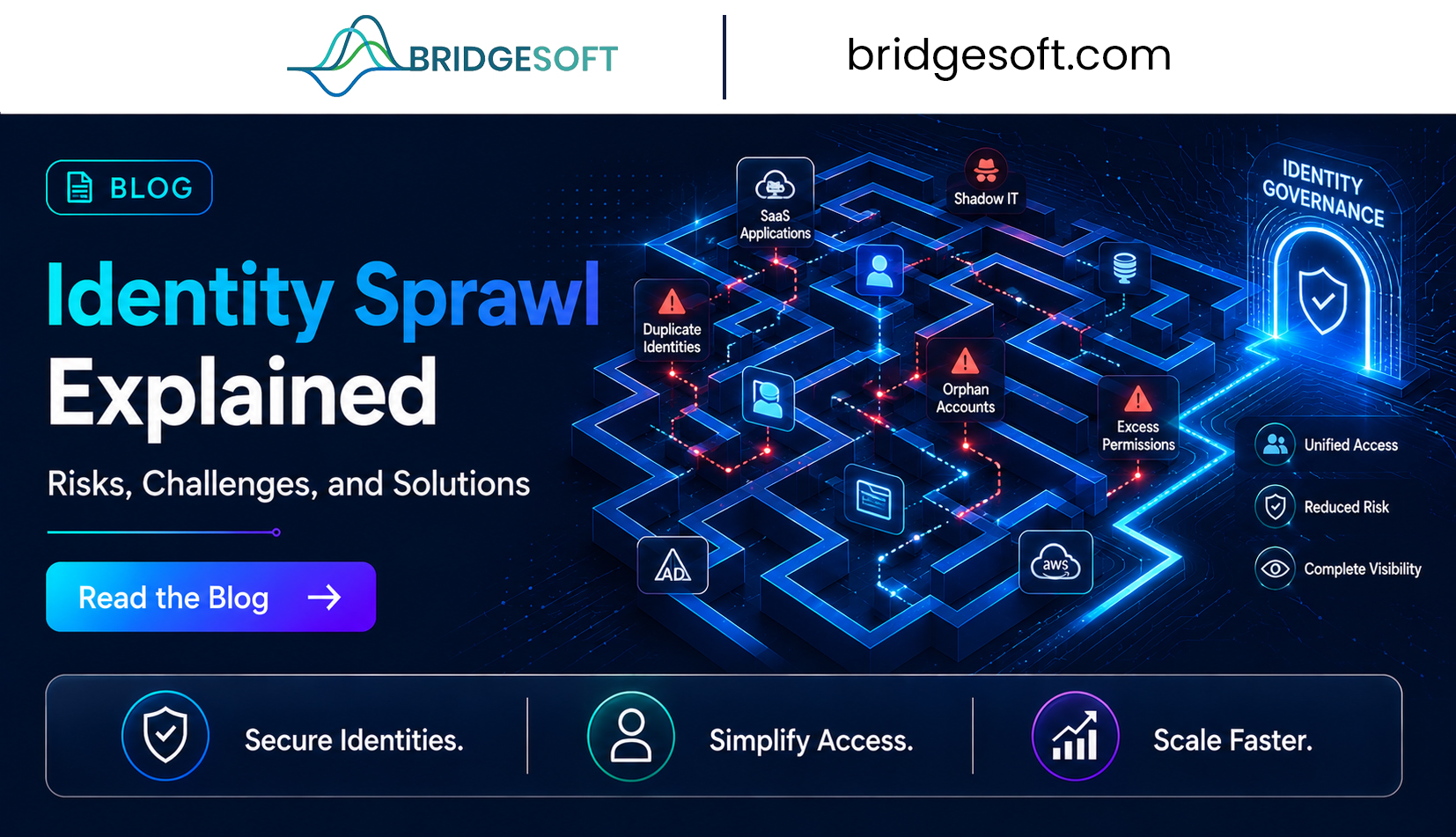
This scenario mirrors what many organizations experience today in their digital environments through a growing challenge known as Identity Sprawl.
As businesses adopt cloud applications, remote work models, third-party integrations, and digital transformation initiatives, the number of identities within the enterprise grows rapidly. Employees, contractors, partners, service accounts, applications, and devices all require access to systems and data. Without proper controls, these identities become scattered across multiple platforms, creating a complex web of unmanaged accounts, excessive permissions, and security vulnerabilities.
Identity sprawl is no longer just an IT challenge—it is a business risk that directly impacts security, compliance, and operational efficiency.
Identity sprawl occurs when organizations accumulate many identities across various systems without centralized visibility or governance. As new applications and services are introduced, user accounts are created in multiple locations, often with inconsistent access policies and little ongoing oversight.
Over time, employees change roles, projects evolve, and systems expand. However, access rights are rarely cleaned up at the same pace. Duplicate identities may appear across platforms, users may retain permissions they no longer want, and inactive accounts may remain active.
The result is an identity ecosystem that becomes increasingly difficult to manage, monitor, and secure.
In today's cloud-driven environment, identity sprawl has become one of the most common challenges organizations face in maintaining effective Identity and Access Management practices.
Modern organizations rely on identities to access virtually every business application and resource. As a result, identities have become one of the most attractive targets for cybercriminals.
Every unmanaged account, unused credential, or excessive permission creates a potential pathway for unauthorized access. If an attacker can compromise a valid identity, they no longer need to overcome conventional network security.
Identity sprawl increases the likelihood of:
The larger the identity ecosystem becomes, the more difficult it is for security teams to maintain control and enforce consistent security policies.
Organizations often discover these risks only after a security event or compliance audit if they don't have an organized identity management strategy.
Beyond security concerns, identity sprawl creates significant operational challenges.
IT teams frequently spend valuable time managing access requests, resetting passwords, reviewing permissions, and tracking down account ownership. As organizations grow, these manual processes become increasingly difficult to scale.
Separate identity stores and applications may be used by different departments, resulting in separation and uneven access control. Mergers, acquisitions, and digital transformation projects often introduce additional complexity by bringing new systems and user populations into the environment.
Without centralized visibility, organizations struggle to answer fundamental questions:
These challenges can quickly overwhelm security and IT teams, increasing both risk and administrative costs.
One of the most effective ways to combat identity sprawl is through strong Identity Governance.
Identity Governance provides organizations with visibility, accountability, and control over user access across the enterprise. It ensures that identities are continuously monitored, reviewed, and aligned with business requirements.
With proper governance processes in place, organizations can:
Identity Governance transforms access management from a reactive process into a proactive security strategy. Instead of simply granting access, organizations can continuously evaluate whether access remains appropriate.
This level of oversight is essential for maintaining security in increasingly complex digital environments.
As identity ecosystems grow, organizations must ensure users have access only to the resources required for their roles.
This is where Secure Access Management becomes critical.
Secure Access Management focuses on enforcing access controls that protect sensitive systems while maintaining a seamless user experience. Through centralized authentication, policy enforcement, and risk-based access decisions, organizations can significantly reduce identity-related threats.
Modern access management solutions provide features such as:
These capabilities help organizations strike the right balance between security and productivity while minimizing opportunities for unauthorized access.
Businesses can reduce their attack surface and improve overall cybersecurity resilience by implementing Secure Access Management procedures.
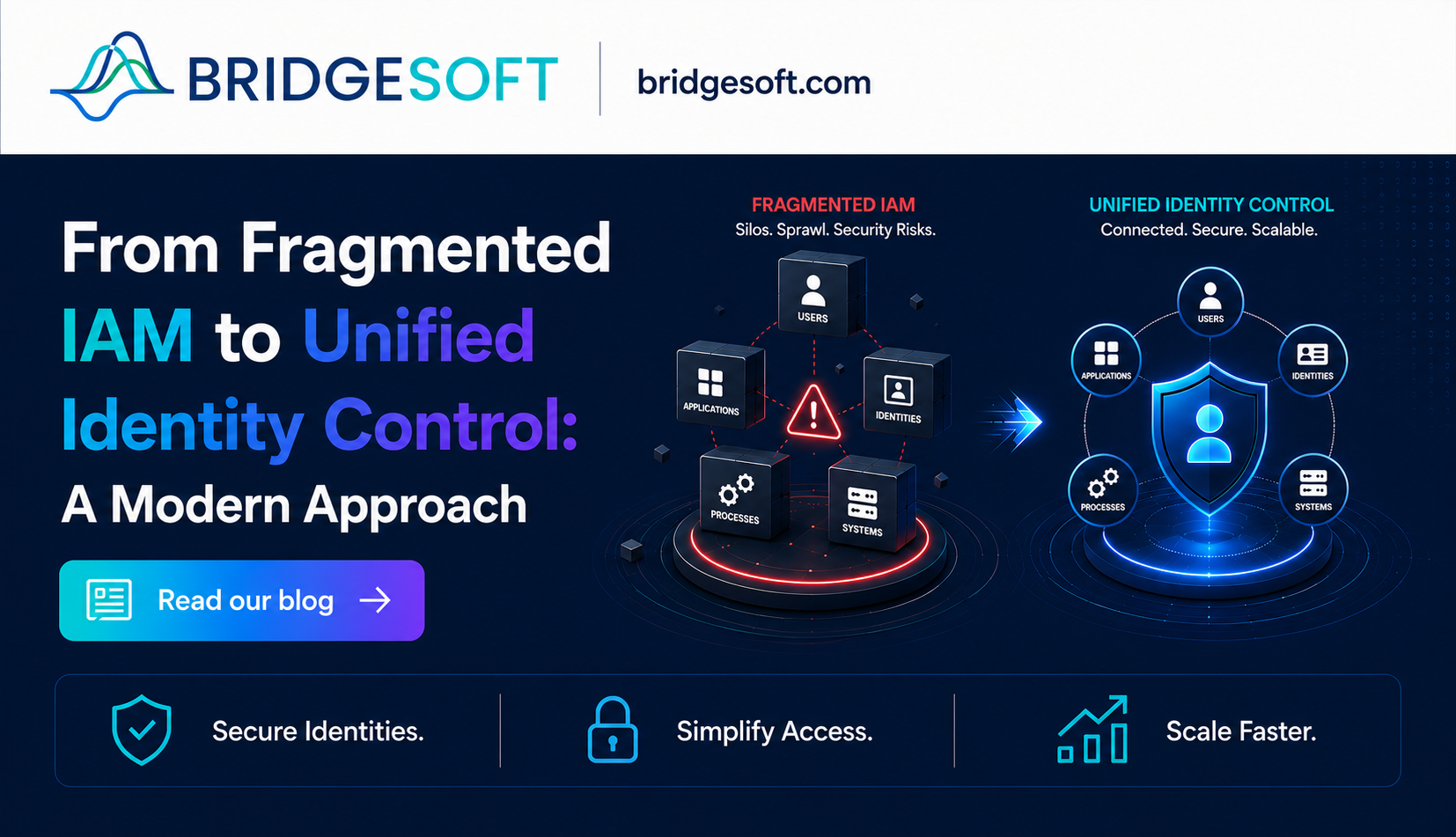
Organizations today operate in highly connected digital environments where employees, applications, and data exist across cloud, on-premises, and hybrid infrastructures. While businesses continue to accelerate their digital transformation, many still struggle with fragmented systems that create security gaps, operational inefficiencies, and inconsistent access controls.
Disconnected platforms and manual access process’s complicate identity management. Employees juggle multiple credentials, and IT teams spend excessive time resolving access issues. These systems decrease productivity and heighten the risks of unauthorized access and compliance failures.
Organizations are moving toward unified identity control—a centralized approach that strengthens security and streamlines access management. Modern IAM solutions create connected ecosystems with improved visibility, governance, and operational efficiency.
Fragmented IAM grows as organizations add technologies, expand operations, acquire new businesses, merge with other entities, or integrate multiple systems—without a centralized identity strategy. Large enterprises with multiple subsidiaries or business units often inherit disconnected identity environments that become increasingly difficult to manage and secure over time.
Without Identity Governance, organizations risk excessive privileges, orphaned accounts, delayed deprovisioning, and inconsistent access policies. These gaps expose systems and data, creating compliance headaches during audits.
In addition, scattered access information makes it difficult for security teams to gain complete visibility into who has access to critical resources and whether those permissions remain appropriate. Modern enterprises require more than isolated identity tools — they need centralized identity intelligence to secure the entire digital ecosystem.
[The Future of Identity Governance]
A unified IAM approach turns identity into a strategic advantage by centralizing authentication, access management, and user governance. Unified Identity and Access Management delivers stronger security, smoother operations, and more consistent controls across the enterprise.
Modern IAM platforms support advanced security capabilities such as Single Sign-On (SSO), Multi-Factor Authentication (MFA), and adaptive authentication. These technologies help employees securely access applications without the complexity of managing multiple credentials. At the same time, organizations strengthen protection against unauthorized access attempts and identity-based cyber threats.
Unified identity systems automate access tasks and centralize operations on a single platform, reducing IT complexity and supporting seamless user experiences across cloud and hybrid environments.
Identity is the new security perimeter. Organizations must monitor access requests, permissions, and identity-related activity to reduce risk and stay compliant. Identity Governance is essential.
Modern governance solutions give visibility into user access across systems. Businesses automate reviews, enforce policies, and monitor activities to spot risky behavior or excessive permissions.
By integrating Identity Governance into a centralized IAM framework, organizations can significantly reduce insider threats, improve compliance readiness, and ensure that users maintain only the access necessary for their roles. Automated audit reporting and policy enforcement also simplify compliance management for regulations such as GDPR, HIPAA, and ISO standards.
Manual identity management causes delays, inconsistencies, and security gaps. Modern IAM platforms automate user access provisioning to fix this.
Intelligent workflows let organizations automatically create accounts, assign permissions, and grant role-based access. When roles change or employees leave, permissions are updated or revoked immediately.
Automated user access provisioning improves operational efficiency while reducing the risks associated with dormant accounts, overprovisioned access, and manual errors. It also enhances employee productivity by enabling faster, more secure access to business-critical applications.
As organizations adopt cloud, remote work, and SaaS applications, digital transformation security becomes a top priority. Modern IAM Solutions provide the scale and flexibility required to secure rapidly evolving environments.
Centralizing identity controls enables consistent security across the enterprise. Adaptive authentication and AI-driven threat detection respond dynamically to changing risk levels and user behaviors.
Unified platforms also accelerate innovation by simplifying integration with digital services, allowing organizations to extend IAM policies consistently across the organization.
Final Thoughts:
Fragmented identity systems add complexity, inefficiency, and security risks that businesses can no longer ignore. Unified IAM centralizes control, strengthens governance, improves secure access management, and automates provisioning.
Identity and Access Management (IAM) is no longer just a layer of security—it has evolved into a critical business enabler. From onboarding employees efficiently to ensuring regulatory compliance and enabling secure digital transformation, IAM sits at the heart of modern enterprise operations.
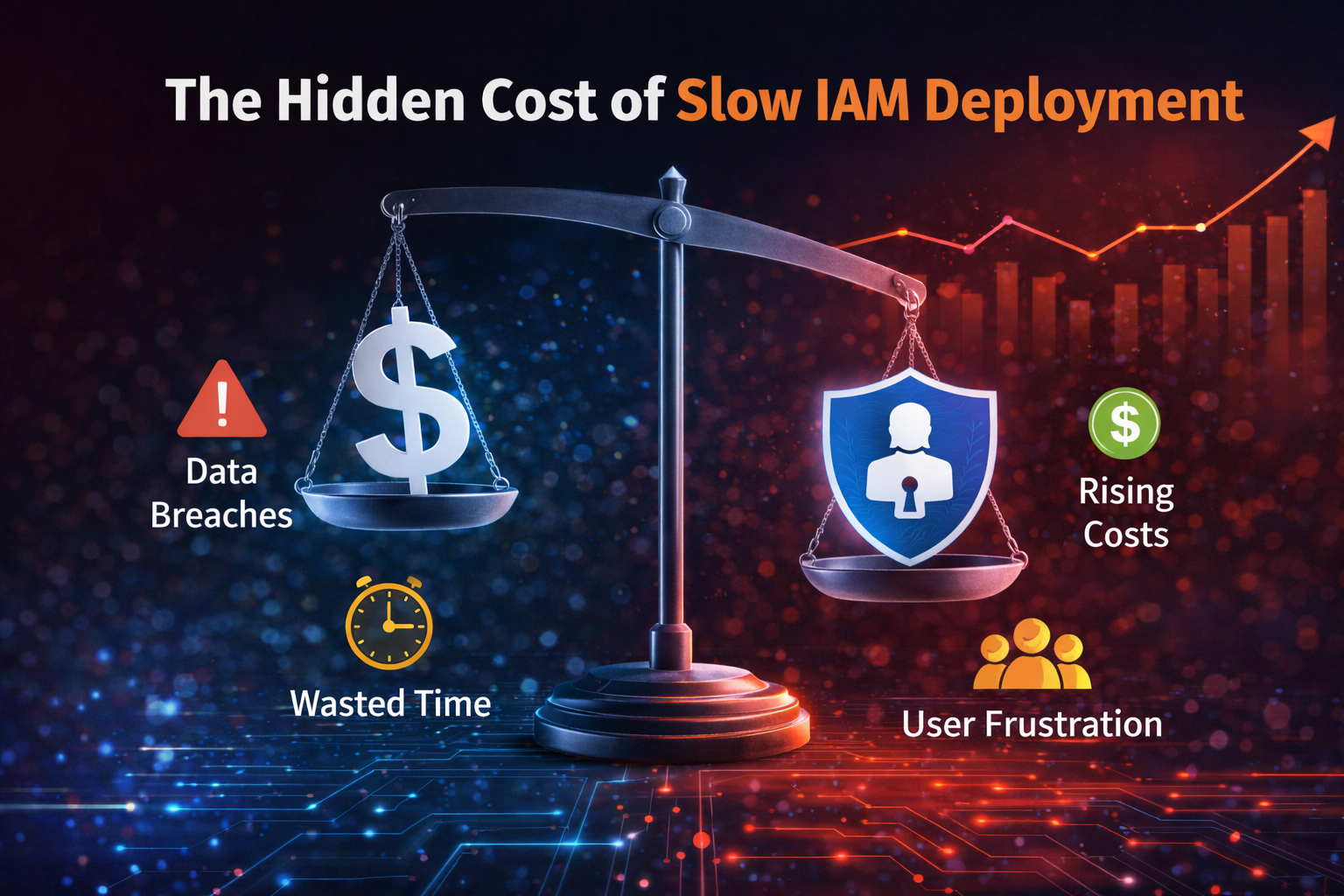
Despite its importance, many organizations struggle with a persistent, often underestimated challenge: slow IAM deployment.
At first glance, implementation delays may appear manageable—just a few weeks added to timelines or minor integration setbacks. However, as these delays accumulate, they begin to create ripple effects across the organization. What starts as a technical delay gradually becomes a business problem, affecting security, productivity, compliance, and overall performance.
To truly understand how to avoid these outcomes, it’s important to first recognize the root causes behind why IAM Projects fail and how organizations can implement IAM successfully with the right strategy.
Slow IAM deployment is not just about missed deadlines—it often reflects deeper inefficiencies in an organization’s technology and processes.
It can manifest in several ways: delayed employee onboarding, prolonged application integrations, heavy reliance on manual provisioning, and extended implementation cycles that far exceed initial expectations. These inefficiencies are typically rooted in legacy systems, a lack of integration planning, and the absence of a structured implementation roadmap.
Organizations that take the time to build a clear IAM roadmap and prioritize early integration are better positioned to avoid these delays and achieve a more streamlined implementation journey.
One of the most immediate and critical consequences of slow IAM deployment is the increased exposure to security risks. When IAM systems are only partially implemented, users often retain access privileges longer than necessary, and manual errors become more frequent.
Delayed deprovisioning and lack of centralized control create gaps that can be exploited, increasing the likelihood of unauthorized access or data breaches. Over time, these vulnerabilities can have serious financial and reputational consequences for the organization.
Beyond security, slow IAM directly impacts the day-to-day productivity of employees and teams. When access to applications and systems is delayed, employees are unable to perform their roles efficiently.
IT teams, on the other hand, are often burdened with repetitive manual tasks such as provisioning and access approvals. This not only slows down business workflows but also diverts valuable resources away from more strategic initiatives.
The result is a workplace environment where inefficiencies become normalized, and both employees and IT teams experience growing frustration.
IAM is often viewed as a long-term investment in security and efficiency. However, when deployment is slow, it begins to behave more like an ongoing operational expense.
Delays lead to extended development efforts, continuous rework, and increased reliance on manual processes. Organizations may find themselves allocating additional resources to maintain incomplete systems, driving up costs without delivering proportional value.
In such scenarios, the true cost of IAM is not in its implementation—but in its delay.
IAM plays a central role in maintaining regulatory compliance and ensuring audit readiness. When implementation is delayed, organizations struggle to establish complete audit trails, enforce access governance policies, and generate consistent reports.
These gaps can lead to compliance failures, especially in highly regulated industries where visibility and accountability are critical. The longer the IAM deployment is delayed, the more difficult it becomes to meet regulatory requirements and avoid potential penalties.
IAM is a foundational component for broader digital transformation efforts, including cloud adoption, automation, and Zero Trust security models.
When IAM deployment is slow, it creates a bottleneck that impacts these initiatives. Organizations may find themselves unable to move forward with modernization efforts because the underlying identity infrastructure is not yet mature.
In this way, IAM delays do not just affect security—they slow down the organization’s ability to innovate and compete in a digital-first world.
In today’s fast-paced work environment, users expect seamless and immediate access to the tools they need. Slow IAM processes, however, often lead to login issues, access delays, and inconsistent user experiences.
When employees are unable to access systems efficiently, they may turn to unauthorized tools or workarounds—leading to the rise of shadow IT. This not only undermines security but also creates additional governance challenges for the organization.
A major contributor to slow IAM deployment is the difficulty of integrating with legacy systems. Many enterprises operate with outdated platforms that lack modern APIs or standardized integration capabilities.
For years, cybersecurity programs were anchored in infrastructure: firewalls, antivirus software, and perimeter defense. Identity and Access Management (IAM) was often seen as an operational function important, but isolated from the broader conversation around enterprise risk.
Today, that model no longer holds.
In a digital first, cloud driven world, identity has become the new security perimeter. It defines who (or what) has access to sensitive systems, data, and workflows. And because every breach, escalation, or misconfiguration ultimately traces back to a question of identity, a modern security culture must begin with identity at its core.
But culture isn’t a product you can deploy. It’s a mindset. It requires buy in from stakeholders, clarity in roles, and sustained reinforcement across the organization. Building an identity first security culture means embedding identity into every layer of business operations and making it everyone’s responsibility.
As hybrid work, cloud adoption, and API driven development reshape enterprise environments, traditional network perimeters have eroded. Users, applications, and workloads now connect from anywhere across unmanaged devices, third party networks, and distributed systems.
In this model, the question is no longer “Is this network secure?” but rather “Should this identity have access right now?”
Security outcomes increasingly depend on identity decisions:
An identity first approach shifts the focus from controlling access at the edge to governing access at the source based on who the user is, what they need, and how their risk posture changes over time.
Adopting an identity first culture involves more than new tools or policies. It requires changing how people think, behave, and prioritize.
1. From IT Ownership to Shared Accountability
IAM has traditionally been owned by IT, but identity is now a shared responsibility. HR provides attributes. Security defines policies. Business managers approve access. Compliance teams ensure oversight. Identity affects and is affected by every function. Success depends on alignment and accountability across stakeholders.
2. From Reactive Compliance to Proactive Governance
Rather than scrambling to fix access before audits, identity first organizations bake governance into everyday workflows. Role definitions are clear. Entitlement reviews are automated. Violations are detected in real time. Identity controls become part of the organization’s operating system.
3. From Static Permissions to Dynamic Access
In fast moving environments, static access grants quickly become outdated. Identity first thinking embraces principles like least privilege, just in time (JIT) access, and contextual authentication. It treats access as a temporary condition not a permanent entitlement.
1. Executive Sponsorship
Without leadership support, identity programs often stall due to lack of prioritization or funding. Executives must champion identity as a business enabler, not just a security requirement. Metrics tied to business value such as time to productivity, risk reduction, or audit readiness help build support across the C suite.
2. Identity Literacy Across Teams
Just as cybersecurity awareness training is standard practice, identity awareness should be part of organizational onboarding and training. Managers need to understand their role in access approvals. Developers need to know how to secure service accounts. Employees must recognize their role in protecting credentials and reporting suspicious access.
3. Seamless User Experience
Security that disrupts users is often bypassed. Identity first organizations prioritize security by design making secure behavior the path of least resistance. This includes intuitive access requests, SSO, passwordless authentication, and clear visibility into who has access to what and why.
4. Continuous Improvement
Identity governance is not a “set it and forget it” effort. Business roles change. Technologies evolve. Threats adapt. A culture of continuous improvement with regular policy reviews, feedback loops, and automation audits ensures that identity programs remain relevant and effective.
If your organization is looking to build or reinforce an identity first culture, start with the following foundational steps:
While culture is people first, technology plays an enabling role. Identity first cultures benefit from platforms that:
Technology should not be the culture but it should make the culture easier to adopt, enforce, and evolve.
Culture is the force multiplier of security. Policies can be written. Tools can be deployed. But without a culture that values identity as a strategic asset, even the most advanced IAM implementations will fall short.
An identity first culture ensures that access is governed by design not by default. It empowers people to make informed decisions, respond to risk quickly, and align access with the needs of the business.
Imagine your phone, computer, or favorite app being compromised, wouldn’t you want an immediate solution?
Well, lucky for you, there is one! There’s a digital detective whose job is to figure out who did it, how they did it, and what they accessed. That’s what Cyber Forensics is all about, solving digital crimes by collecting and analyzing evidence from electronic devices.
Now, here’s where IAM, short for Identity and Access Management, becomes a hero:
IAM is like the bouncer at a VIP party. It decides who gets in, what rooms they can enter, and what they’re allowed to do. And when something goes wrong, IAM keeps a record of every door opened and by whom. Think of it as having a detailed guest list and security footage at every door.
This makes Cyber Forensics faster and more accurate because investigators can trace digital footprints back to specific users or actions. Meaning that we are able to let you rest, knowing that you’re safe.
So in today’s world of constant digital threats, IAM isn’t just about security. Let’s imagine a scenario together so that you will know what to do in a situation where Cyber Forensics is needed. Because IAM is also about catching criminals.
You have just received an email from our cybersecurity team, telling you and the team to be cautious in opening suspicious emails or answering any call that requests us to log in to the link(s) that they provide.
Everyone began to question what was happening and found that there was a threat actor (TA) attempting to impersonate an IT support personnel, asking employees to log in to a link in order to get their user ID and password, also known as a user's login credentials.
The TA can use the login of whoever falls for the trick and get confidential company information. We were all relieved to find that our identity and access management (IAM) security awareness program was able to save the company from the cyber attack.
So, what exactly happened? The TA was able to convince one employee to create a login, hence getting access to their credentials. The TA then tried to log in to our company’s application from his device, in which he was prompted to use two-factor authentication.
The user was told to give him the authentication code which raised a red flag. It is
known that people are not meant to share the code with anybody especially for something important. The user immediately hung up and reported the incident to our security team…
This is known as an outsider threat, which happens when a person outside of a secure system manages to get in and essentially steal, change or block access to data.
However, companies must also be wary of the people on the inside, individuals within the system who misuse their access. IAM systems enhance digital forensics by monitoring user access, enforce stricter controls, and strengthen security overall.
IAM and Cyber Forensics play hand in hand together, and with this example above, it’s clear it’s more common than we think.
Every time you log into your email, swipe your access card at work, or even unlock your phone with Face ID, IAM is quietly working in the background. It’s making sure you are really you, and that you’re only accessing what you’re supposed to.
But when something goes wrong, like a data breach or unauthorized access, Cyber Forensics steps in. And thanks to IAM logs and records, investigators can follow the digital breadcrumb trail. They can pinpoint who accessed what, when, from where, and even what device they used.
This partnership is crucial, especially today when cybercrimes are becoming more sophisticated. Without IAM, forensic experts would be digging through a digital haystack without a clue. But with IAM? It’s like turning on the lights in a dark room.
Together, IAM and Cyber Forensics don’t just help respond to attacks, they help prevent them, by tightening access controls and spotting unusual behavior before it becomes a bigger problem.
So the next time you log in somewhere or get asked to verify your identity, remember: that tiny inconvenience is actually part of a much bigger system working to keep you, and your data safe.
In today’s digital landscape, safeguarding sensitive data and ensuring regulatory compliance are top priorities for organizations. Identity Access Management (IAM) serves as a cornerstone for achieving these goals by controlling user access to critical systems and resources.
Below are key best practices to optimize your IAM strategy.
1. Develop Comprehensive IAM Policies Aligned with Business Needs
Start by defining clear IAM policies that reflect your organization’s unique requirements. This includes mapping user roles and access levels to ensure employees only have permissions necessary for their responsibilities. Implementing Role-Based Access Control (RBAC) simplifies permission management by assigning access based on job functions. Regularly revisit these policies to align with evolving business needs, ensuring scalability and agility in dynamic environments.
2. Strengthen Authentication and Access Controls
Enforce strong passwords and multi-factor authentication (MFA) to add security layers. Utilize advanced verification methods, such as biometrics or hardware tokens, to reduce unauthorized access risks. By combining security layers like encryption and least-privilege principles, organizations can create a robust defense against breaches.
3. Conduct Regular Risk Assessments and Policy Reviews
Proactively identify vulnerabilities through frequent risk assessments. This enables organizations to adjust policies and address gaps before they escalate. Schedule policy updates to stay compliant with industry regulations and adapt to emerging threats. A dynamic approach ensures your IAM framework remains resilient.
4. Automate User Lifecycle Management and Monitoring
Automate user provisioning and deprovisioning to eliminate manual errors and ensure timely access adjustments during onboarding or role changes. Implement log monitoring and automated alerts to track suspicious activities in real time. Tools that monitor access logs enhance visibility, enabling swift responses to potential incidents.

5. Integrate IAM with Security Solutions and Provide Training
Maximize protection by integrating IAM with security solutions like SIEM (Security Information and Event Management) systems. This fosters cohesive incident response strategies and centralized threat detection. Additionally, provide user training to educate employees on phishing recognition and secure access practices. An informed workforce is your first line of defense.
Why Bridgesoft?
At Bridgesoft, we understand that effective IAM requires a blend of cutting-edge technology and strategic planning. Our solutions support RBAC implementation, automated user management, and seamless SIEM integration, empowering organizations to enforce granular access controls while reducing administrative overhead.
Conclusion
Implementing these IAM best practices not only fortifies security but also enhances operational efficiency. By prioritizing policy reviews, strong authentication, and user training, businesses can build a future-proof IAM framework. Partner with Bridgesoft to leverage tailored IAM strategies that align with your organizational goals, ensuring secure and scalable access management.
By adopting these practices, organizations can transform their IAM approach into a strategic asset, driving both security and productivity.
In today's ever-evolving digital landscape, managing user identities has become increasingly complex. Businesses juggle a vast network of applications, cloud resources, and interconnected systems, each requiring secure access control. This is where Identity Governance and Administration (IGA) comes into play.
Bridgesoft, a leading provider of IGA solutions, empowers organizations to streamline identity management and bolster security. But before diving into Bridgesoft's offerings, let's delve deeper into the world of IGA and explore its significance.
Key Components of Identity Governance
An effective IGA program should include the following components:
Bridgesoft offers a robust IGA platform that caters to the diverse needs of modern organizations. Here's a glimpse into Bridgesoft's IGA solutions:
By implementing Bridgesoft's IGA solutions, you can:
If you are looking for a partner to help you implement an Identity Governance program, Bridgesoft is the perfect choice. Contact us today to learn more about our solutions.
The gaming industry is a colossal entertainment force, with millions worldwide enthralled by online games. This phenomenal growth, however, brings a rising tide of online security threats. Hackers constantly seek ways to exploit vulnerabilities in games and platforms, making robust security measures crucial for game developers and publishers to safeguard their players.
One of the most concerning issues is identity theft. Hackers can steal player accounts, wreaking havoc by cheating, pilfering in-game items, or even making real-world purchases. This can be devastating for players, potentially leading to lost accounts or compromised financial information.
Another major threat is denial-of-service (DoS) attacks. These bombard game servers with traffic, rendering them inaccessible to legitimate players. DoS attacks disrupt gameplay and cause frustration, potentially damaging a game's reputation.
Here's a glimpse into the industry's scale to emphasize the importance of security:

Bridgesoft, a company specializing in identity and access management (IAM) services, offers solutions specifically designed for the gaming industry. IAM solutions address online security challenges by providing features like:

By implementing IAM solutions, game developers and publishers can create a safer and more secure environment for their players. This safeguards them from identity theft, DoS attacks, and other online security threats.
There's more to the benefits of IAM solutions. They can also enhance the player experience by:
If you're a game publisher, prioritizing IAM solutions is vital to protecting your players and your business. Bridgesoft provides a variety of solutions to cater to your specific requirements. For more info on the gaming do check this.
To learn more about how Bridgesoft's IAM solutions can help you secure your game, visit our website or contact us directly.