Every organization wants employees to become productive from day one. Whether hiring a new employee, onboarding a contractor, or assigning additional responsibilities to an existing team member, timely access to business applications is essential. Yet, many IT departments still rely on manual processes to create accounts, assign permissions, and approve access requests.

At first glance, manual provisioning may appear manageable. However, as organizations grow, the number of users, applications, cloud services, and business systems increases rapidly. What once worked for a small IT team quickly becomes an operational bottleneck.

Manual User Access Provisioning slows onboarding, increases administrative workloads, creates inconsistent permissions, and exposes organizations to unnecessary security risks. Instead of focusing on strategic initiatives, IT teams spend valuable time responding to access requests, troubleshooting permissions, and managing account changes.

Modern businesses require a faster and more secure approach. This is where Identity and Access Management (IAM) transforms the provisioning process by automating access decisions and simplifying identity operations.

Why Manual Provisioning Becomes a Challenge

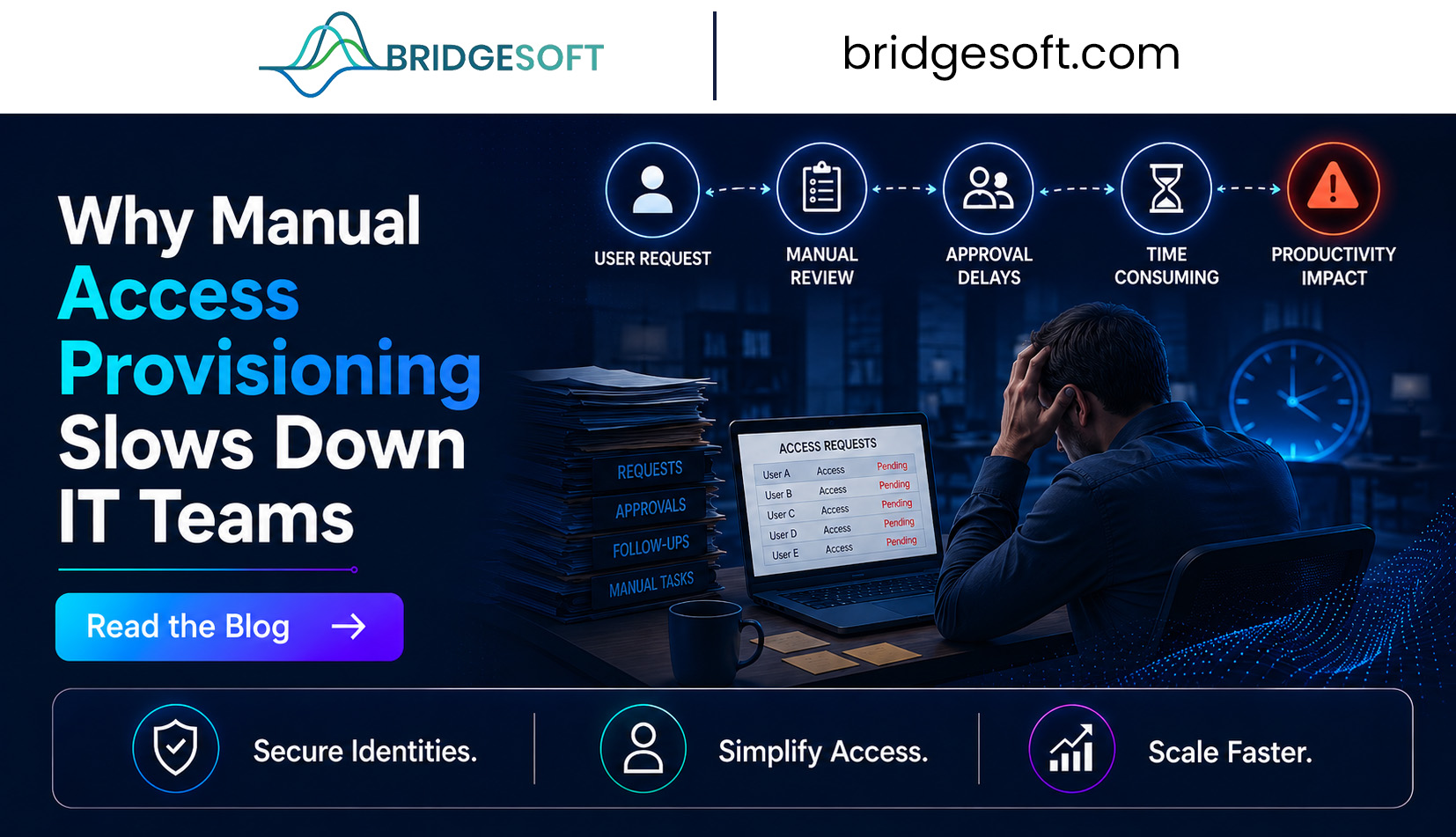
In many organizations, user access requests still follow a familiar pattern. A manager submits a request; the IT team reviews it; approvals are gathered via email or ticketing systems; accounts are created manually; permissions are assigned to applications one at a time; and confirmation is sent back to the user.

This process may seem straightforward, but it introduces delays at every stage. Waiting for approvals, switching between multiple systems, and manually configuring permissions consume valuable IT resources.

As organizations expand across cloud applications, hybrid environments, and remote workforces, these manual tasks multiply. IT teams spend more time managing access than supporting innovation, leaving little capacity for higher-value projects.

The Business Impact of Slow User Access Provisioning

Delayed access affects far more than the IT department. New employees who cannot access essential applications lose valuable onboarding time, while existing employees may experience interruptions when changing roles or joining new projects.

Business managers face productivity losses, employees become frustrated, and support tickets continue to increase. Over time, these inefficiencies affect collaboration, customer service, and overall business performance.

Manual provisioning also creates inconsistencies. Different administrators may assign different permissions for similar roles, leading to excessive access, missing permissions, or unnecessary approval requests. These inconsistencies increase operational complexity while making governance more difficult.

Faster user access provisioning improves both employee experience and business agility by ensuring users receive the right access when they need it.

Security Risks Associated with Manual Provisioning

Manual access management is not only inefficient—it also introduces security risks.

When access requests are processed manually, mistakes become more likely. Accounts may receive excessive permissions, access may remain active after employees leave the organization, or temporary privileges may never be removed.

These issues increase the organization’s attack surface and create opportunities for unauthorized access.

Strong, secure access management requires consistent policy enforcement throughout the identity lifecycle. Manual processes make this consistency difficult to achieve, particularly across large enterprises managing thousands of identities.

Automated identity controls reduce these risks by ensuring access decisions follow predefined security policies rather than individual administrative judgment.

How Role-Based Access Control (RBAC) Simplifies Provisioning

One of the most effective ways to reduce provisioning complexity is through Role-Based Access Control (RBAC).

Instead of assigning permissions individually, RBAC groups users according to their business roles. Employees in finance, human resources, sales, customer support, or IT automatically receive access appropriate to their responsibilities.

This approach dramatically simplifies provisioning because administrators no longer need to determine permissions for every request.

RBAC also improves consistency, reduces administrative effort, and supports compliance by ensuring similar roles receive standardized access across the organization.

As businesses grow, Role-Based Access Control becomes a critical foundation for scalable Identity and Access Management.

Accelerating IAM Deployment Through Automation

Organizations often view IAM deployment as a security initiative, but one of its greatest advantages is operational efficiency.

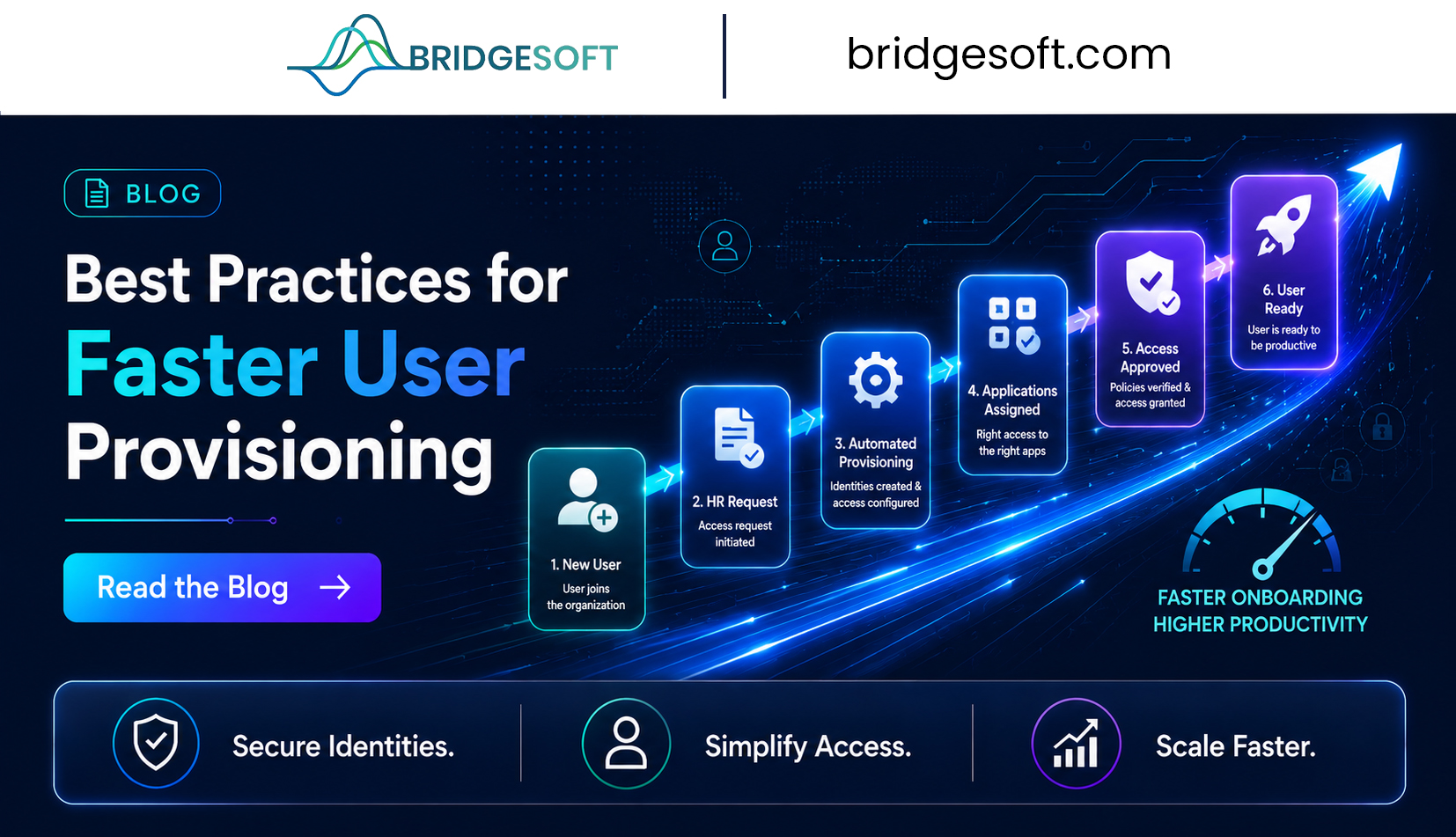
Modern IAM platforms automate the entire provisioning lifecycle—from onboarding and role changes to offboarding and access reviews. Instead of relying on emails, spreadsheets, or manual approvals, workflows automatically provision users based on business rules and organizational policies.

In today's fast-paced digital workplace, employees expect immediate access to the applications, systems, and resources they need to perform their jobs effectively. Whether organizations are onboarding new employees, managing contractors, supporting remote teams, or enabling third-party access, delays in user provisioning can negatively impact productivity, employee experience, and business operations.

At the same time, organizations must ensure that access is granted securely and consistently. Providing access too slowly can hinder business performance, while providing access too quickly without proper controls can introduce security risks and compliance concerns.

This is why User Access Provisioning has become a critical component of modern Identity Access Management strategies. The goal is no longer to create user accounts; it is to deliver the right access to the right users at the right time while maintaining security, governance, and operational efficiency.

Organizations that streamline provisioning processes gain a significant advantage by improving employee productivity, reducing administrative overhead, and strengthening their overall security posture.

The Cost of Slow User Provisioning

Many organizations still rely on manual provisioning processes that involve emails, spreadsheets, service desk tickets, and multiple approval steps. While these methods may have worked in the past, they often create bottlenecks in modern enterprise environments.

When user provisioning is delayed, employees may spend hours or even days waiting for access to critical applications. Productivity is impacted, onboarding is delayed, frustration rises, and IT workers are under more strain as a result.

Slow provisioning can also create security challenges. Inconsistent processes often result in excessive permissions, duplicate accounts, or delayed removal of access when users change roles or leave the organization.

As organizations continue expanding across cloud and hybrid environments, traditional provisioning methods become increasingly difficult to manage at scale.

Build a Strong Identity Access Management Foundation

Faster provisioning starts with a well-defined Identity Access Management framework. Organizations must establish a centralized approach for managing user identities, roles, permissions, and access requests across all systems.

A modern Identity Access Management platform provides visibility into user access, standardizes provisioning workflows, and enables automation across the identity lifecycle.

Organizations may reduce multiple processes and establish a uniform user experience across business systems, cloud platforms, and applications by centralizing identity management.

A strong IAM foundation not only accelerates access delivery but also improves governance, compliance, and operational efficiency.

Automate User Access Provisioning Workflows

Automation is one of the most effective ways to accelerate User Access Provisioning.

Manual provisioning requires IT teams to create accounts, assign permissions, configure access rights, and process approval requests individually. These time-consuming, repetitive operations increase the risk of human error.

Organizations can add, edit, and remove user access in accordance with predefined business rules and policies through automated provisioning processes. When a new employee joins the company, access can be automatically assigned according to their department, role, location, or business function.

Automation helps organizations:

By removing manual bottlenecks, organizations can deliver access in minutes rather than days.

[AI for Identity vs Identity for AI]

Implement Role-Based Access Controls

One of the most common causes of provisioning delays is the lack of standardized access models.

Many organizations assign permissions manually, resulting in inconsistent access levels and lengthy approval cycles. Role-Based Access Control (RBAC) simplifies provisioning by grouping permissions into predefined roles aligned with business responsibilities.

Instead of assigning permissions individually, organizations can automatically grant access based on a user's role.

For example, employees in finance, human resources, sales, or IT can receive access packages tailored to their specific responsibilities.

This approach not only accelerates provisioning but also supports Secure Access Management by ensuring users receive only the access necessary to perform their jobs.

Leverage an Identity Gateway for Centralized Access Control

As organizations expand across multiple applications and environments, managing access separately for each system becomes increasingly complex.

An Identity Gateway provides a centralized layer that connects users, applications, and identity services. It simplifies access enforcement, authorization, and authentication in both contemporary and legacy settings.

By leveraging an Identity Gateway, organizations can streamline provisioning workflows while maintaining consistent security policies across systems.

This centralized approach reduces administrative complexity and enables faster access delivery without compromising security or compliance requirements.

Strengthen Cloud IAM Security Through Automated Provisioning

Cloud adoption has transformed how organizations manage identities and access. Employees now require secure access to applications across multiple cloud environments, devices, and locations.

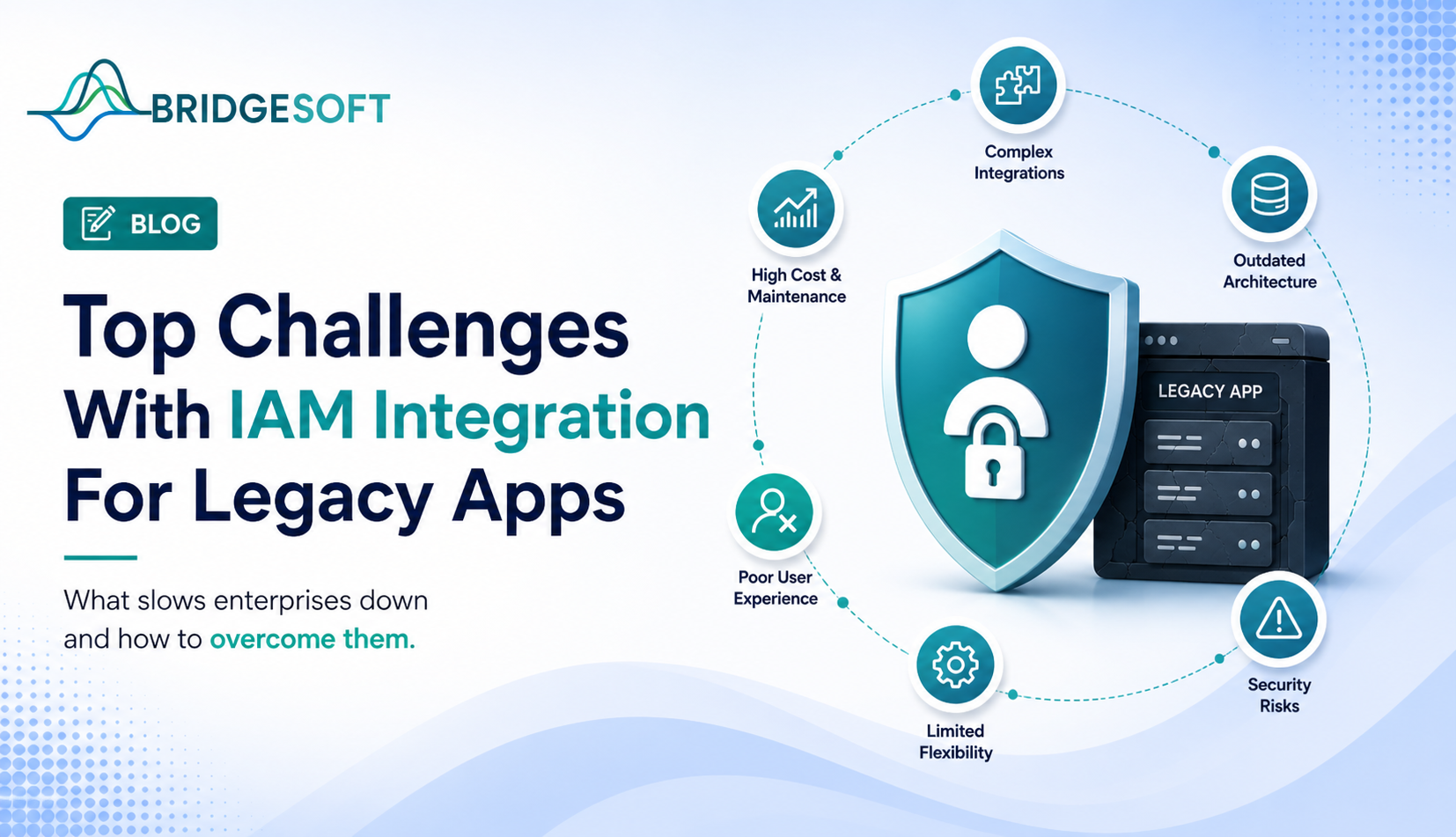
Digital transformation is accelerating across industries, but organizations still rely on legacy applications for key business operations. These systems often lack the security features needed for modern cybersecurity and compliance. With cloud adoption, hybrid environments, and remote work, securing legacy applications is now a top IT and security priority.

Modern Identity Access Management (IAM) transforms legacy systems by integrating them into a centralized identity framework. This strengthens security, enhances governance, simplifies access, and supports scalability, bridging traditional infrastructure with future-ready environments without disrupting business operations.

The Security Challenges Associated with Legacy Applications

Legacy applications were designed in a different era, before today’s standard cloud computing, security threats, and regulations. Many use outdated authentication, local credential storage, shared admin accounts, and manual processes—creating serious security gaps for modern enterprises.

One of the biggest challenges organizations face with legacy systems is the lack of centralized visibility into identities (knowing who has access to what). Employees often manage multiple usernames and passwords across applications, which increases password fatigue and the risk of credential compromise. In many cases, IT teams struggle to track who has access to specific systems, whether that access is still required, and whether excessive permissions exist within critical applications. Without proper Identity Governance (policies and tools to control user access), organizations lose the ability to effectively control and monitor user access across the enterprise.

Compliance requirements add another layer of complexity. Regulations such as GDPR (General Data Protection Regulation), HIPAA (Health Insurance Portability and Accountability Act), SOX (Sarbanes-Oxley Act), and ISO standards (international security and quality benchmarks) require organizations to implement strict access controls, maintain audit trails, and demonstrate accountability for user permissions. Legacy applications rarely provide these capabilities natively, making IAM implementation essential for organizations that need to meet modern compliance expectations while reducing operational risks.

What is Modern Identity Access Management Integration?

Modern IAM integrates legacy systems into a unified security framework. Older applications can join a centralized identity environment that supports secure authentication, access control, and automated management—improving security without disrupting operations.

A modern IAM solution centralizes authentication policies, enabling users to securely access multiple systems through Single Sign-On (SSO) and Multi-Factor Authentication (MFA), improving the user experience, security, and operational efficiency.

The Growing Importance of Identity Governance

Identity Governance is increasingly important as organizations grow employees, contractors, vendors, machines, bots, APIs, and AI agents all need secure, controlled access. Without governance, risks like excessive privileges, orphaned accounts, and threats increase.

Integrating Identity Governance into legacy environments improves access visibility, automates reviews, and enforces policy-driven controls. This visibility is vital for compliance and risk management in regulated industries.

Key Methods Used in Modern IAM Implementation

Identity Federation
Modern IAM uses multiple methods for integrating legacy applications. Identity federation allows users to authenticate with a centralized provider while accessing older systems, creating a seamless experience while enabling consistent security policies.

Directory Synchronization
Directory synchronization is key for legacy integration. Older systems often rely on on-premises directories like Active Directory or LDAP. Modern IAM can synchronize identities across all environments, improving consistency and reducing administrative effort.

Access Gateway Solutions
IAM access gateways add a security layer in front of legacy applications, allowing modern authentication methods without modifying the applications. Gateways introduce MFA, adaptive authentication, and session policies, even for systems that originally lacked these features.

API-Based Integration
API-based integration lets legacy applications join centralized provisioning, role management, and audit workflows. Automated identity management reduces manual work while improving consistency and security.

Privileged Access Management (PAM)
Privileged Access Management is vital for legacy environments. Many older systems use poorly secured privileged accounts. Integrating PAM secures credentials, automates password rotation, monitors sessions, and enforces least-privilege policies—cutting insider threat risk.

Benefits of Modern IAM Solutions for Legacy Applications

Modern IAM for legacy systems brings more than just security. Automated onboarding and offboarding improve efficiency, unified authentication simplifies user experience, and centralized governance streamlines audits and compliance. A scalable identity foundation supports digital transformation.

Common Challenges During IAM Implementation

Effective IAM implementation needs planning. Legacy setups are complex, with undocumented dependencies and inconsistent models. Organizations must first assess identity structures, application dependencies, privileged accounts, and governance gaps before modernizing.

Identity and Access Management (IAM) is no longer just a layer of security—it has evolved into a critical business enabler. From onboarding employees efficiently to ensuring regulatory compliance and enabling secure digital transformation, IAM sits at the heart of modern enterprise operations.

Despite its importance, many organizations struggle with a persistent, often underestimated challenge: slow IAM deployment.

At first glance, implementation delays may appear manageable—just a few weeks added to timelines or minor integration setbacks. However, as these delays accumulate, they begin to create ripple effects across the organization. What starts as a technical delay gradually becomes a business problem, affecting security, productivity, compliance, and overall performance.

To truly understand how to avoid these outcomes, it’s important to first recognize the root causes behind why IAM Projects fail and how organizations can implement IAM successfully with the right strategy.

What Does “Slow IAM Deployment” Really Mean?

Slow IAM deployment is not just about missed deadlines—it often reflects deeper inefficiencies in an organization’s technology and processes.

It can manifest in several ways: delayed employee onboarding, prolonged application integrations, heavy reliance on manual provisioning, and extended implementation cycles that far exceed initial expectations. These inefficiencies are typically rooted in legacy systems, a lack of integration planning, and the absence of a structured implementation roadmap.

Organizations that take the time to build a clear IAM roadmap and prioritize early integration are better positioned to avoid these delays and achieve a more streamlined implementation journey.

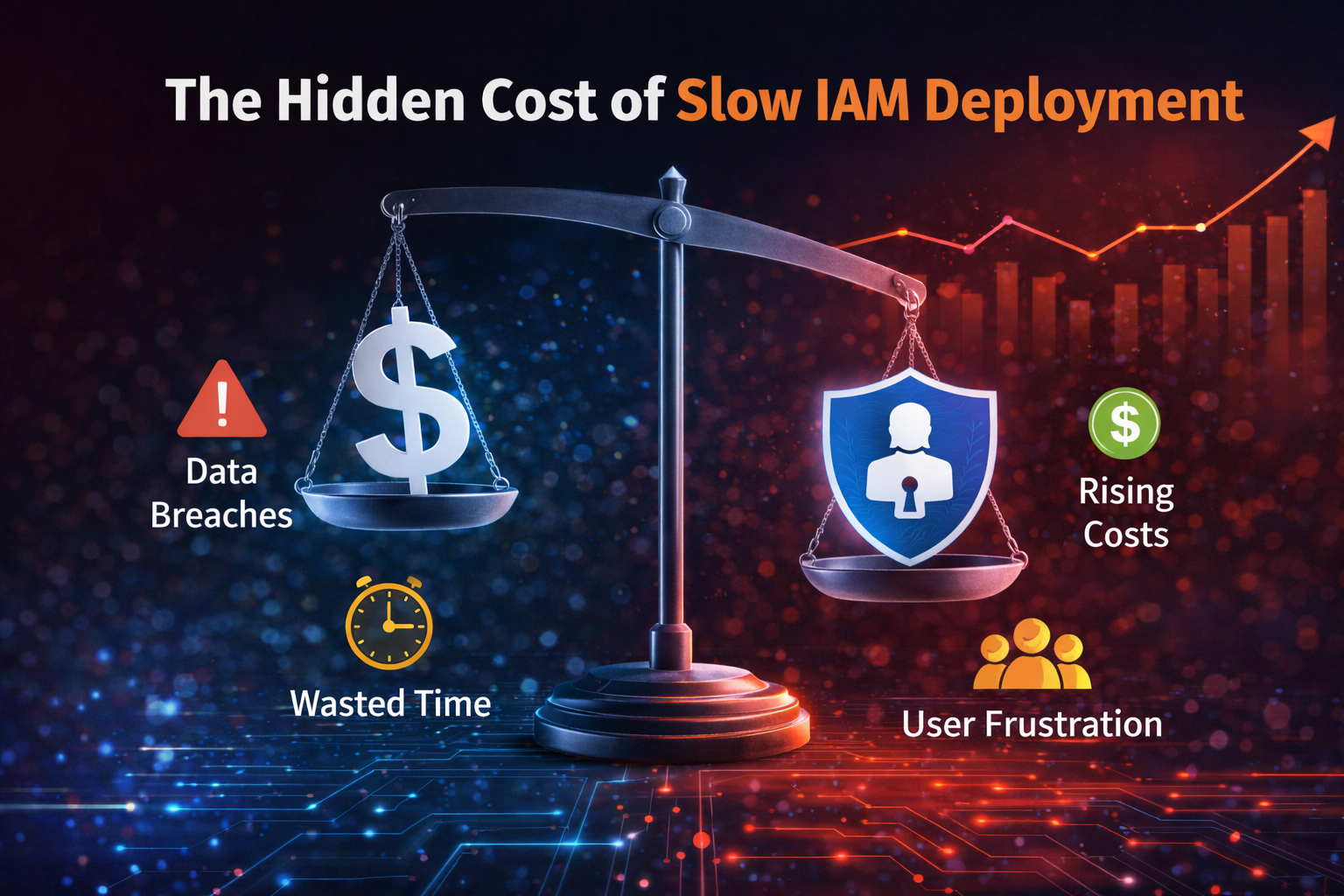
The Hidden Costs of Slow IAM Deployment

Increased Security Risks

One of the most immediate and critical consequences of slow IAM deployment is the increased exposure to security risks. When IAM systems are only partially implemented, users often retain access privileges longer than necessary, and manual errors become more frequent.

Delayed deprovisioning and lack of centralized control create gaps that can be exploited, increasing the likelihood of unauthorized access or data breaches. Over time, these vulnerabilities can have serious financial and reputational consequences for the organization.

Productivity Loss Across Teams

Beyond security, slow IAM directly impacts the day-to-day productivity of employees and teams. When access to applications and systems is delayed, employees are unable to perform their roles efficiently.

IT teams, on the other hand, are often burdened with repetitive manual tasks such as provisioning and access approvals. This not only slows down business workflows but also diverts valuable resources away from more strategic initiatives.

The result is a workplace environment where inefficiencies become normalized, and both employees and IT teams experience growing frustration.

Rising Operational Costs

IAM is often viewed as a long-term investment in security and efficiency. However, when deployment is slow, it begins to behave more like an ongoing operational expense.

Delays lead to extended development efforts, continuous rework, and increased reliance on manual processes. Organizations may find themselves allocating additional resources to maintain incomplete systems, driving up costs without delivering proportional value.

In such scenarios, the true cost of IAM is not in its implementation—but in its delay.

Compliance and Audit Challenges

IAM plays a central role in maintaining regulatory compliance and ensuring audit readiness. When implementation is delayed, organizations struggle to establish complete audit trails, enforce access governance policies, and generate consistent reports.

These gaps can lead to compliance failures, especially in highly regulated industries where visibility and accountability are critical. The longer the IAM deployment is delayed, the more difficult it becomes to meet regulatory requirements and avoid potential penalties.

Delayed Digital Transformation Initiatives

IAM is a foundational component for broader digital transformation efforts, including cloud adoption, automation, and Zero Trust security models.

When IAM deployment is slow, it creates a bottleneck that impacts these initiatives. Organizations may find themselves unable to move forward with modernization efforts because the underlying identity infrastructure is not yet mature.

In this way, IAM delays do not just affect security—they slow down the organization’s ability to innovate and compete in a digital-first world.

Poor User Experience and Shadow IT

In today’s fast-paced work environment, users expect seamless and immediate access to the tools they need. Slow IAM processes, however, often lead to login issues, access delays, and inconsistent user experiences.

When employees are unable to access systems efficiently, they may turn to unauthorized tools or workarounds—leading to the rise of shadow IT. This not only undermines security but also creates additional governance challenges for the organization.

Integration Bottlenecks with Legacy Systems

A major contributor to slow IAM deployment is the difficulty of integrating with legacy systems. Many enterprises operate with outdated platforms that lack modern APIs or standardized integration capabilities.

We've all been there, right? That frustrating dance between getting our work done and navigating the labyrinth of cybersecurity. Organizations are rightly strengthening their digital defenses, but it often feels like every new security measure another authentication step, an extra access form, a policy update – adds friction. While these steps are designed to boost security, they can also leave us feeling frustrated and slow down our productivity.

But here's the thing: this trade-off is no longer acceptable. In today's hyper-digital world, how we interact online defines everything, from customer engagement to employee productivity. That means user experience isn't just a nice-to-have; it's a fundamental security requirement. For identity and security leaders, finding that sweet spot between robust protection and effortless usability has become one of the most pressing challenges.

Security That Empowers, Not Impedes

Think about it: when security controls become a roadblock to getting work done, what happens? People find workarounds. They might reuse passwords, share credentials, or even squirrel away sensitive information in less-than-secure spots. These aren't acts of negligence; they're often cries for help, signals that our security strategy isn't quite in sync with how people operate.

This is where modern Identity and Access Management (IAM) solutions truly shine. They're evolving to match the pace and reality of how we work. Imagine adaptive authentication that understands your context, single sign-on (SSO) that eliminates repetitive logins, or even a future where passwords are a thing of the past. These aren't just buzzwords; they're practical ways to enhance security without forcing users to jump through unnecessary hoops. When security feels seamless, people embrace it, and in turn, risk naturally decreases.

Weaving Design Thinking into Identity Programs

User-centric design isn't just for marketing and product teams anymore; it's a powerful tool for identity strategy. By embracing principles like empathy, rapid prototyping, and continuous iteration, identity leaders can craft workflows and access controls that genuinely reflect user needs.

Take, for instance, designing a new role-based access request system. Instead of simply building it and expecting people to adapt, imagine starting with conversations across different business units. What do users really need access to? How often do those needs shift? And crucially, by building in feedback loops, identity teams can constantly refine these systems based on real-world usage. The outcome? A more intuitive experience for users and a more efficient system for IT and security teams to manage. It's a win-win.

Building Trust Through Openness

Security shouldn't feel like something imposed on users; it should be something they understand and trust. When people are informed about why certain controls are in place, and when they have clear, easy-to-navigate options for requesting access or reporting issues, they're far more likely to embrace and adhere to security protocols.

Providing self-service capabilities, transparent access policies, and real-time visibility into permissions cultivates a culture of trust across the organization. It transforms security from a stern gatekeeper into a collaborative partner one that empowers employees to work confidently, knowing they're protected.

The Bridgesoft Perspective: Security as an Enabler

Ultimately, the most successful identity programs are those built with people at their core. When user experience and security are viewed as complementary forces rather than opposing ones, organizations can create digital environments that are both robustly secure and truly supportive.

At Bridgesoft, we believe that IAM shouldn't force anyone to choose between security and speed. With the right tools, the right mindset, and the right processes, it's not only possible to deliver both, but to elevate the identity function into a genuine driver of business value. We empower organizations to build secure, seamless digital experiences that foster productivity and trust, because we understand that the human element is at the heart of every successful cybersecurity strategy.

Mergers and acquisitions (M&A) are often positioned as growth catalysts — opportunities to enter new markets, acquire talent, expand offerings, or streamline operations. But while financials, legal exposure, and cultural alignment often dominate the M&A due diligence process, one critical area is frequently overlooked: identity governance.

When two organizations join forces, their IT ecosystems must be integrated, aligned, and secured — and identity is at the center of that effort. Yet in many cases, identity and access management (IAM) challenges surface only after the deal is signed, when integration is already underway. By then, it’s often too late to prevent the risks: over-provisioned accounts, orphaned access, regulatory gaps, and delayed synergies.

In today’s digital-first enterprises, failure to address identity early in the M&A process isn’t just a missed opportunity — it’s a hidden liability.

Why Identity Matters in M&A

When two companies merge, their user populations double overnight. Employees, contractors, partners, and systems must quickly gain access to shared resources — from collaboration tools and business applications to customer data and internal systems. At the same time, access must be governed carefully to prevent security breaches, conflicts of interest, or compliance violations.

This rapid scaling of access often introduces chaos:

Legacy identity systems with conflicting architectures

These challenges become particularly acute when the organizations involved operate in regulated industries such as finance, healthcare, or energy, where identity governance is tightly tied to compliance mandates.

The Hidden Risks of Poor Identity Planning

Without proper identity governance, M&A activities can introduce multiple categories of risk:

  1. Security Risk: During integration, users often retain access to their original environments while gaining access to new systems. This results in excessive privileges and elevated attack surfaces — especially if former employees or contractors aren’t promptly deprovisioned.
  2. Compliance Risk: Inconsistencies in how identities are managed across organizations can lead to violations of policies like GDPR, HIPAA, or SOX. Audit readiness becomes more difficult when there’s no central visibility into who has access to what.
  3. Operational Risk: Manual provisioning, mismatched systems, and access delays create inefficiencies that slow down productivity and frustrate users. These delays can impact the very synergies the M&A was supposed to create
  4. Reputational Risk: A high-profile breach during the integration period can damage customer trust and undermine the perceived value of the acquisition — especially if the root cause is a known issue like ungoverned access.

IAM Due Diligence: A New M&A Priority

Identity governance must become a formal component of M&A due diligence. This means evaluating the maturity, architecture, and risk posture of each entity’s IAM program before integration begins. Key questions to ask include:

By answering these questions upfront, organizations can identify integration gaps, anticipate challenges, and begin to define a roadmap that aligns with both security and business goals.

Identity Integration Strategies

There is no one-size-fits-all approach to identity integration during M&A. The right strategy depends on the size, complexity, and timelines involved. However, the most effective approaches share three key characteristics: visibility, unification, and governance.

Here are four common strategies:

  1. Directory Federation
    A short-term solution to provide access across environments while maintaining separate directories. Federation reduces friction but doesn’t address long-term governance or duplication.
  2. Directory Consolidation
    A longer-term play that involves merging identity repositories into a single authoritative source. This simplifies management but requires careful planning to avoid disruption.
  1. IAM Platform Standardization
    Selecting one IAM platform to serve both organizations going forward. This enables consistent policy enforcement, automation, and visibility — but necessitates migration planning and stakeholder alignment.
  2. Hybrid Governance with Central Oversight
    Allowing each entity to retain operational control while establishing shared governance policies and reporting. This model is particularly useful in acquisitions where full integration is not immediate or practical.

Regardless of the model chosen, the integration must be governed by clear policies, documented processes, and continuous monitoring.

Post-Merger Identity Risks to Watch

Even with a solid strategy in place, the post-merger period brings unique identity risks that must be proactively managed:

IAM leaders should create a post-merger identity scorecard that tracks key metrics — such as number of identities reconciled, accounts decommissioned, and policy violations resolved — to guide integration efforts and report progress to leadership.

Making Identity a Strategic Enabler

Rather than being a drag on M&A execution, IAM can be a powerful accelerator — if approached strategically. Mature identity governance accelerates onboarding, simplifies audit preparation, and increases organizational agility during a time of high change.

Imagine being able to grant access to new systems in hours rather than weeks. Or having a unified view of all user entitlements across both organizations. Or being able to assure the board and regulators that access to sensitive systems is fully under control.

This is the promise of treating identity not just as a technical function, but as a core M&A capability.

Don’t Let Identity Chaos Undermine Your M&A Success

A well-planned IAM strategy doesn’t just prevent disasters—it accelerates integration, ensures compliance, and protects your investment.

Ready to secure your merger with a proven identity governance strategy?

Visit Bridgesoft today to learn how we help enterprises turn IAM from a risk into a competitive advantage.

In today's ever-evolving digital landscape, managing user identities has become increasingly complex. Businesses juggle a vast network of applications, cloud resources, and interconnected systems, each requiring secure access control. This is where Identity Governance and Administration (IGA) comes into play.

Bridgesoft, a leading provider of IGA solutions, empowers organizations to streamline identity management and bolster security. But before diving into Bridgesoft's offerings, let's delve deeper into the world of IGA and explore its significance.

Key Components of Identity Governance

An effective IGA program should include the following components:


Bridgesoft: Your Trusted Partner for IGA Solutions

Bridgesoft offers a robust IGA platform that caters to the diverse needs of modern organizations. Here's a glimpse into Bridgesoft's IGA solutions:

By implementing Bridgesoft's IGA solutions, you can:

If you are looking for a partner to help you implement an Identity Governance program, Bridgesoft is the perfect choice. Contact us today to learn more about our solutions.

The gaming industry is a colossal entertainment force, with millions worldwide enthralled by online games. This phenomenal growth, however, brings a rising tide of online security threats. Hackers constantly seek ways to exploit vulnerabilities in games and platforms, making robust security measures crucial for game developers and publishers to safeguard their players.

One of the most concerning issues is identity theft. Hackers can steal player accounts, wreaking havoc by cheating, pilfering in-game items, or even making real-world purchases. This can be devastating for players, potentially leading to lost accounts or compromised financial information.

Another major threat is denial-of-service (DoS) attacks. These bombard game servers with traffic, rendering them inaccessible to legitimate players. DoS attacks disrupt gameplay and cause frustration, potentially damaging a game's reputation.

Here's a glimpse into the industry's scale to emphasize the importance of security:

Bridgesoft, a company specializing in identity and access management (IAM) services, offers solutions specifically designed for the gaming industry. IAM solutions address online security challenges by providing features like:

By implementing IAM solutions, game developers and publishers can create a safer and more secure environment for their players. This safeguards them from identity theft, DoS attacks, and other online security threats.

There's more to the benefits of IAM solutions. They can also enhance the player experience by:

If you're a game publisher, prioritizing IAM solutions is vital to protecting your players and your business. Bridgesoft provides a variety of solutions to cater to your specific requirements. For more info on the gaming do check this.

To learn more about how Bridgesoft's IAM solutions can help you secure your game, visit our website or contact us directly.

In today's digital world, managing user identities and access is critical for any organization. With the rise of cyber threats, it is essential to ensure that employees have secure access to company resources while maintaining the confidentiality, integrity, and availability of corporate data. Two concepts that are often used interchangeably are Workforce Identity Management (WIM) and Access Management (AM). While they share similarities, they have significant differences that are important to understand.

What is Workforce Identity Management (WIM)?

Workforce Identity Management is the process of creating, maintaining, and managing digital identities of employees, contractors, and partners. It involves providing access to the right resources at the right time based on job roles, responsibilities, and attributes. WIM includes identity governance, user authentication, authorization, and access control. WIM solutions are designed to ensure that identities are secure, compliant, and consistent across different applications, systems, and platforms.

What is Access Management (AM)?

Access Management is the process of controlling access to resources based on user permissions, roles, and attributes. AM involves granting or denying access to applications, data, and services based on user authentication, authorization, and access policies. Access Management solutions are designed to ensure that users have the right level of access to resources based on their job roles, responsibilities, and attributes. AM solutions are used to enforce security policies, prevent unauthorized access, and provide a seamless user experience.

The Key Differences between Workforce Identity Management and Access Management

  1. Scope: Workforce Identity Management covers the entire lifecycle of digital identities, including creation, management, and deletion, while Access Management is focused on controlling access to resources based on user permissions and policies.
  2. Functionality: Workforce Identity Management solutions include identity governance, user authentication, authorization, and access control. Access Management solutions, on the other hand, are focused on access control, such as single sign-on, multifactor authentication, and access policies.
  3. User Experience: Workforce Identity Management solutions are typically used by IT administrators, security analysts, and compliance officers, while Access Management solutions are used by end-users to access resources.
  4. Integration: Workforce Identity Management solutions are integrated with various applications, systems, and platforms, while Access Management solutions are integrated with applications, data, and services.

Why Workforce Identity Management and Access Management are Important for Organizations?

Workforce Identity Management and Access Management are crucial for organizations to ensure that employees have secure access to corporate resources. These solutions are designed to protect confidential information, prevent data breaches, and ensure compliance with regulatory requirements. WIM and AM solutions also improve productivity, reduce IT costs, and provide a seamless user experience.

Workforce Identity Management and Access Management are two critical concepts that are essential for any organization's cybersecurity posture. While they share similarities, they have significant differences that are important to understand. WIM is focused on managing digital identities, while AM is focused on controlling access to resources. Organizations should implement both WIM and AM solutions to ensure that employees have secure access to corporate resources while maintaining confidentiality, integrity, and availability.

Bridgesoft is a leading provider of technology, consulting, and information security management solutions. Bridgesoft's products and services cover a range of areas from physical and logical access and identity management to security risks and threats.
Copyright 2026 Bridgesoft. All rights reserved.
cloud-checklockcogeyeenterpictureuserstorecartmap-markersmartphonelaptop-phonerocketbuscrossmenuplus-circle